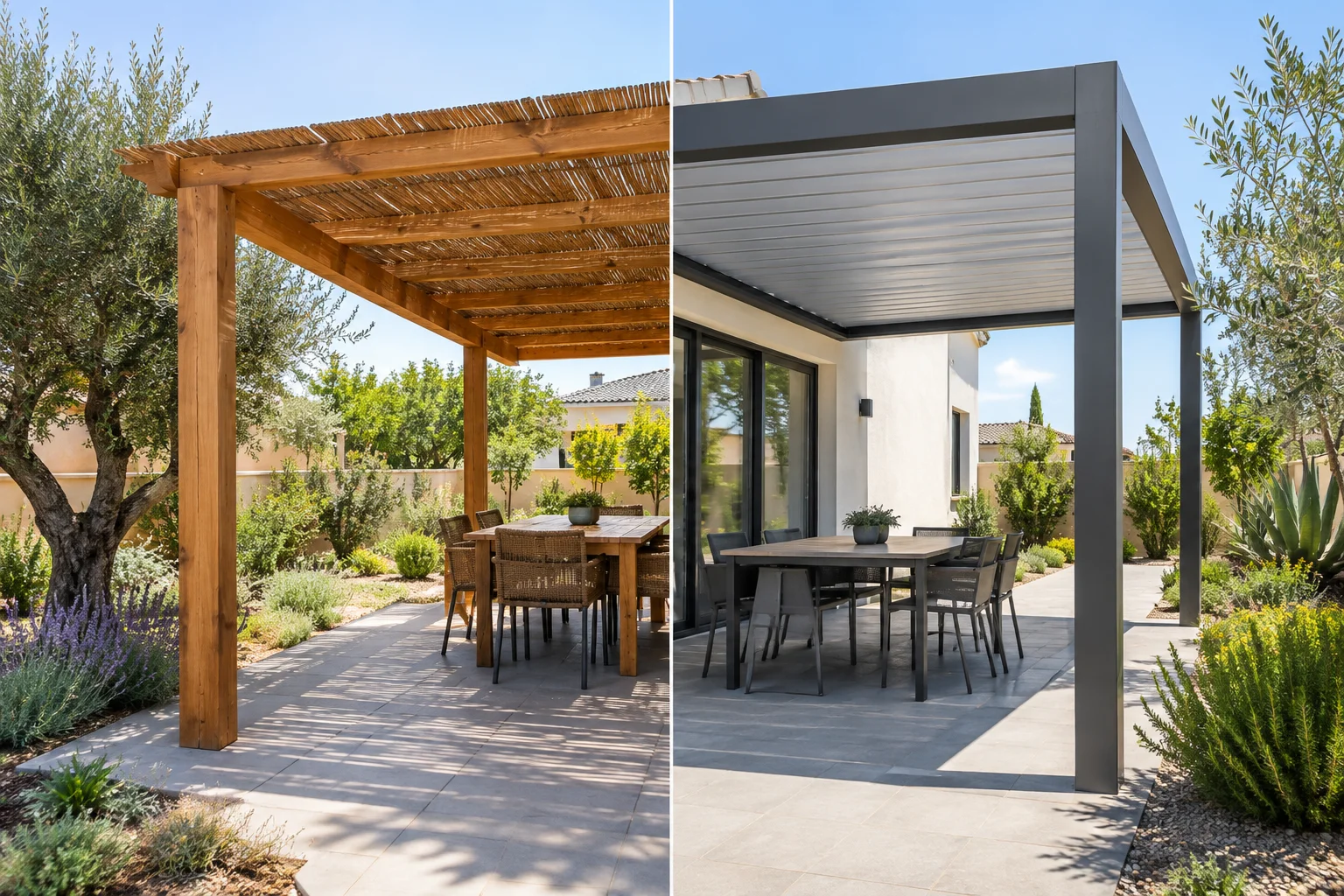
Choosing a wood vs aluminium pergola involves more than style. In Southern Israel, strong sun, heat, wind exposure and maintenance needs all shape the right choice. Wood often provides a warmer, more custom look. By contrast, aluminium suits homeowners who want clean lines and less ongoing care.
Neither material suits every garden. Instead, consider the pergola location, your shade needs, the garden shape and how you use the space. A well-planned timber pergola can become a lasting garden feature. Likewise, an aluminium system can suit a modern patio with a low-maintenance brief.
Wood vs aluminium pergola: the short answer
Choose a wooden pergola if you want a natural finish, custom proportions or details that match other timber features. It works especially well when the pergola should feel part of the landscape. As a result, wood can soften the transition between patio and planting.
Choose an aluminium pergola if easy upkeep, a crisp contemporary look and routine weather resistance matter most. It can work particularly well with newer homes and compact patios. However, the design, finish and roof system still make a major difference.
For either option, roof design and orientation influence comfort as much as the frame material. Before choosing a structure, read our guide to planning pergola placement, size and orientation in Southern Israel. Otherwise, a poorly positioned pergola may provide little useful shade.
How Southern Israel conditions affect pergola materials
A pergola in Kiryat Gat or elsewhere in Southern Israel must handle long periods of direct sunlight. Therefore, consider surface temperature, UV exposure, roof covering and maintenance access before choosing a colour.
Timber and aluminium react differently to heat. Dark aluminium can become very hot in direct sun. Timber also warms up, yet it often feels less harsh to touch. In either case, do not rely on the frame for comfort. Instead, focus on the quality and design of the overhead shade.
Strong sunlight can gradually change exposed timber. For example, wood may fade, dry out and develop surface checks without maintenance. Aluminium needs no oiling or staining. However, choose an outdoor-suitable finish and clean it regularly.
Wind also varies from site to site. An exposed garden may need careful structural planning, secure fixings and a roof suited to local conditions. Consequently, a standard-sized product may not suit every patio, boundary wall or irregular layout.
Wooden pergolas: appearance, flexibility and upkeep
A wooden pergola adds texture and warmth that aluminium rarely matches. It can soften a modern garden, connect a patio to planting and complement decking, fences or benches. Therefore, many homeowners choose wood for its natural character.
When timber is the better choice
- You want a bespoke shape, decorative details or substantial-looking posts and beams.
- Your garden already includes timber fencing, decking, planters or outdoor furniture.
- You prefer a natural material that you can refinish as your garden style changes.
- You want the structure to work with climbing plants, screening or custom side panels.
- The pergola forms part of a wider garden renovation, rather than a stand-alone addition.
Custom timber pergolas adapt well to awkward dimensions. For example, a designer can plan one around an existing patio, mature tree, narrow side return or dining zone. This flexibility helps the pergola feel integrated rather than squeezed into a spare gap.
However, timber needs a realistic maintenance plan. Depending on the timber, coating and exposure, it may need periodic cleaning and treatment. In addition, check for fading, roughness, loose fixings or places where water repeatedly collects.
Good construction details limit unnecessary wear. For example, keep posts out of standing water and soil. Likewise, direct roof drainage away from timber edges. Installers should also allow for natural timber movement.
Aluminium pergolas: clean lines and lower routine maintenance
An aluminium pergola gives a neat, modern look with less routine care than timber. It often comes in neutral colours that work with window frames, paving and contemporary house finishes. As a result, it appeals to homeowners who do not want regular staining or oiling.
When aluminium is the better choice
- You prefer a minimal, contemporary architectural style.
- Low maintenance matters more than a natural timber finish.
- You want a consistent factory-applied colour across the structure.
- Your patio has clean lines, and the pergola should match modern doors or frames.
- You are considering an integrated adjustable roof or a more engineered shading system.
Although many people call aluminium maintenance-free, low maintenance is more accurate. Dust, pollen and airborne dirt can collect on frames and roof channels. Therefore, wash the structure occasionally and clear drainage paths.
Aluminium also has some design limits. For instance, some systems use set module sizes, so unusual gardens can prove harder to fit. A slim frame may look elegant. However, it may lack the visual weight or custom character that a large living area needs.
Furthermore, aluminium pergolas vary widely. Frame thickness, connections, finish quality, roof type and fixing methods affect appearance and performance. Therefore, compare the proposed specification rather than assuming every aluminium product performs the same way.
Shade and roof design matter more than the frame
When comparing a wood vs aluminium pergola, first decide what shade you need. An open-slat pergola creates filtered shade and a sense of enclosure. Yet it cannot match the protection from a solid roof, adjustable louvers or a well-designed covered system.
A partly open timber roof can suit a garden that needs light for nearby plants. On the other hand, a west-facing dining patio may need stronger late-afternoon protection. In that case, review roof coverage, side screening and orientation carefully.
Consider these practical questions before deciding:
- At what time of day do you most want to sit outside?
- Does the patio receive strong afternoon sun from the side?
- Do you want filtered shade, rain protection or both?
- Will the roof reduce light entering the house?
- Where will water run during rain?
- Do you need privacy screening as well as overhead cover?
If fast, flexible shade is your priority, a pergola may not be the only option. In that case, our comparison of pergolas and shade sails for durability explains where each approach makes sense.
Comparing long-term maintenance and value
Maintenance involves more than effort. It also shapes how the pergola looks after several seasons of sun and use. A timber structure suits homeowners who value its character and accept the care it needs. Meanwhile, aluminium reduces many tasks, although later style changes may prove harder.
Long-term value also depends on personal priorities. A custom wooden pergola can create a strong focal point and make the garden feel established. Similarly, an aluminium pergola can make a patio easier to use with a clean, orderly finish. In both cases, proportions, suitable shade and sound installation matter more than an expensive-looking material.
Include the whole project in budget comparisons. In particular, size, foundations or footings, roof design, drainage, lighting, screens, access and site preparation can change the final scope. For more guidance, see the main factors that influence a custom pergola cost in Kiryat Gat.
How to choose the right pergola for your garden
Start with how you want to use the area. A family dining space needs dependable shade over the table. By contrast, a quiet seating corner may benefit from a lighter, open pergola with planting around it. A small garden often needs shade without an enclosed feeling.
Next, assess the house and existing surfaces. Timber can link natural planting with outdoor carpentry. Meanwhile, aluminium can complement a contemporary façade, porcelain paving or metal-framed doors. Either approach can support the garden without dominating it.
Finally, be honest about maintenance. If you love natural wood but will not maintain it, aluminium may offer the sensible choice. Conversely, if you dislike a manufactured look and want a custom centrepiece, timber care may feel worthwhile.
Plan the pergola as part of the whole garden
The best results come from planning the pergola with the patio, paths, planting, irrigation and privacy features. This approach avoids common problems. For example, it can prevent posts from blocking access, drainage from falling into beds or a structure from shading sun-loving plants.
Creative Garden Co. helps homeowners across Kiryat Gat and Southern Israel assess their site, choose suitable materials and design pergolas around everyday use. When you are ready, explore our custom pergola design and build service in Kiryat Gat to discuss a timber pergola or a coordinated outdoor space.
A thoughtful wood vs aluminium pergola decision delivers more than an attractive frame. Ultimately, it should create a shaded area that feels comfortable, fits the garden and stays practical for years.