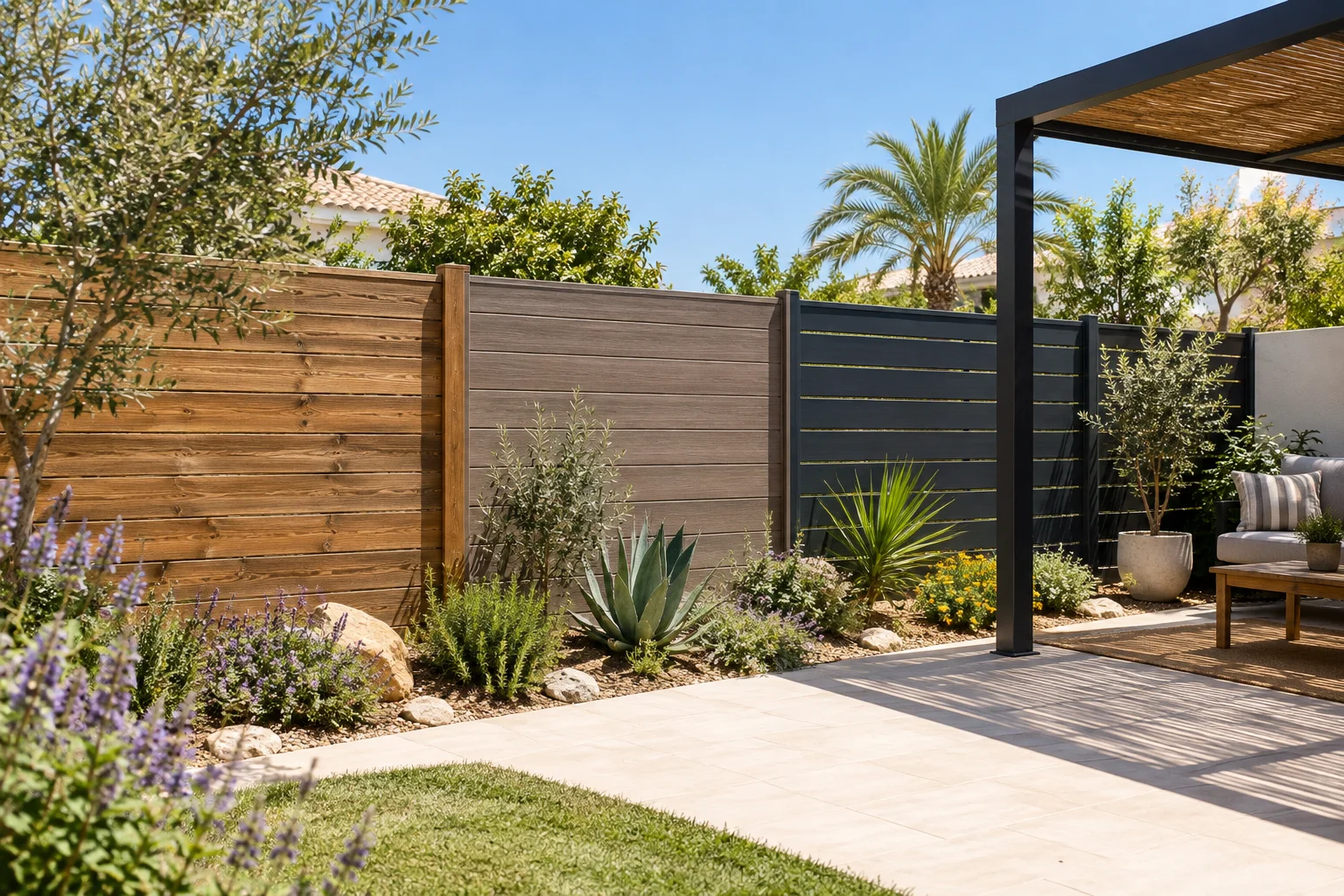
The best fence materials for hot gardens depend on direct sun, privacy needs and your maintenance routine. In many Southern Israel gardens, wood brings warmth and flexibility. Composite provides a lower-maintenance timber look, while metal creates a slim, durable structure. However, no single material suits every site.
Strong sun and summer heat can affect colour, surface temperature and material movement. Therefore, choose the fence material and construction details together. A well-planned fence should also work with gates, planting, irrigation access and everyday garden use.
Quick answer: choosing fence materials for hot gardens
- Choose wood when you want a natural finish, a custom design and are comfortable with periodic maintenance.
- Choose composite when you want a consistent timber-style appearance with less routine finishing work.
- Choose metal when strength, slim profiles and long-term structural stability are your main priorities.
When comparing fence materials for hot gardens, start with the boundary exposure and the level of care you are happy to provide. A mixed design can also offer the best solution. For example, a metal frame can provide the structure, while timber or composite infill creates the screening you want. As a result, a long boundary can feel lighter while still giving the garden privacy.
What hot, sunny conditions mean for garden fencing
Before comparing materials, assess the boundary itself. A fence beside a south- or west-facing patio may receive intense afternoon sun. By contrast, a fence shaded by a house, pergola or mature tree has different demands. Heat is only one part of the decision.
Also consider wind exposure, the condition of the existing wall or ground, and the fence’s purpose. It may screen a seating area, define a boundary or hide a service area. A fully solid fence offers the greatest visual privacy. However, it may catch more wind than a design with small gaps or a partial screen.
Finally, plan access before installation. Keep irrigation pipes, outdoor taps, electrical points and drainage covers within reach. If you are renovating the wider garden, plan fencing alongside paving, planting and levels. This usually avoids adding it at the end. Our garden renovation and transformation service can coordinate these elements as one practical project.
Wood fencing: natural character with ongoing care
Wood remains popular because it brings warmth and texture to a garden. It suits horizontal slats, vertical boards, framed screens and made-to-measure details around uneven walls or awkward corners. In addition, wood can connect visually with a timber pergola, bench or planter.
When wood is a good choice
Wood suits homeowners who value natural grain and custom details. It can soften modern paving and render walls. Meanwhile, a slatted layout can create privacy without making a compact garden feel closed in. Custom spacing also helps balance screening, airflow and light.
However, exterior timber needs regular attention in a sunny garden. Sunlight can alter its colour over time, while heat and weather can affect the surface. Maintenance needs vary with the timber, finish and exposure. Therefore, ask how your chosen material needs care before you commit to a design.
Wood fencing trade-offs
- It needs periodic cleaning and may need re-finishing to preserve the look you prefer.
- Natural colour changes are part of using real timber outdoors.
- Boards need suitable gaps and fixing details to allow for normal outdoor movement.
- A poorly planned installation can trap moisture or make future repairs harder.
Wood is neither automatically the highest-maintenance option nor maintenance-free. Instead, it suits homeowners who value its natural appearance and will include care in their long-term garden plan. For tailored proportions, post positions and slat layouts, see our guide to custom garden fence design.
Composite fencing: a lower-maintenance timber-style option
Manufacturers make composite fence boards to give a uniform, timber-like finish. They can suit homeowners who want privacy screening with less routine sanding, staining or painting than typical timber fencing. As a result, they often fit clean, contemporary gardens and pair well with composite decking.
Where composite fencing works well
Composite can work well for a low-maintenance garden privacy fence, especially along a clear boundary with regular sun. Its consistent colour and profile can help a new-build garden feel finished quickly. In addition, a framed composite screen can hide bins, utility areas or a close neighbouring outlook without relying on fast-growing planting.
That said, low maintenance does not mean no maintenance. Dust, irrigation overspray and garden debris still need cleaning. Also, darker surfaces may feel very hot in direct sun. Therefore, consider touch comfort near a dining table, children’s play area or narrow passage.
Composite fencing trade-offs
- It generally has a more uniform appearance than natural wood, which some homeowners prefer and others do not.
- Heat can cause materials to expand and contract, so correct spacing, framing and fixings are essential.
- Not every composite board or system performs in the same way, so compare the intended outdoor use and installation guidance.
- Repairs and colour matching may be less straightforward than replacing an individual timber board.
Choose composite for its balance of appearance and maintenance, not simply because marketing describes it as maintenance-free. In particular, view a sample at the actual boundary. Colour can look very different in full sun than it does indoors.
Metal fencing: strong structure and a modern finish
Metal fencing can create a crisp, contemporary boundary with relatively slim components. It is particularly useful when the fence needs a strong frame, a narrow profile or a more open design. Furthermore, metal can form the structure for timber or composite infill panels.
When metal is the better option
A metal fence or screen can suit gardens where security, durability and a defined architectural look matter. Vertical bars, perforated-style panels and framed screens offer different levels of visibility and privacy. For example, an open metal boundary can preserve a view or airflow. A denser screen, on the other hand, can protect a patio from overlooking.
Metal surfaces can become hot in direct sunlight. Therefore, consider where people will touch the fence, such as near a gate latch or built-in bench. Also check the protective coating, cut-edge details and installation quality before choosing an outdoor metal fence.
Metal fencing trade-offs
- Open metal designs provide less complete privacy unless you add planting or screening panels.
- Metal can feel more formal or industrial than timber, although planting can soften the effect.
- Solid metal panels need thoughtful structural planning because wind loads can be significant.
- Choose coatings and finishes for exterior use, then inspect them over time.
Metal often works best as part of a combined solution. For instance, a dark frame with horizontal timber slats can provide a clean line and a warmer garden-facing finish.
Privacy, wind and planting: do not choose panels alone
The right fence does more than mark a boundary. It shapes how enclosed, shaded and comfortable the garden feels. A fully solid screen helps when overlooking is the main issue. Yet on an exposed boundary, measured gaps may reduce the effect of a large blank wall and allow some air movement.
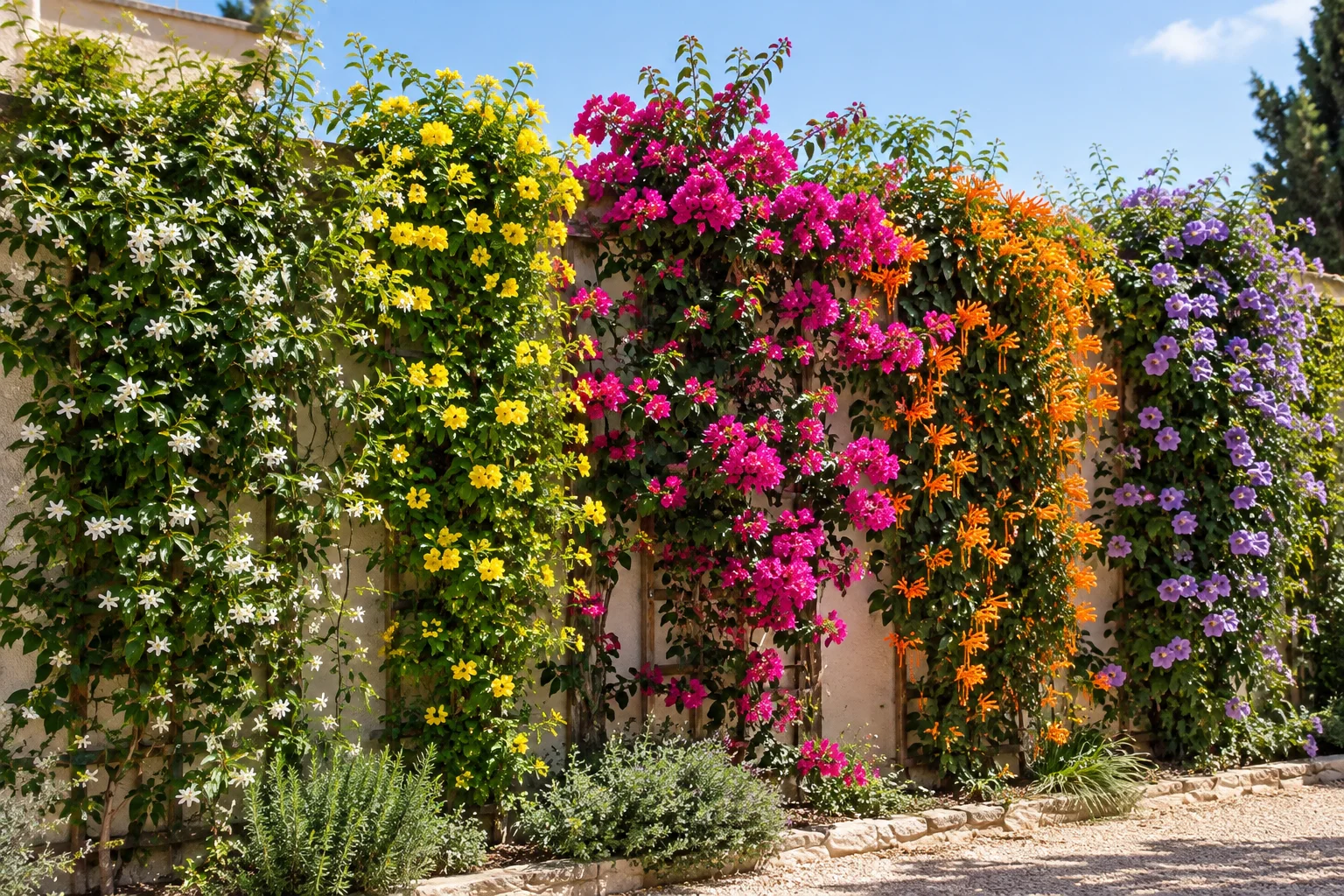
Planting can add softness, seasonal interest and another layer of privacy. However, it cannot provide an instant substitute for a screen when you need privacy immediately. Leave enough planting space, plan irrigation carefully and choose plants for the available sun. Our guide to creating privacy in a sunny Southern Israel garden explains how fences, screens and planting can work together.
For a small patio, one well-positioned screen may help more than fencing every boundary at the same height. This approach can protect the seating area while preserving openness elsewhere in the garden.
How to choose the right fence for your garden
Use these questions to narrow the choice before requesting a design or quote:
- What is the main purpose? Decide whether privacy, boundary definition, security, screening or appearance comes first.
- How much direct sun does it receive? Check the boundary at different times of day, not only when you first view it.
- How much maintenance suits your routine? Be realistic about cleaning, re-finishing and future adjustments.
- Does the fence need to match other features? Consider decking, paving, pergolas, gates and the house exterior.
- What sits behind or below it? Identify walls, slopes, irrigation, drainage covers and services before construction starts.
- Would a mixed material design work better? A structural metal frame, timber feature section and planting bed may solve several needs at once.
Plan the fence as part of the whole garden
The best fence materials for hot gardens work with the wider outdoor space. A new privacy screen may change where shade falls, where climbing plants can grow and how a patio feels. Likewise, installing a fence before paving or irrigation can avoid unnecessary cutting and rework later.
Creative Garden Co. designs and builds custom garden fences, privacy screens and outdoor carpentry for homes across Southern Israel. If you are considering wood, composite, metal or a combination, we can assess the boundary and discuss how you use the space. Then, we can create a solution that fits the garden rather than forcing a standard panel into it. Explore our outdoor carpentry services in Southern Israel to start planning a practical, durable boundary for your garden.