Garden drainage Carmei Gat homeowners plan before landscaping can prevent frustrating problems later. These include water beside the house, a patio that drains the wrong way, washed-out soil and irrigation pipes damaged during future work. Therefore, set finished ground levels and a clear rainfall route before laying paving, grass or planting.
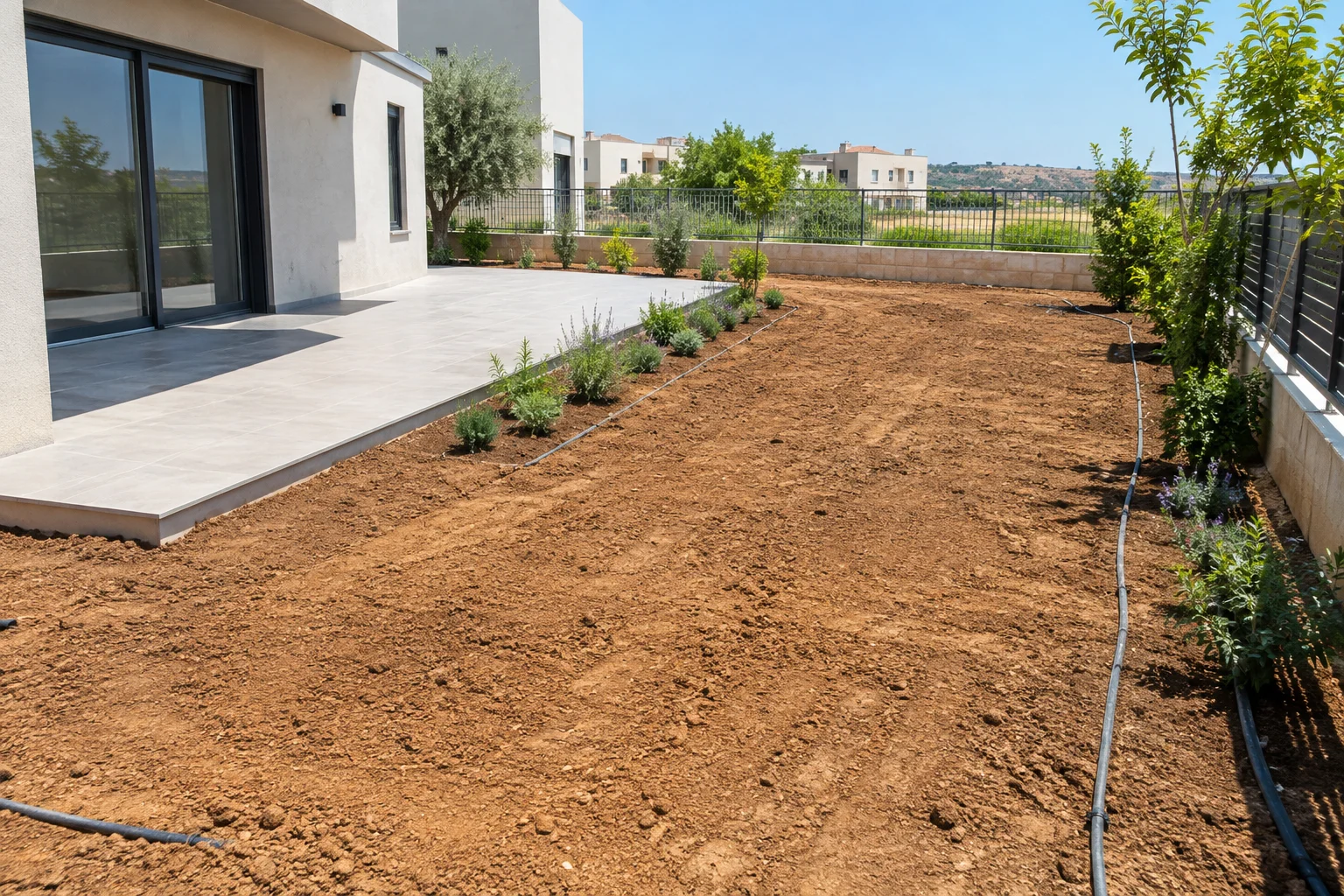
This matters especially in a new-build garden. An empty plot can look flat and simple, yet small height changes affect every later decision. So, begin with the house threshold, existing site levels, patio position and safe runoff routes.
Garden drainage Carmei Gat: start with finished levels
Compacted construction soil does not always match the level your completed garden needs. Finished levels include every layer above the base. These layers may include bedding, paving, lawn preparation, synthetic grass, topsoil, mulch or gravel. Therefore, allow for the depth of each chosen surface.
For example, a lawn area needs room for suitable soil and preparation. A paved patio needs a stable base, bedding and paving. If you ignore these construction layers, one surface may finish too high or too low.
Begin by identifying the fixed points:
- house door thresholds and any existing patio edge;
- boundary walls, fences and gates;
- inspection covers, service points and outdoor taps;
- the current high and low points of the plot;
- steps, retaining edges or neighbouring ground where relevant.
Next, decide the intended finished height for each garden zone. At this stage, the layout becomes practical rather than decorative. Then, a garden design can show how patios, lawns, paths and planting beds meet. This avoids awkward steps, thin soil zones and trapped water.
Keep surface water moving away from the house
As a general principle, hard surfaces and prepared ground near the house should slope away from the building. The required fall depends on the surface, site conditions and drainage route. However, the key decision is simple: do not direct rainfall towards walls, door openings or patio thresholds.
Do not assume planting or loose gravel will make water disappear. Compacted soil beneath a new garden may drain slowly. In addition, large paved areas can shed water quickly during rain. That water still needs a planned destination.
Look for low points before installing anything
Walk through the garden after rain where possible. Puddles, damp marks and silt deposits often show where runoff already collects. If construction is still underway, carefully use a hose to see how water moves across visible surfaces. As a result, you may spot a problem before expensive finishes hide it.
Also, pay close attention to corners between the house and a boundary wall. These enclosed areas can collect water when surrounding ground directs runoff into them. A planting bed there may need a different level, better soil structure or a deliberate drainage solution. More plants alone may not solve the issue.
Plan the patio and garden as one drainage system
A patio often becomes the main hard surface in a Carmei Gat garden. It may hold a dining table, pergola, outdoor kitchen or access route from the house. Because it is useful and relatively impermeable, agree its drainage direction before paving starts.
First, consider how people will move from the home into the garden. Then, decide where rainwater will leave the patio. These decisions work together. The patio should feel level enough for furniture and daily use. However, it also needs a purposeful fall that carries runoff away from the house.
For effective garden drainage Carmei Gat gardens need, check the patio fall alongside the surrounding borders, paths and lawn levels. A patio can drain correctly on its own while still sending water into a poorly graded garden corner.
The selected material and format also affect preparation. Large porcelain tiles, concrete pavers and natural stone each need a suitable base and careful installation. Our guide to choosing patio paving for Southern Israel gardens explains the practical differences between these surfaces.
Do not block a runoff route with a raised feature
Raised planters, low retaining walls, deck frames and lawn edging can look neat. However, they can act like small dams when they cross a natural or planned drainage path. As a result, water may collect behind them and saturate nearby soil.
This does not make raised features unsuitable. Instead, include them in the grading plan. A planter can sit above surrounding ground when that suits the design. Yet surrounding surfaces still need a route for excess water. Similarly, a deck should not hide a low point that stays wet beneath it.
Choose the right approach for garden runoff drainage
No single drainage feature suits every garden. The right approach depends on levels, soil, hard-surface area and the water likely to reach each zone. In many cases, sensible grading and well-planned permeable planting areas matter more than visible drains.
Gentle grading
Gentle grading shapes the garden so water moves naturally across the surface to an appropriate lower area. It often offers the simplest option for open lawn, planting and gravel zones. In particular, it works well when space allows a gradual fall without steep or uncomfortable ground.
However, grading alone may not solve a tight corner, a patio close to the house or an area with few outlet options. It also needs protection from later changes. For instance, adding soil to a bed or building a new border can change a fall that once worked.
Permeable planted areas
Planting beds can soften runoff by receiving water from nearby paths or lawn. They work best when you prepare the soil properly and choose plants for the expected moisture conditions. In contrast, a shallow bed over compacted ground can fill and remain wet.
Use planting for more than decoration. For example, a lower border can form part of the drainage strategy. Meanwhile, a higher and drier bed may suit plants that dislike wet roots. In hot, sunny gardens, plant choices should also match sun exposure and irrigation needs.
Channel drains and collection points
A channel drain or discrete collection point may suit areas where water gathers along a patio edge, doorway or narrow passage. These features need a real outlet and access for future cleaning. Otherwise, a drain simply moves the problem underground.
Where runoff could affect the home, neighbouring property or shared infrastructure, seek suitable site-specific professional advice before construction. A garden contractor can coordinate landscaping levels. More complex drainage conditions may need additional specialist input.
Coordinate irrigation before soil, turf or paving goes in
Drainage manages unwanted water after rain. Irrigation delivers controlled water to plants and lawn. Although they are different systems, both depend on correct ground preparation and access. Therefore, plan irrigation routes before completed surfaces make changes harder.
Map the areas that need water, including trees, planting beds, pots and lawn. Then, keep valves, filters, controllers and connection points accessible. Avoid placing irrigation joins beneath a permanent patio unless the design provides sensible repair access.
Good zoning also reduces overwatering. Drip irrigation usually suits planting beds because it applies water near the roots. Lawn areas may need a different approach. Read more about a well-planned garden irrigation system installation before choosing components or burying pipework.
Protect irrigation during final grading
Mark pipe routes and valve boxes before bringing in soil, aggregate or paving materials. Heavy equipment, deep edging and future tree planting can damage hidden pipes. In addition, keep irrigation heads clear of walls, paving and fences to avoid overspray.
Finally, check levels again after installing irrigation. Soil that covers pipes may change the intended fall. The aim is for irrigation, planting and drainage to support one another, rather than compete for space.
A practical sequence for new-build landscaping preparation
New construction gardens benefit from a clear order of work. Starting with plants or grass can tempt you to work around underlying problems. Instead, establish the difficult-to-change elements first.
- Measure the site and record fixed levels. Note thresholds, covers, boundaries and existing slopes.
- Decide how the garden will be used. Identify patios, paths, shade structures, lawn, planting and service access.
- Set the finished levels. Allow for the construction depth of every chosen surface.
- Confirm runoff directions. Check how patio and garden water will move away from the house.
- Prepare bases and drainage elements. Complete required groundwork before decorative finishes.
- Install irrigation and test it. Make repairs while pipework remains accessible.
- Build hard landscaping. Install patios, paths, edging and structural features at the agreed levels.
- Finish soil preparation, planting and lawn. Complete the softer landscape after the heavy work ends.
This sequence is particularly helpful when planning landscaping for a new construction home. It reduces the chance of lifting a new lawn, cutting through paving or moving a planted bed to fix a basic level issue.
Use visualisation for layout decisions, then verify the site
An AI garden visualisation can help you compare patio locations, planting layouts, pergolas or raised-bed ideas before construction starts. It helps you see how the garden may feel from the house and how zones relate to each other. For example, it may reveal that a proposed lawn becomes too small once the patio and planting borders are included.
However, visualisation does not replace measurements, site assessment or a buildable levels plan. Images can show a concept, but not the exact falls, soil depths, pipe locations or drainage capacity your property needs. Treat the visual as a decision-making tool. Then refine the design against real site conditions.
Creative Garden Co. can bring practical ground-level, irrigation, planting and outdoor-living decisions into the early design conversation. Explore our garden design services in Carmei Gat if you want to plan a new garden as one coordinated project. Ultimately, garden drainage Carmei Gat homeowners consider early gives the finished space a stronger foundation for everyday use.