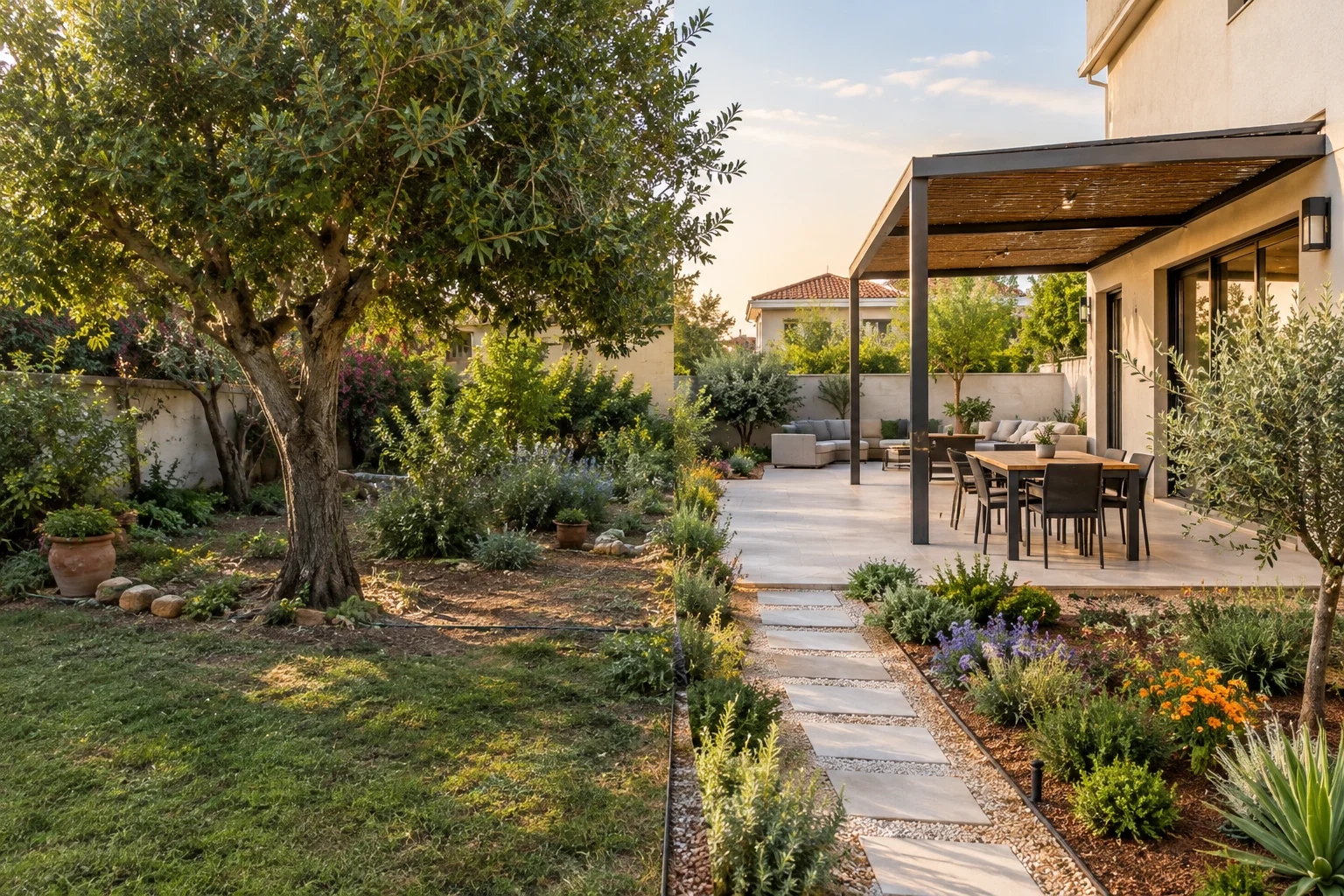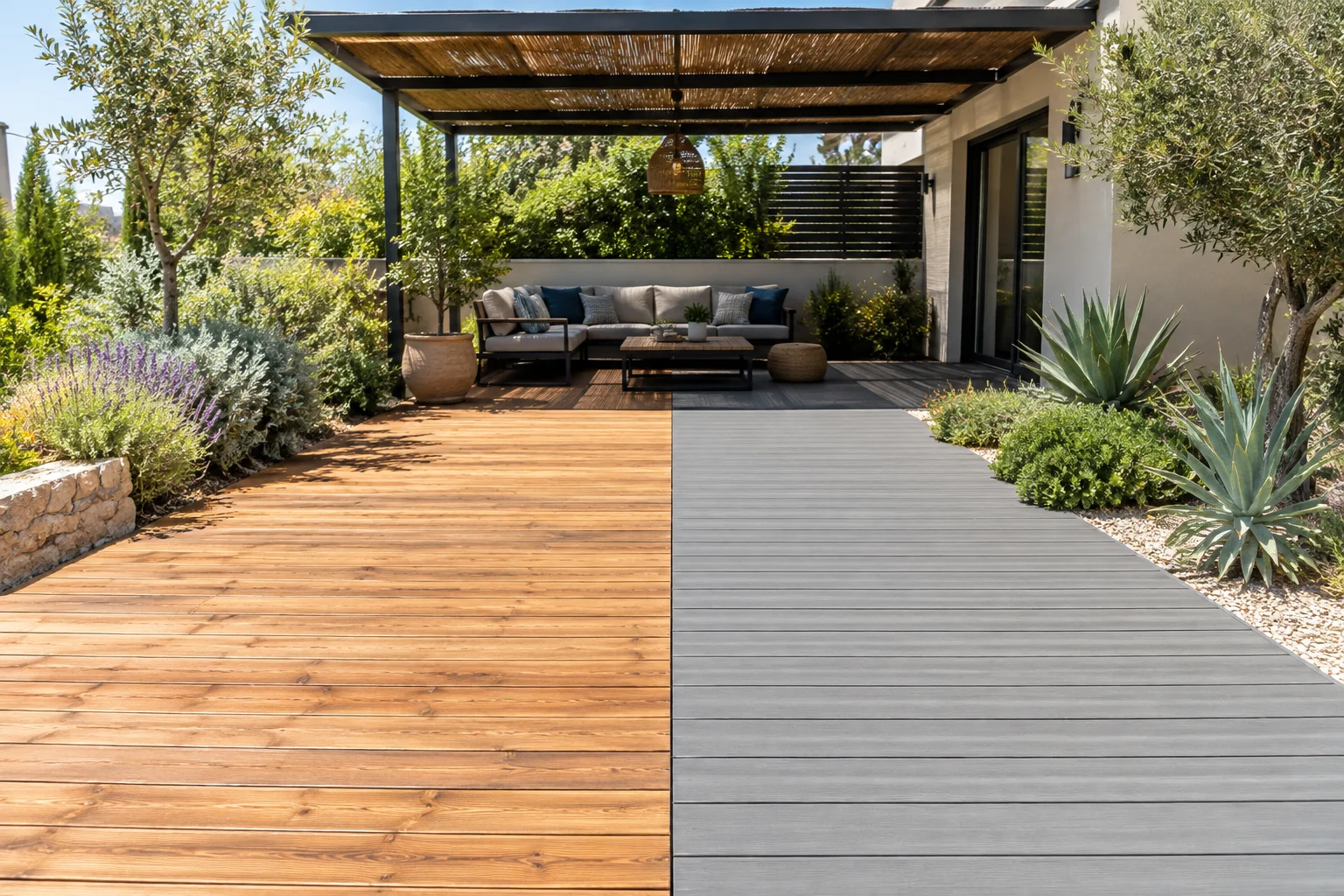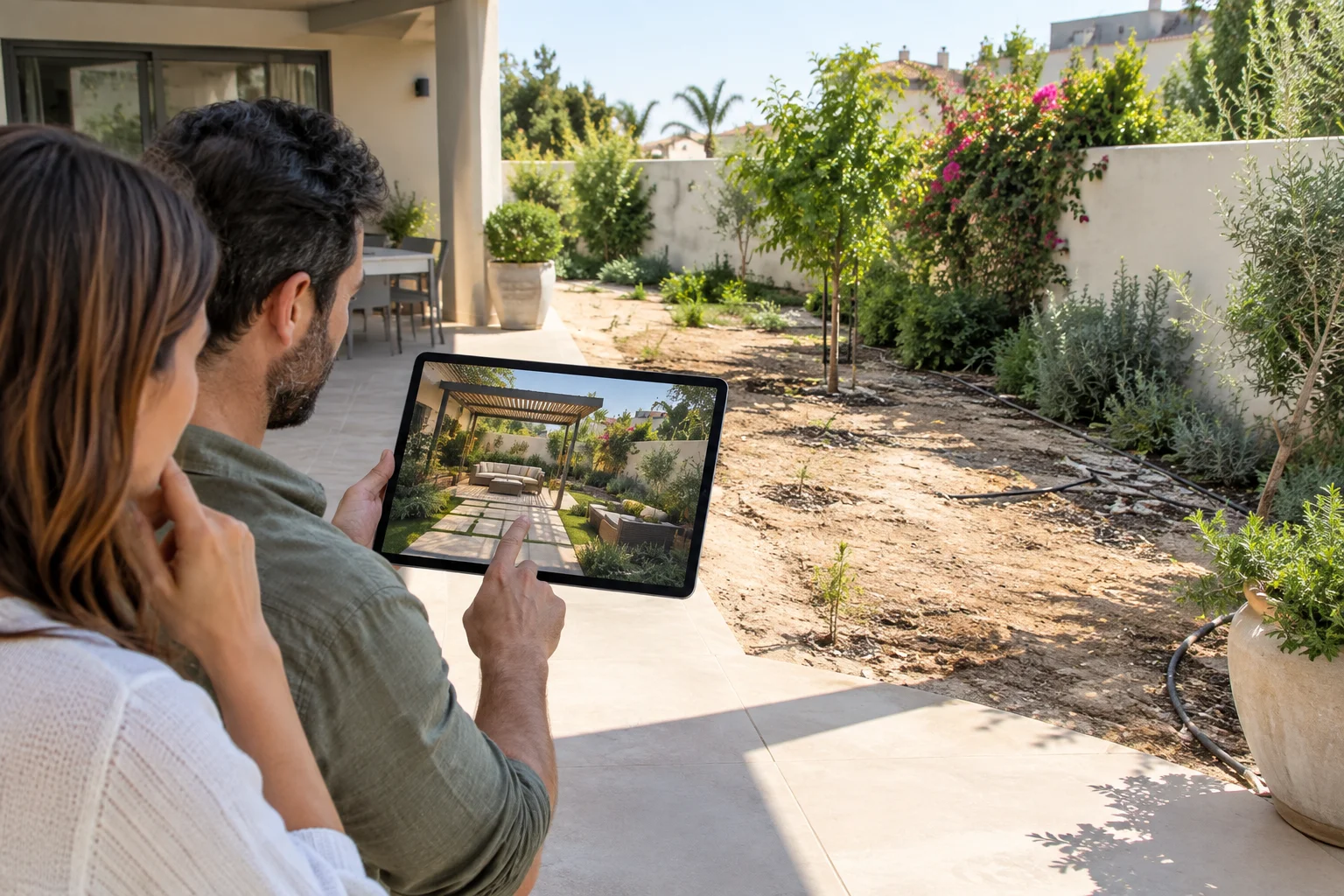
A beautiful garden can look established in a day, but it only stays that way when water reaches each plant consistently. A well-planned garden irrigation system installation does more than turn sprinklers on automatically. It protects your investment in trees, lawn, planting beds, and seasonal color while making daily garden care far easier.
In Southern Israel, irrigation needs to work through long dry stretches, intense heat, windy days, and changing plant needs. The right system is not simply a collection of pipes and drippers. It is designed around how your garden is used, what has been planted, where shade falls, and how water moves through the space.
Start With the Garden Plan, Not the Pipes
Irrigation works best when it is planned alongside the garden itself. Installing lines before deciding where a pergola, deck, path, lawn, vegetable bed, or play area will sit often leads to wasted work later. A pipe may need to be moved, a valve box may end up under a future planting bed, or watering zones may not match the finished layout.
For a new home in Kiryat Gat, Carmei Gat, Even Shmuel, or a nearby community, it makes sense to assess the full outdoor space before construction begins. Measure the garden, identify existing water points, note levels and drainage, and map sunny and shaded areas. This creates a practical foundation for planting, hardscaping, carpentry features, and irrigation.
A mature garden needs the same thoughtful approach. Before adding new irrigation, look at what is already there. Established trees may have roots beyond their original watering circle, old sprinklers may be throwing water onto paving, and buried lines may have leaks or poor pressure. Sometimes a targeted repair and zone adjustment is enough. In other cases, replacing a patchwork system gives better long-term results.
Match Watering Methods to Plant Types
The biggest mistake in garden irrigation system installation is treating the entire garden as one watering area. Lawn, shrubs, young trees, herbs, flowering plants, and potted plants all need water differently. When they share one schedule, one group is usually getting too much or too little.
Drip Irrigation for Beds, Hedges, and Trees
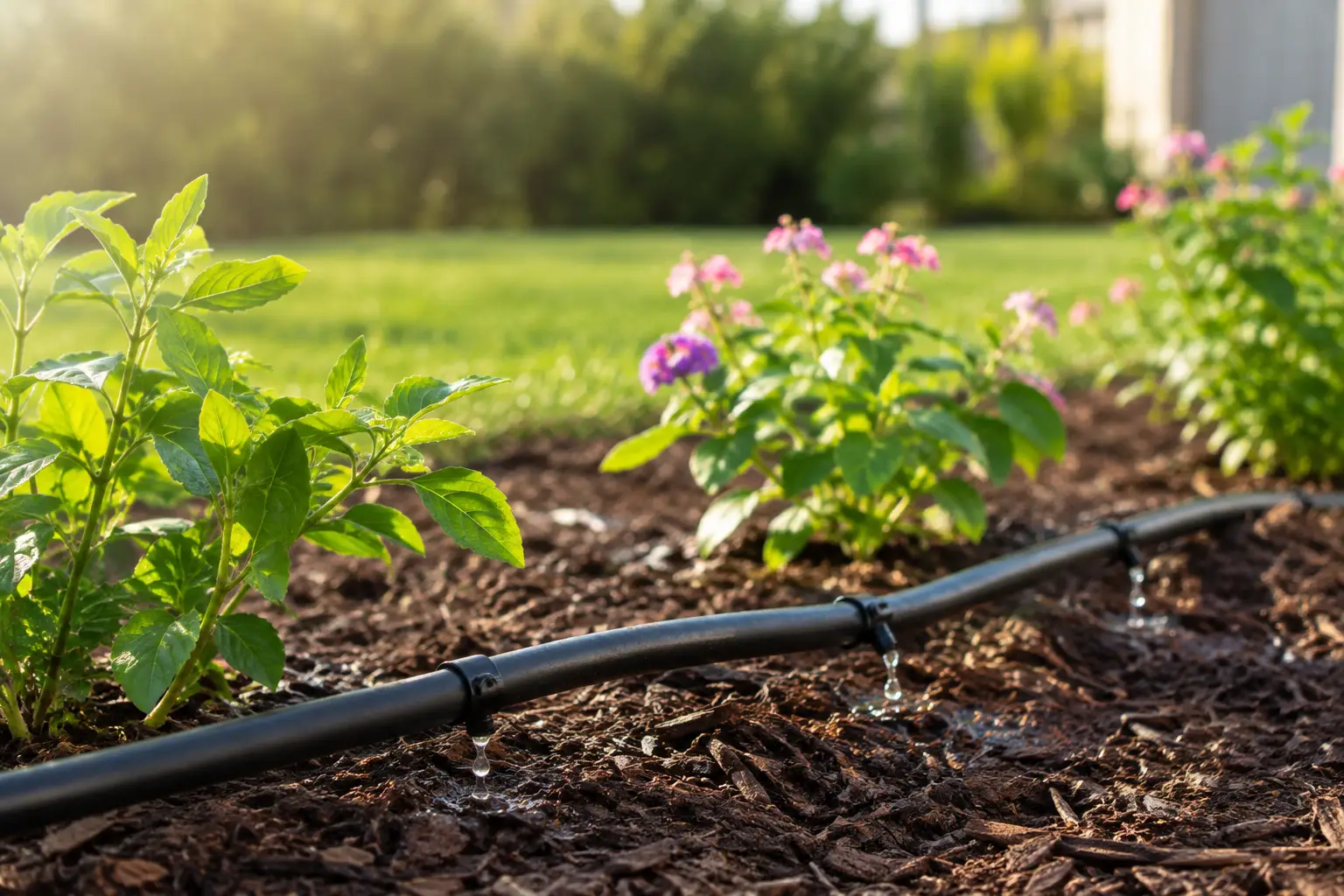
Drip irrigation delivers water slowly at soil level. It is usually the best choice for planting beds, hedges, fruit trees, ornamental trees, and many Mediterranean-style plantings. Because the water goes directly into the root zone, there is less evaporation and less water landing on leaves, fences, decks, or walkways.
The layout matters. A new shrub may need one or two well-positioned drippers, while a larger tree needs a wider ring or several outlets spread around the root zone. Placing every dripper close to the trunk encourages shallow roots. As plants grow, the irrigation should grow with them.
Drip lines also need protection. They should be secured properly, kept clear of sharp stones, and covered with mulch where appropriate. Mulch helps hold moisture in the soil, reduces weeds, and makes the irrigation less visible without burying access points that may need future service.
Sprinklers for Lawn Areas
Lawn generally needs even surface coverage, which is where pop-up sprinklers or carefully selected spray heads can work well. The goal is head-to-head coverage: water from one sprinkler should reach the next sprinkler rather than leaving dry strips between them.
This does not mean more sprinkler heads are always better. Too many heads on one zone can reduce pressure and create weak coverage. Poorly aimed sprinklers waste water on walls, paving, and garden furniture. A correctly designed lawn zone uses the right nozzle size, spacing, and run time for the lawn shape.
If a lawn is small, narrow, or surrounded by planting, it may be worth considering whether turf is the best use of that area. A combination of planting beds, stepping stones, gravel, or groundcover can reduce water demand and maintenance without reducing the garden’s appeal.
Separate Zones Make Better Decisions Possible
A zone is a group of irrigation outlets that operate together. Separating zones gives you control. Lawn may need a different schedule from hedges, while potted plants near a sunny patio may need more frequent watering than shaded beds.
A practical residential system may include separate zones for lawn, trees and shrubs, flower beds, and containers. The exact number depends on garden size, water pressure, plant selection, and the layout of outdoor features. More zones add materials and planning, but they also prevent the common problem of overwatering one area to keep another alive.
Design for Pressure, Filtration, and Access
The parts that are hardest to see often determine whether an irrigation system lasts. A controller can have excellent settings, but it cannot compensate for low pressure, blocked filters, incorrect pipe sizing, or damaged fittings.
Before installation, check the available water pressure and flow. This helps determine how many sprinklers or drippers can run on each zone. It also helps avoid a system that looks fine on paper but performs unevenly once it is turned on.
Filtration is especially important for drip irrigation. Small particles can block emitters over time, leaving plants dry even though the system appears to be operating. A proper filter, pressure regulator where needed, and accessible valves make maintenance simpler and protect the system.
Valve boxes should be placed where they can be reached without disrupting the garden. Hiding everything completely may look tidy on installation day, but inaccessible valves create frustration when a repair is needed. Good work balances a clean finish with practical access.
Choose a Controller You Will Actually Use
An automatic controller is useful only if it is programmed for real conditions. A basic timer can be an excellent option for a straightforward garden, especially when zones are clearly labeled and seasonal adjustments are easy to make. Smart controllers can offer more flexibility, but they still need sensible setup and occasional checks.
Avoid setting one schedule and forgetting it for the year. Plants need different watering patterns in spring, peak summer, fall, and winter. After rain, watering may need to be reduced or paused. Newly planted gardens often need more frequent, shorter watering while roots establish. Once plants are settled, deeper and less frequent watering usually encourages stronger roots.
Watering early in the morning is often the most efficient choice. Less water is lost to daytime heat, and foliage has time to dry. Evening watering can work in some situations, but regularly wet leaves overnight may encourage plant disease in dense planting areas.
Installation Details That Prevent Expensive Repairs
Quality installation is visible in the small decisions. Pipes should be routed thoughtfully around future construction and planting areas. Fittings need to be secure, sprinkler heads set at the correct height, and drip lines tested before beds are fully finished.
After the system is installed, every zone should be run and inspected. Check that sprinklers pop up fully, water reaches the intended lawn edges, drippers are flowing, and no leaks appear at connections. Adjust heads before they begin watering a fence or deck every morning.
It is also smart to document the system layout. A simple plan showing valve locations, zone names, main lines, and irrigation routes can save time years later when adding a tree, installing a fence, or repairing a damaged section. This is particularly valuable in gardens that include custom pergolas, decks, outdoor kitchens, or play structures, where future work may involve digging or anchoring into the ground.
Give the System Seasonal Attention
Even a well-built irrigation system needs care. Filters should be cleaned, drip lines checked for blockages or damage, and sprinkler heads cleared of soil and grass. A leaking fitting may seem minor, but slow leaks can waste water, soften nearby soil, and affect plant health.
Watch the plants as well as the controller. Yellowing leaves, dry edges, weak growth, or unusually fast weed growth can reveal an irrigation problem. The cause may be a blocked dripper, a broken pipe, excessive watering, poor drainage, or a planting choice that does not suit the location.
A garden maintenance visit is a good time to review irrigation performance. Pruning can change shade patterns, a growing hedge can block sprinklers, and seasonal planting can alter water needs. Irrigation should support the garden as it develops, not remain frozen in the layout from its first day.
When Professional Planning Is Worth It
A simple container garden may only need a basic timer and a few drippers. A larger family garden with lawn, mature trees, planting beds, decking, shade structures, and different levels benefits from a complete plan. The more features a garden includes, the more valuable it is to have one team coordinate the design, installation, planting, and future maintenance.
Creative Garden Co. approaches irrigation as part of the finished outdoor experience, not an afterthought hidden below the soil. That means considering where children play, where families entertain, how paths and carpentry features will be built, and how each planted area will be cared for in the seasons ahead.
The best irrigation system is one you barely notice because the garden simply looks healthy, tidy, and ready to enjoy. Give it a thoughtful start, check it as the garden changes, and it will quietly do one of the most important jobs in your outdoor space.