Patio paving Southern Israel homeowners choose should do more than look good on installation day. It should handle strong sun, high summer temperatures, wet feet and regular cleaning. It also needs to suit the way your household uses the garden. For most homes, start with a durable, non-slip surface in a mid-to-light tone. Then pair it with a well-prepared base and a clear drainage plan.
However, no single material suits every garden. Porcelain, concrete pavers and natural stone each offer useful benefits. Your layout, shade, budget, maintenance expectations and preferred style should therefore guide the final choice.
Start with how the patio will be used
Before comparing finishes, decide what the paved area must do. A small route from the back door has different needs from a large dining terrace. Likewise, a family seating area under a pergola needs a different layout from an exposed sun terrace.
Consider these questions early. They can help you avoid choosing a surface from a showroom sample alone.
- Will the patio support dining, lounging, children’s play or access around the house?
- How much direct afternoon sun reaches the area?
- Will a pergola, shade sail or mature tree shade part of the paving?
- Do you need a level route for a pushchair, outdoor furniture or frequent trips between the house and garden?
- Will soil, leaves, barbecue spills or irrigation overspray reach the surface?
- Do you prefer a clean contemporary look or a more varied natural finish?
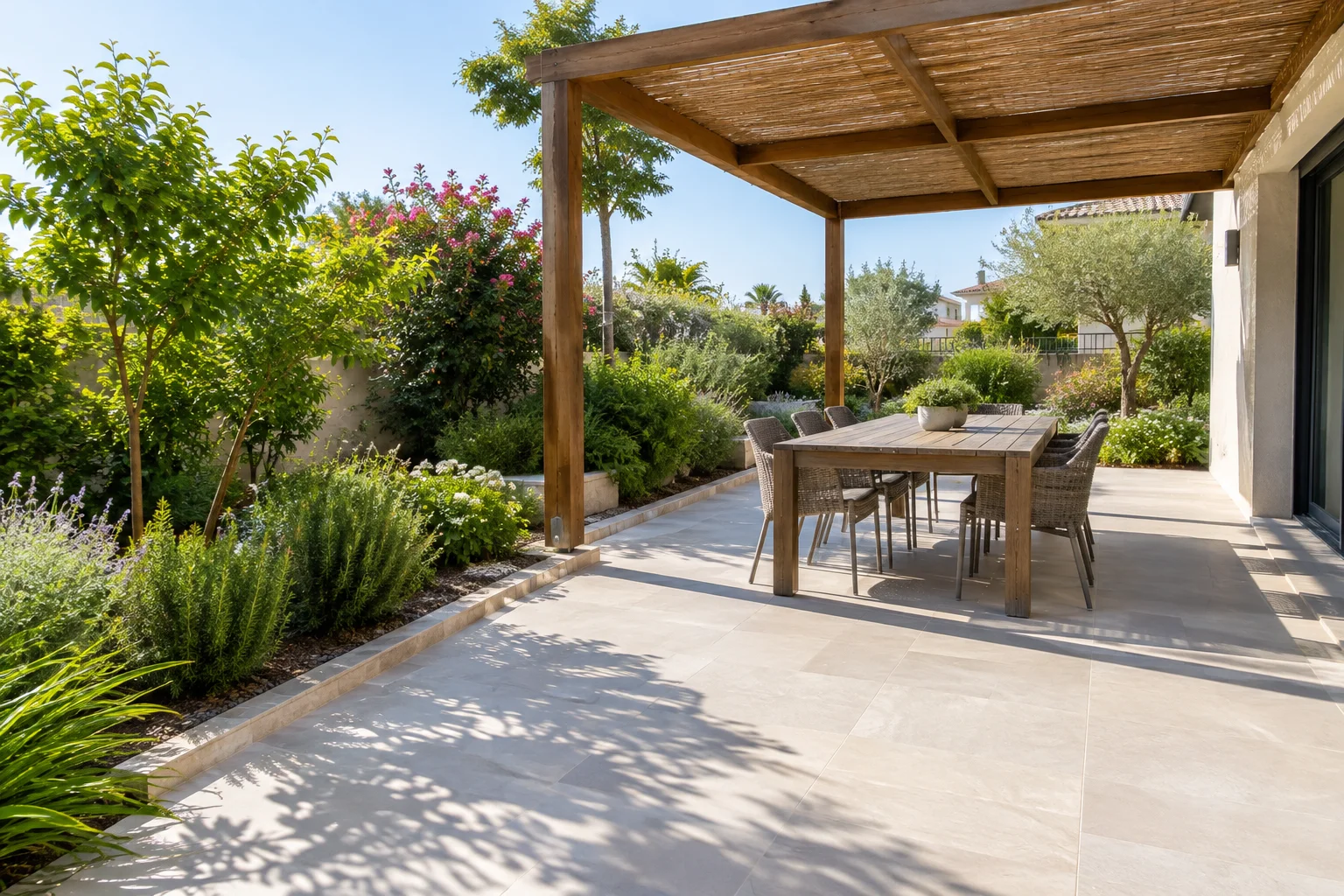
For example, a main outdoor dining patio needs clear space behind every chair. It should also connect directly to shade. Read our guide to planning shade for a south-facing garden when deciding where the seating area belongs.
How sun and heat affect patio paving in Southern Israel
In a hot, sunny garden, colour and exposure affect everyday comfort. Dark paving often absorbs more heat in direct sun. Very pale paving may also create noticeable glare. Therefore, warm mid-tones, soft greys and stone shades often offer a practical middle ground.
Texture matters too. A polished or very smooth surface may look sleek. However, it can feel less secure when wet. Choose an outdoor finish with suitable grip, especially near kitchens, taps, pools or irrigation areas.
Shade changes the decision, but it does not remove the need for a suitable surface. For instance, a pergola can make a sunny patio more useful at lunch or in the afternoon. Still, exposed edges and access paths will remain hot. Therefore, view samples outdoors at different times before you confirm a colour.
Porcelain paving: a clean, low-maintenance option
Outdoor porcelain suits homeowners who want a crisp, consistent finish and simple routine cleaning. It comes in many colours and can resemble stone or concrete. Yet it keeps a more uniform appearance. In addition, large-format porcelain can make a compact garden feel calmer because it has fewer visible joints.
When porcelain is a good fit
- You prefer a modern or minimal garden design.
- You want a surface that is easy to sweep and wash down.
- You want the patio to coordinate closely with contemporary house finishes.
- You are happy to choose an outdoor-rated, textured finish instead of a glossy one.
Porcelain needs careful installation. The installer must create a stable base and accurate levels. They must also set falls that guide water away. Poor preparation can damage any paving project. However, large-format tiles show uneven support or rushed setting-out quickly.
Also, inspect the finish in sunlight. Some porcelain ranges look brighter or more reflective outside than indoors. As a result, ask to see a full sample panel rather than one small piece.
Concrete pavers: flexible, practical and easy to repair
Concrete pavers offer a practical choice for patios, paths and mixed-use garden surfaces. They come in many shapes, sizes and colours. As a result, they can support a formal grid or a more traditional paving pattern. They also help a patio flow into a path, driveway edge or separate seating zone.
A key benefit is flexibility. Contractors can lift and replace individual units when they need access to underground services. They can also repair a small damaged area without disturbing the whole patio. Consequently, this approach can help where irrigation lines, lighting cables or drainage parts run below the surface.
What to consider with concrete pavers
Concrete pavers have joints, so those joints need attention. Over time, wind-blown soil, weeds and organic debris can collect in them. Therefore, regular sweeping and occasional weeding will keep the patio looking sharper. Installers should also secure jointing and edge restraints properly to keep the paving stable.
Colour selection deserves care. Very dark concrete can feel hot in an exposed sitting area. On the other hand, heavily textured or patterned options can make a small patio look busy. Therefore, a simple paver in a calm, mid-light colour is often easier to live with.
Natural stone: character with more variation
Natural stone can give a patio texture, colour variation and a less uniform finish. It often suits gardens with planted borders, rendered walls, timber features or a softer established style. However, each stone type and finish performs differently. The specific product matters more than the broad label “natural stone.”
Choose stone with a suitable outdoor texture. Then ask how you should seal, clean and maintain it. Some stones need more care than porcelain or standard concrete pavers. In return, their natural variation can hide small marks and dust better than a perfectly uniform surface.
Stone works best when its character plays a central role in the garden design. It suits homeowners who accept variation as part of the result. Conversely, it may not suit someone who wants perfectly even colour across every slab.
Drainage and base preparation are part of the patio
Attractive patio paving Southern Israel gardens can rely on involves more than the visible surface. The ground below determines whether the patio stays stable and moves water as planned. First, assess site levels, existing ground conditions and the relationship with the house threshold.
The finished surface should fall gently toward a planned drainage route. It should not hold water against the building or leave puddles in the seating area. The exact approach depends on the site. For example, it may use falls across the paving, drainage channels, gravel areas or a combination.
In addition, plan irrigation before construction ends. It is much easier to position sleeves, pipes and access points during the work. Otherwise, you may need to lift new paving later. Keep irrigation heads away from the patio where possible. Repeated overspray creates extra cleaning and can make the surface slippery.
Do not overlook edges and changes in level
A patio needs a clean edge where it meets planting, lawn or gravel. Edging retains the surface and gives beds a defined boundary. Meanwhile, make every step, retaining edge and level change clear and comfortable to use.
During a renovation, you may need to correct awkward levels from earlier paving. Our garden renovation and transformation service can coordinate paving, planting, shade and circulation. As a result, the garden can feel considered rather than like a series of separate upgrades.
Plan the patio as part of the whole garden
A patio works best when it relates clearly to the house and wider garden. The main route from indoors should feel direct. Likewise, seating needs shade where you need it most. Planting can soften hard edges without blocking movement. Lighting can also make the space easier to use after sunset.
In a compact garden, one well-sized patio often works better than several small paved patches. It gives the garden a clear purpose and preserves space for planting or lawn. In a larger garden, separate paved zones can work well. For example, you might place a dining terrace by the house and a quieter seat farther into the garden.
Try not to pave every available metre just to reduce maintenance. Hard surfaces still need sweeping and cleaning. More importantly, an all-paved garden can feel harsh in summer. Planting beds, trees and shaded areas add comfort, colour and a softer view from inside the home.
A simple checklist before choosing patio paving
- Mark the furniture layout. Check chair clearance, walkways and door openings before setting the patio size.
- Watch the sun. Note morning, midday and late-afternoon exposure. Then plan shade alongside the paving.
- Take samples outdoors. View possible colours in direct sun, shade and wet conditions.
- Confirm the surface texture. Choose an outdoor, non-slip finish that suits the patio’s use.
- Discuss levels and drainage first. Do this before you commit to a material or patio shape.
- Coordinate services. Plan irrigation, lighting and future outdoor features before the team installs the base.
- Set a maintenance expectation. Decide whether you prefer an easy-clean finish or a more natural surface that needs extra care.
Get the material and layout decisions working together
The best patio paving Southern Israel homeowners can choose fits the garden’s daily use, sun exposure and wider layout. Porcelain can suit a clean, contemporary terrace. Meanwhile, concrete pavers offer flexibility and practical repair options. Natural stone brings texture and character when you welcome variation and its care needs.
Creative Garden Co. can help you plan a patio as part of a complete garden design and installation project. We consider usable space, levels, drainage, shade, planting and materials together. As a result, the finished patio can support the way you want to live outdoors. Get in touch to discuss a new garden or a more practical renovation for your existing space.