Irrigation zones help Southern Israel homeowners plan a healthy garden without wasting water. The basic rule is simple: place plants with similar watering needs on the same valve. Keep unlike areas separate. For example, lawn, trees, flowering pots and low-water shrubs rarely need the same water amount or irrigation method.
This decision matters even more in hot, sunny gardens. A single timer setting cannot serve every part of the garden well. Instead, a zoned system lets you adjust watering as plants establish, seasons change and shade develops.
What are irrigation zones?
An irrigation zone is part of a watering system with its own valve. When that valve opens, only its connected sprinklers or drip lines run. Therefore, each zone can have its own schedule, run time and, in many systems, start time.
Good irrigation planning groups areas by their real water needs. It also considers the irrigation method, water pressure, sun exposure, soil and slope. As a result, irrigation zones should not simply follow which garden beds sit close together.
For example, a small natural lawn may need sprinklers on one zone. A nearby border of established, low-water shrubs can use a separate drip zone. Although the areas sit side by side, combining them can give one too much water or too little.
Start with the garden layout, not the pipes
Before choosing valves, drippers or sprinkler heads, draw a simple garden plan. Mark the house, patio, paths, lawn, planting beds, trees, pots and future features such as a pergola. This step helps you understand how the space will work before workers bury pipes.
Next, note areas with strong afternoon sun, morning sun or lasting shade. Also identify slopes, raised planters and places where soil dries quickly. In practice, these conditions can matter as much as plant names.
Planning irrigation with the whole garden prevents awkward compromises later. For instance, it is easier to run irrigation before paving, decking or dense planting goes in. If you are still deciding on the layout, our guide to garden design in Southern Israel explains why planting, shade and practical construction work best as one coordinated plan.
List every area that needs water
First, make a short list before deciding how many valves you need. Most residential gardens include some combination of the following:
- Natural lawn.
- New trees and established trees.
- Flowering beds, shrubs and ground cover.
- Low-water planting.
- Vegetable beds, herbs or fruit trees.
- Raised planters and containers.
Not every item needs its own zone. However, the list reveals important differences. A raised planter can dry faster than an in-ground bed, while a newly planted tree often needs different care from mature shrubs nearby.
How to group irrigation zones
The most useful approach is to group plants and surfaces that need similar treatment. In practice, consider water demand, irrigation method and site conditions together.
Keep natural lawn separate from planting beds
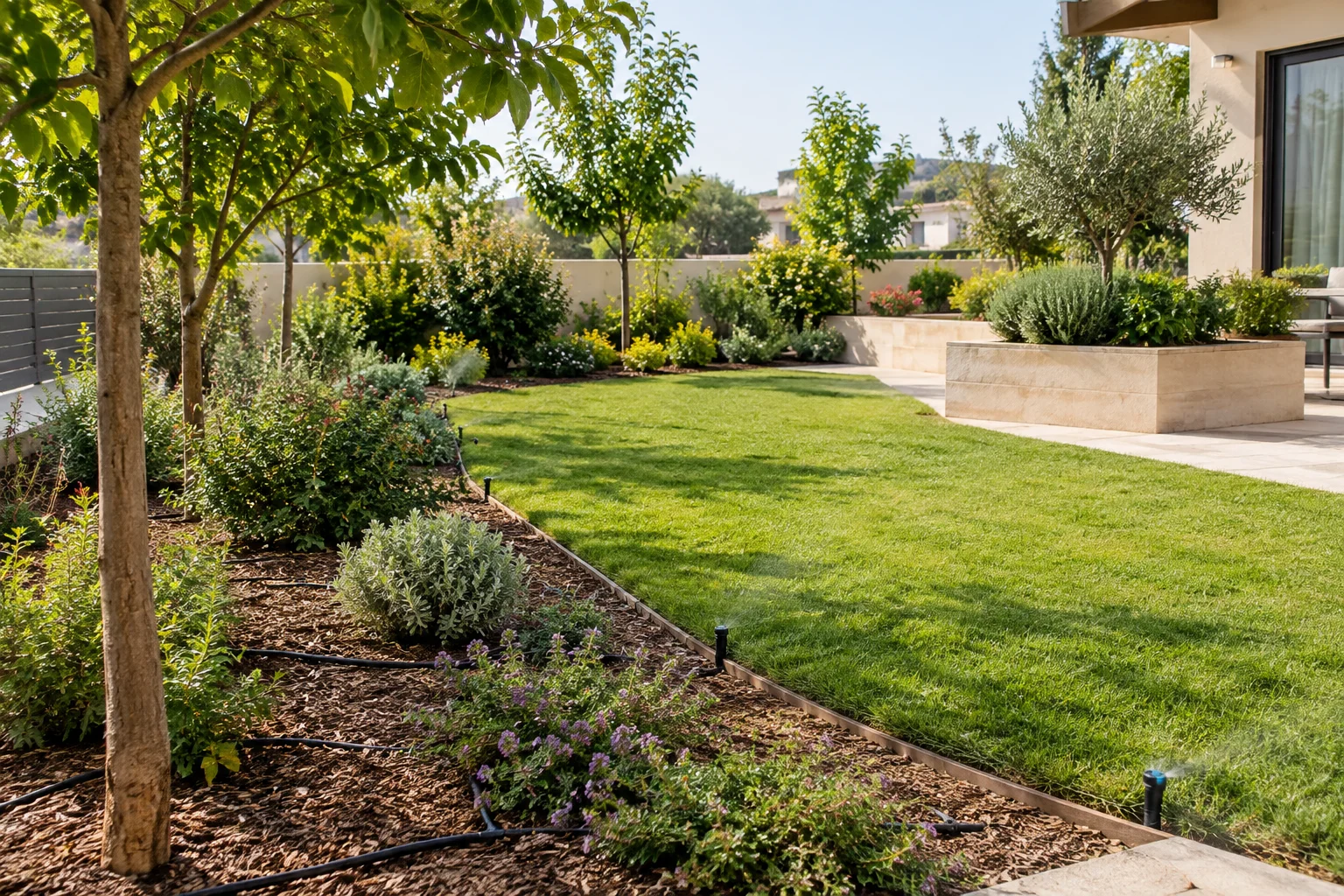
Natural grass generally needs even coverage across its root area. Therefore, sprinklers often suit lawns because they water a broad surface. By contrast, planting beds commonly suit drip irrigation that delivers water close to the soil.
For that reason, separate lawn and planting zones are usually the sensible choice. Drip lines in a lawn do not give the same surface coverage as sprinklers. Meanwhile, regular sprinkler watering over shrubs can wet paths, walls and foliage unnecessarily.
If you are deciding where each method fits, read our practical comparison of drip irrigation and sprinklers in Southern Israel. Many gardens use both methods. However, they should operate as separate zones.
Separate low-water plants from thirsty planting
Low-water planting should not share a valve with plants that need more frequent or longer watering. Otherwise, tougher plants receive more water than they need to keep the thirstier area going.
This distinction becomes especially useful after plants establish. For example, drought-tolerant shrubs, Mediterranean-style planting or hardy ground cover can often run less often than seasonal flowers, vegetables or lush screening plants. Choosing suitable plants early also makes zoning easier. See our guide to low-water plants for Southern Israel gardens for planning ideas.
Consider trees by age and location
Newly planted trees need regular, targeted watering while they establish. Mature trees often have broader, deeper root systems and may need a different schedule. Therefore, a young tree row may not suit a mature garden border.
Location matters too. For instance, trees beside a hot wall or in open afternoon sun may dry out differently from trees in a sheltered corner. Group trees together only when their age, exposure and surrounding planting are broadly similar.
Treat pots and raised planters as special areas
Containers and raised planters have limited soil volume. As a result, they can dry much faster than in-ground planting. They often work best on a dedicated drip zone, particularly with herbs, vegetables or flowering plants.
A separate zone gives you control without overwatering the rest of the garden. It also makes seasonal changes easier. For example, you may water a productive herb bed differently from an ornamental border.
Plan irrigation zones for sun, soil and slope
Plant categories alone do not create reliable irrigation zones. For example, two similar shrub beds may need separate schedules when one faces intense afternoon sun and the other stays shaded for much of the day.
Sun and shade change watering needs
Full-sun areas lose moisture faster, especially during hot periods. However, extra water is not always the best answer. Mulch, suitable plant selection and shade from trees or structures can also help manage moisture loss.
Shaded areas usually dry more slowly. If they share a schedule with a hot, exposed bed, they can remain too wet for too long. For this reason, assess the garden as you will use and plant it, not only as it looks on installation day.
Soil affects how quickly water moves
Some soils absorb water slowly, while others drain quickly. Consequently, slow absorption can cause runoff when a zone runs too long at once. In that case, shorter watering cycles with pauses may work better than one long run.
Fast-draining soil may need a different approach, especially around new planting. Instead, observe how water behaves on site rather than relying on a fixed schedule. Puddles, runoff and dry patches can show that a zone needs adjustment.
Slopes need careful zoning and timing
Water moves downhill. As a result, a slope can leave upper plants dry while sending excess water towards the lower edge. Keep sloped sections separate where possible. Also avoid running them so long that water flows across the surface.
In addition, place drip lines and emitters so water reaches the root area. Do not let water simply follow the easiest path downhill. Consider ground levels, drainage and irrigation together before landscaping begins.
How many irrigation zones does a garden need?
There is no useful universal number. For example, a compact garden with synthetic grass, a few low-water beds and pots may need only two or three zones. A larger garden with natural lawn, trees, exposed borders, shaded planting and containers may need several more.
The right number comes from differences in plant needs and irrigation methods, not from a desire to keep the system simple. Too few zones remove control. On the other hand, a separate valve for every small group can make a system needlessly complex.
A practical starting point could include:
- One sprinkler zone for natural lawn.
- One drip zone for general shrubs and ground cover.
- One drip zone for low-water planting.
- One zone for young trees, productive beds or containers when their needs differ.
Water pressure also affects the answer. Every zone needs enough pressure and flow for its sprinklers or drippers to work properly. Otherwise, running too many heads or too much drip line together can cause uneven results. A site assessment helps establish sensible zone sizes before installation.
Common irrigation-zoning mistakes to avoid
Many watering problems start with a reasonable idea applied too broadly. Therefore, avoiding these common mistakes can reduce water waste and make future maintenance easier.
- Putting lawn and drip beds on one zone: they usually need different delivery methods and schedules.
- Grouping plants only by proximity: nearby plants may have very different water needs.
- Ignoring future shade: young trees and a new pergola can change sun exposure over time.
- Using one schedule all year: watering needs change with weather, growth and plant establishment.
- Forgetting access to valves and filters: hidden components are harder to inspect and maintain.
- Designing around the current garden only: allow for planned beds, trees or paving before installing pipework.
Even a well-planned system needs occasional checks. For example, blocked drippers, leaks, overspray and changed planting can affect performance. Our guide on reducing irrigation water waste explains what to inspect once the system is running.
Review irrigation zones before installation
Before booking garden irrigation system installation, review these decisions with your installer or garden designer:
- Which areas will be natural lawn, planted beds, pots or hard surfaces?
- Which plants need similar watering once established?
- Where are the hottest, shadiest and windiest parts of the garden?
- Are there slopes, raised planters or soil differences to address?
- Will future trees, shade structures or extensions alter the conditions?
- Which areas suit drip irrigation, and which genuinely need sprinklers?
- Where can valves, filters and controllers remain accessible?
- How will you adjust schedules after planting and through the seasons?
Clear answers at this stage make installation smoother and give the garden a better foundation. In addition, they can prevent a common renovation problem. You may otherwise need to lift finished surfaces or disturb established planting to add a missing irrigation line later.
Get professional help with irrigation zone planning
Irrigation zones for Southern Israel homes should reflect the actual site, planting plan and future garden development. A professional visit can identify pressure limits, sun patterns, slopes and practical pipe routes before work starts.
Creative Garden Co. can plan and install a garden irrigation system as part of a new garden, renovation or planting upgrade. We consider irrigation alongside lawn, trees, planting, paving and future maintenance. As a result, the finished system supports the whole garden rather than becoming an afterthought. If you are planning a garden project in Southern Israel, contact us to discuss a practical irrigation layout for your space.