Effective south-facing garden shade starts with the areas you want to use, not with a pergola or sail from a catalogue. In Southern Israel, a sunny garden can feel pleasant for much of the year. However, strong afternoon sun can make an open patio, play area or dining table hard to use. First, plan shade for the times when you spend time outdoors. Then, choose a solution that suits the space, budget and garden style.
A good plan often combines several approaches. For example, a fixed structure may protect the main seating area, while a tree, screen or movable umbrella improves comfort elsewhere. As a result, the garden can stay open and bright while its key areas gain protection.
Start by mapping sun and daily garden use
Before you choose shade for a sunny garden, observe the space on a clear day. Check the garden in the morning, around midday and later in the afternoon. Then, note where sun reaches the patio, doors, windows, lawn, planting beds and existing seating.
South-facing gardens receive plenty of direct light. However, each garden has its own pattern. The home’s shape, boundary walls, neighbouring buildings and mature trees all affect it. For instance, a small wall or house corner may provide useful shade at one time. Later, that same area may sit in full sun.
Next, list how your household uses the garden. A family that eats outside in the evening needs shade in a different place from someone who enjoys morning coffee. Likewise, a children’s play area, outdoor kitchen and clothes-drying zone each need a different approach.
Use a simple shade planning checklist
- Mark the main door and the route from the house to the garden.
- Identify where people sit, eat, cook, play or work outdoors.
- Record the areas that become uncomfortable during the hottest part of the day.
- Consider window glare as well as heat on the patio.
- Keep sunny areas for plants that suit full sun, where appropriate.
- Check where future trees can grow without blocking paths, drains or useful views.
These observations give a garden designer better information than a simple request for “more shade.” They also help you avoid a common mistake. For example, homeowners sometimes cover an area they rarely use while the main seating area stays exposed.
Put permanent shade over the highest-use area
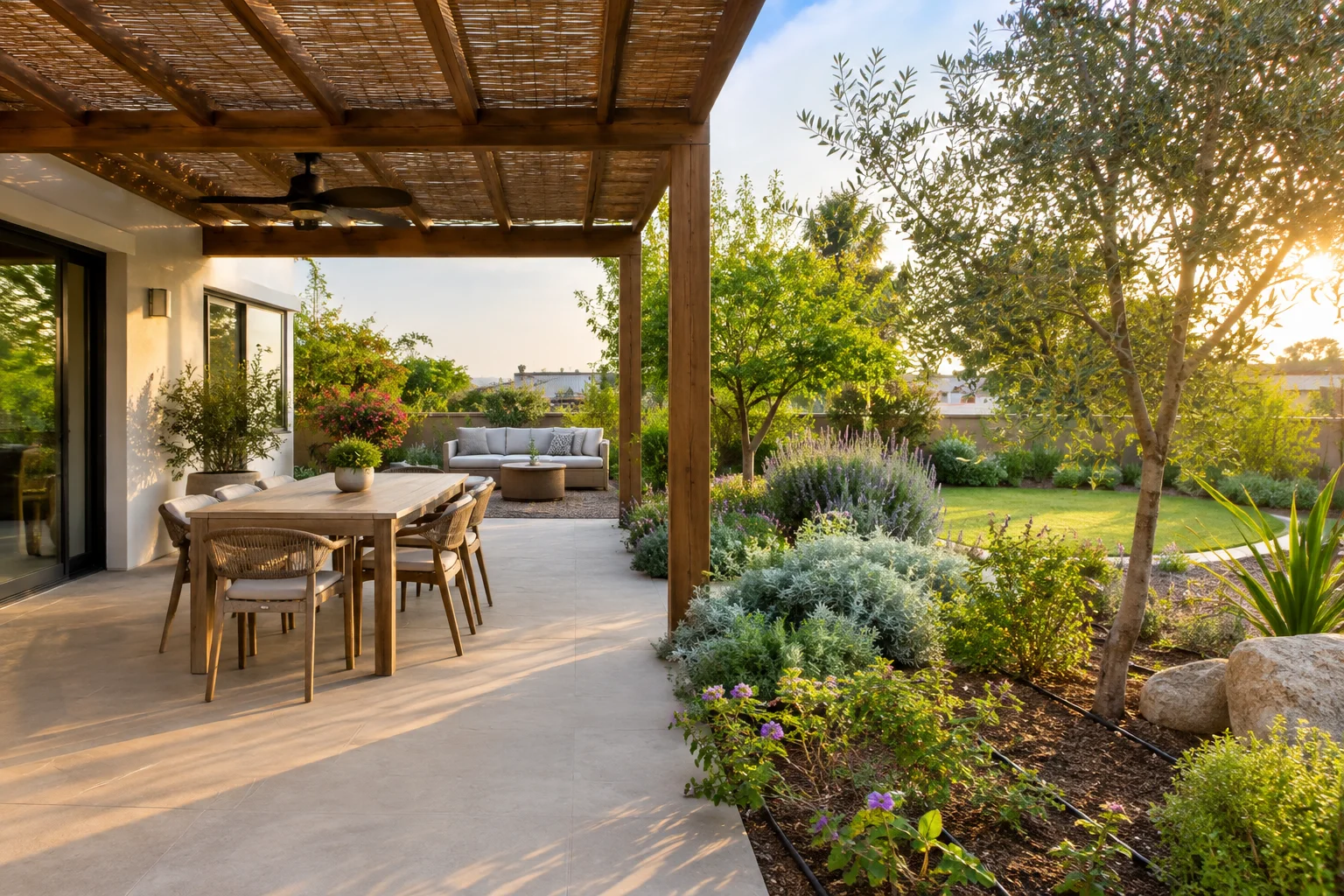
For most homes, start with the patio outside the house. You can easily reach this space with food, drinks and furniture. Therefore, create dependable shade there before you improve less-used parts of the garden.
A patio cover can also limit direct sun at nearby doors and glazing. However, consider the daylight inside before you extend the cover. Aim for a comfortable link between the home and garden, rather than a dark room behind a heavy structure.
Place the dining table, lounge seating or outdoor kitchen within the shade footprint. Do not place it at the edge. Sun angles change through the day and year. As a result, a generous-looking cover on a plan may give less useful shade at certain times.
In a larger garden, add a second shaded destination away from the house. For example, you might choose a bench under a tree, a small reading corner or a covered lounge area. This feature can make the garden feel larger and encourage use at different times.
Pergola, shade sail, trees or screens: choose by purpose
No single solution suits every south-facing garden shade plan. Instead, consider how reliable the shade must be, how close the area sits to the house and how much wind it receives. Also consider the look you want for the garden.
Pergolas for a defined outdoor room
A pergola often suits a main patio, dining area or built-in outdoor feature. It can define an outdoor room and support lighting, curtains, screens or climbing plants where appropriate. In addition, its form can link the garden visually with decking, planters and fencing.
However, a pergola needs careful placement and proportions. Open slats provide filtered shade rather than full cover. Their direction and spacing determine how much sun reaches the space below. A solid or denser roof offers more protection, but it can reduce indoor light and change the feel of the patio.
If you are considering a fixed structure, explore the practical design options with a custom pergola builder in Kiryat Gat. A tailored layout can account for doors, boundaries, patio dimensions and your household’s routine.
Shade sails for flexible coverage
A shade sail can suit a garden where you want a lighter look or need to cover an awkward shape. For example, it may work over a play space, side patio or temporary seating zone. Angled sails can also create a modern appearance.
On the other hand, a sail needs well-planned fixing points and proper tension. Do not simply stretch fabric between convenient posts. Instead, consider exposure, drainage and how you will manage the sail when conditions change. Read our practical comparison of pergola versus shade sail durability before you choose between these options.
Trees for living shade and softer garden structure
Trees provide valuable living shade, soften hard surfaces and make a hot garden feel less stark. They work especially well beside seating, along a sunny boundary or near a lawn. However, trees need time to establish. Therefore, do not rely on them as the only shade source for a new patio.
Choose and position trees for their eventual size, root space, canopy form and maintenance needs. In addition, leave room for access and irrigation around the planting area. A tree too close to a wall, paving or a small patio can become hard to manage as it matures.
Screens for low-angle sun and privacy
Overhead shade cannot solve every comfort problem. In particular, late-day sun can enter from the side when people sit under a pergola or sail. A vertical screen, planted boundary or carefully placed fence panel can reduce glare and improve privacy.
Use screens selectively so the garden still feels open. For more ideas on combining boundary treatment and planting, see our guide to creating privacy in a sunny Southern Israel garden.
Plan surfaces, planting and irrigation around the shade
Shade planning affects more than seating comfort. Paving, decking and artificial grass can become unpleasantly hot in direct sun. Therefore, consider material colour, texture and location. Where possible, review a sample in the garden itself. A shaded dining area can also make furniture and rugs more comfortable to use.
Meanwhile, match planting to the light available after you add a structure. Do not put full-sun plants under a dense roof and expect them to thrive. Instead, reserve sunny beds for suitable plants. Use the shaded edges for species that tolerate part shade.
New trees and planting beds still need a sensible watering plan while plants establish. Separate irrigation zones can help because shaded planting often dries at a different rate from exposed beds. For plant-selection guidance, see these low-water plants for Southern Israel gardens.
Common south-facing garden shade mistakes
- Choosing the structure before studying the sun: An attractive feature can still shade the wrong place.
- Covering only the table: Allow for chairs, movement and changing sun angles around the dining area.
- Ignoring side sun: Add a screen, curtain or planting where late-afternoon glare causes the real problem.
- Making every area shaded: Gardens need a balance of shade, open sky and sunny planting space.
- Forgetting maintenance access: Leave room to prune plants, clean surfaces and reach irrigation components.
- Treating a visual concept as a construction drawing: A visualisation can compare layouts, but site measurements and construction decisions still matter.
Bring the shade plan into the overall garden design
The best south-facing garden shade plan supports the whole layout. Patio size, pathways, planting beds, irrigation, views from inside and outdoor carpentry should work together. Consequently, planning these elements together often proves easier than adding a large structure after you finish the garden.
Creative Garden Co. helps homeowners in Southern Israel assess sun exposure, plan practical outdoor layouts and install features for everyday life. Whether you are updating an exposed patio or planning a new garden, contact us to discuss a shade plan. Together, you can balance comfort, planting and long-term use.