Choosing a garden maintenance service in Kiryat Gat involves more than finding someone to mow a lawn or cut back shrubs. The right provider should understand your garden’s needs through the year. They should also explain each visit clearly. In addition, they can help prevent weeds, dry growth and irrigation issues from building up.
For most homeowners, the best choice combines a clear routine with flexibility. Before you commit, compare visit frequency, work scope, seasonal tasks, communication and the quote. Do not focus only on the lowest price.
Start with the condition and complexity of your garden
A small garden with hardy plants and synthetic grass needs a different routine from a larger garden. The larger space may include natural lawn, fruit trees, dense borders and several irrigation zones. Therefore, a good provider should ask about your garden before recommending a schedule.
First, walk through the space and list areas that need regular attention. Include lawns, hedges, trees, planting beds, pots, paths, artificial grass and irrigation equipment. Also note places where leaves or debris collect. This list helps you compare similar quotes.
Next, separate routine care from work that has built up over time. An overgrown garden may need a one-off clearance or a seasonal garden cleanup first. After that reset, regular visits can keep the space manageable. Otherwise, you may expect one routine visit to solve months of neglect.
What should a garden maintenance service include?
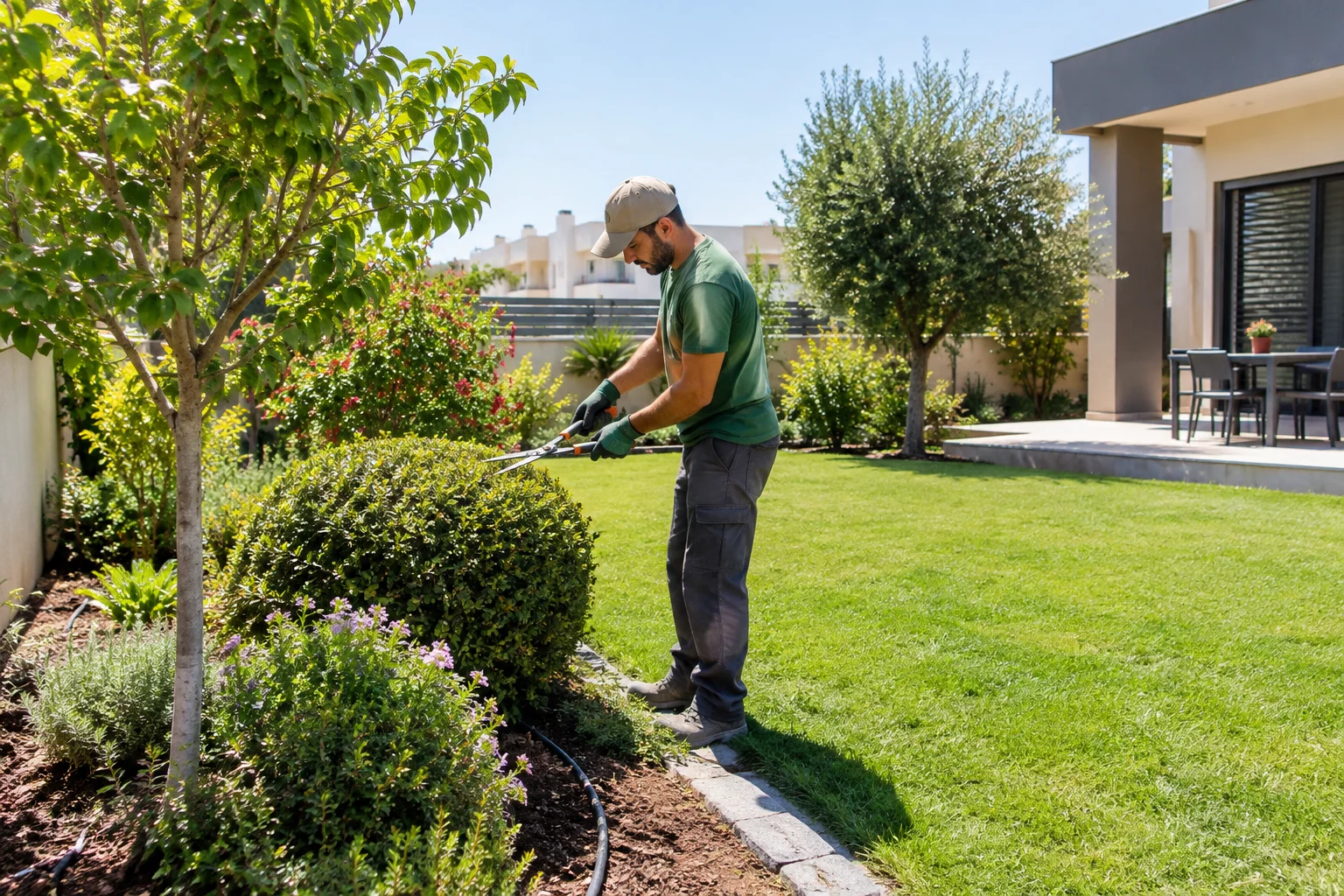
A reliable garden maintenance service should describe its usual tasks in plain language. The exact scope varies by garden and season. However, regular care often covers the following work.
- Pruning and shaping shrubs, hedges and suitable plants.
- Removing weeds from beds, paved edges and other accessible areas.
- Collecting fallen leaves, dry growth and routine green waste.
- Providing basic lawn care when the garden has natural grass.
- Tidying beds, paths and visible outdoor areas.
- Checking for obvious irrigation issues, including damaged emitters, leaks or poor coverage.
That list offers a starting point rather than a fixed promise. For example, mowing matters only when a garden has natural grass. Likewise, careful plant shaping takes longer than cutting everything back. Therefore, ask the provider which areas they will maintain and what finish you can expect.
Ask what routine visits do not cover
Clear exclusions matter as much as inclusions. Major tree work, palm removal, new planting, irrigation repairs, pest treatment and soil improvement may need separate approval. Large waste removal may also need separate approval. However, this detail does not weaken a quote. Instead, it prevents surprises and protects time for routine care.
Pruning also needs a specific conversation. General trimming does not deliver the same result as planned pruning. Ask whether the service can identify plants that need more careful work. Then ask whether they charge for that work separately. You can learn more about planned garden pruning in Kiryat Gat before deciding what your garden needs.
Choose a visit frequency that matches growth and use
No single visit schedule suits every garden. Frequency depends on the planting, lawn type, irrigation, garden size and your preferred level of tidiness. In Kiryat Gat, strong sun and dry periods make irrigation checks especially important. Meanwhile, active growth can create extra pruning and weeding work.
More frequent visits often suit gardens with natural lawn, fast-growing hedges or young planting. They can also suit gardens used often by children, pets or guests. By contrast, a simpler garden with drought-tolerant plants, mulch and little lawn may need fewer visits. Even so, a low-maintenance design still needs observation and seasonal work.
Rather than choosing a schedule on cost alone, ask why the provider recommends it. A sensible answer should relate directly to your garden. Then agree how you will handle changes when growth slows or a season creates extra work.
Check whether irrigation receives proper attention
Watering issues can harm a garden before you notice them from the patio. For example, a blocked dripper can stress one plant. A damaged sprinkler can waste water or soak the wrong surface. Therefore, regular visual checks add real value to garden care.
Routine maintenance may not cover full irrigation repairs. Still, the provider should say whether they will report faults, make minor adjustments or quote for repairs. Also ask who checks timers, irrigation zones and visible leaks. Pay particular attention before and during hotter periods.
If your system shows uneven watering, weak pressure or overspray, address it early. Our guide to common garden sprinkler problems can help you identify whether the issue needs adjustment, repair or a fuller inspection.
Compare garden maintenance quotes fairly
An affordable garden maintenance quote should match the work your garden needs and stay clear over time. A low starting price may not offer a fair comparison. For instance, it may leave out waste removal, lawn care, irrigation checks or enough time for all garden areas.
When you compare quotes, give every provider the same information. Share photos or arrange a site visit. Then describe your preferred visit frequency and mention concerns such as overgrown hedges, struggling lawn or damaged irrigation. Finally, ask for the scope in writing.
Use this quote comparison checklist
- How often will visits take place, and can the schedule change with the seasons?
- Which garden areas will the team cover during each routine visit?
- Does the service cover mowing, edging or synthetic-grass cleaning where relevant?
- Will the team take routine green waste away from the property?
- Does the service cover irrigation checks, and how do you approve repairs?
- Which tasks will the provider charge for separately?
- How will the provider tell you about extra work or a developing issue?
Do not assume that every provider means the same thing by “full service.” Instead, look for a clear description that reflects your garden. This approach makes it easier to choose a garden maintenance service for value and suitability. It also helps you avoid a vague headline price.
Look for practical knowledge, not a one-size-fits-all routine
A capable gardener should adapt the work to the plants, exposure and property layout. For instance, plants in a shaded side passage may need different care from plants in a hot, open bed. Similarly, a young tree needs a different cutting approach from an established hedge.
Ask how the provider manages strong sun, dry growth and water efficiency. The answer does not need technical language. However, it should show that they notice changing conditions and make sensible recommendations. They should not repeat exactly the same work at every visit.
Communication matters too. A provider should explain when a task falls outside the agreed routine. They should give the reason and ask for your approval before doing the work. As a result, you stay in control of your garden maintenance quote while receiving useful input.
Questions to ask before you choose
Use your first conversation to decide whether the service suits your garden. In particular, these questions reveal more than a simple price request.
- What regular maintenance would you provide for this garden?
- How often do you recommend visits, and why?
- What seasonal work should I expect during the year?
- Which tasks fall outside the routine service?
- How do you report irrigation or plant-health concerns?
- Will you remove routine green waste after each visit?
- Can you adjust the routine if the garden changes or we add planting?
Also consider whether the answers address your specific garden. A professional garden maintenance service should explain its approach clearly. It should not make promises that ignore the garden’s condition.
When regular maintenance is not enough
Sometimes a garden needs more than recurring care. Dead or overcrowded plants, poor irrigation coverage and unsafe branches can create ongoing problems. Damaged surfaces or an awkward layout can do the same. In that case, a targeted improvement may make future care simpler and more effective.
For example, you may replace unsuitable plants with better choices, create defined planting beds or repair irrigation. These changes can reduce repeated problems. A maintenance provider should separate routine work from upgrades that need their own planning.
Creative Garden Co. provides garden maintenance in Kiryat Gat for private gardens and changing needs. We can discuss a routine for the practical work your garden requires. We can also identify issues that need separate attention. Contact us to arrange a visit and discuss your garden.