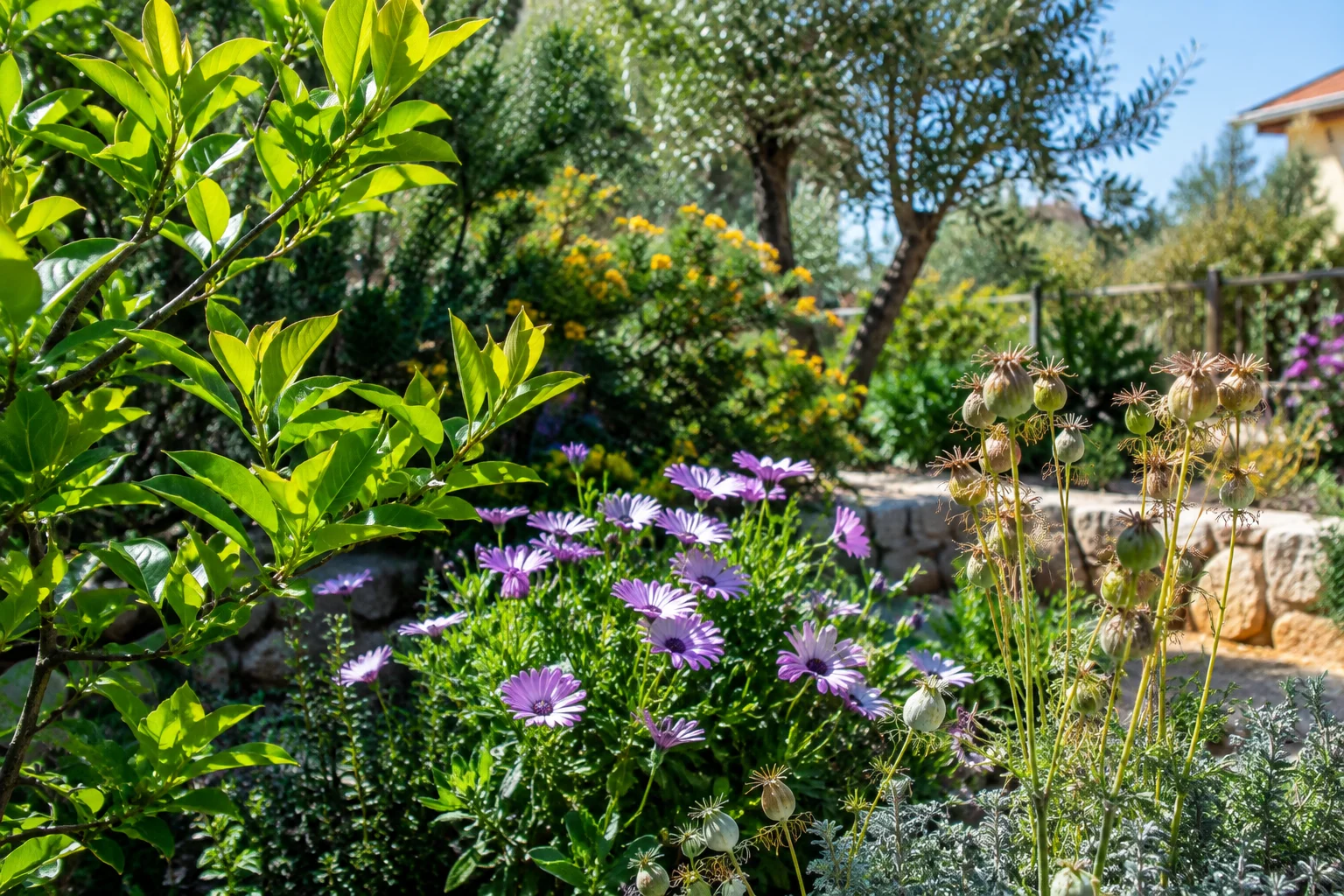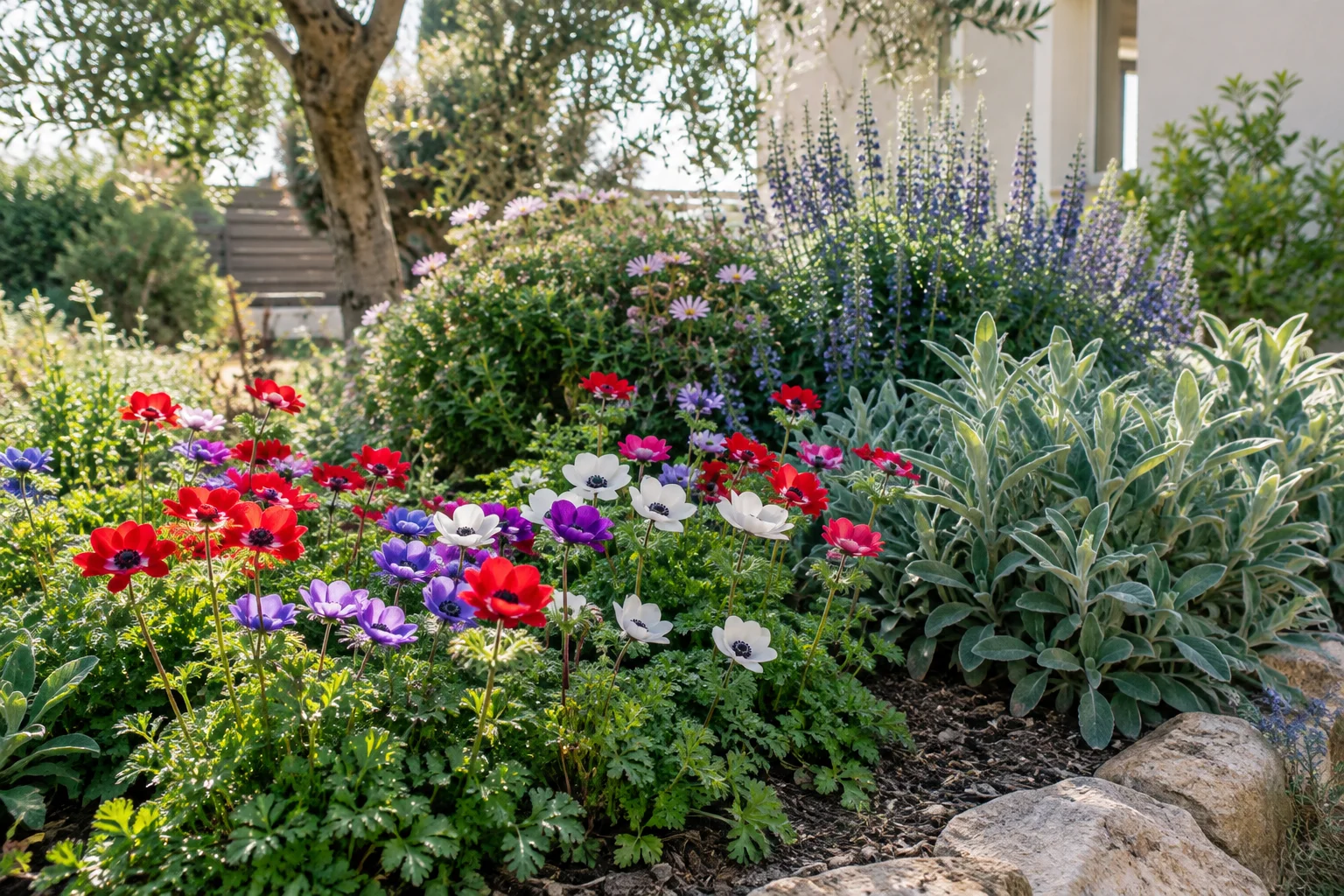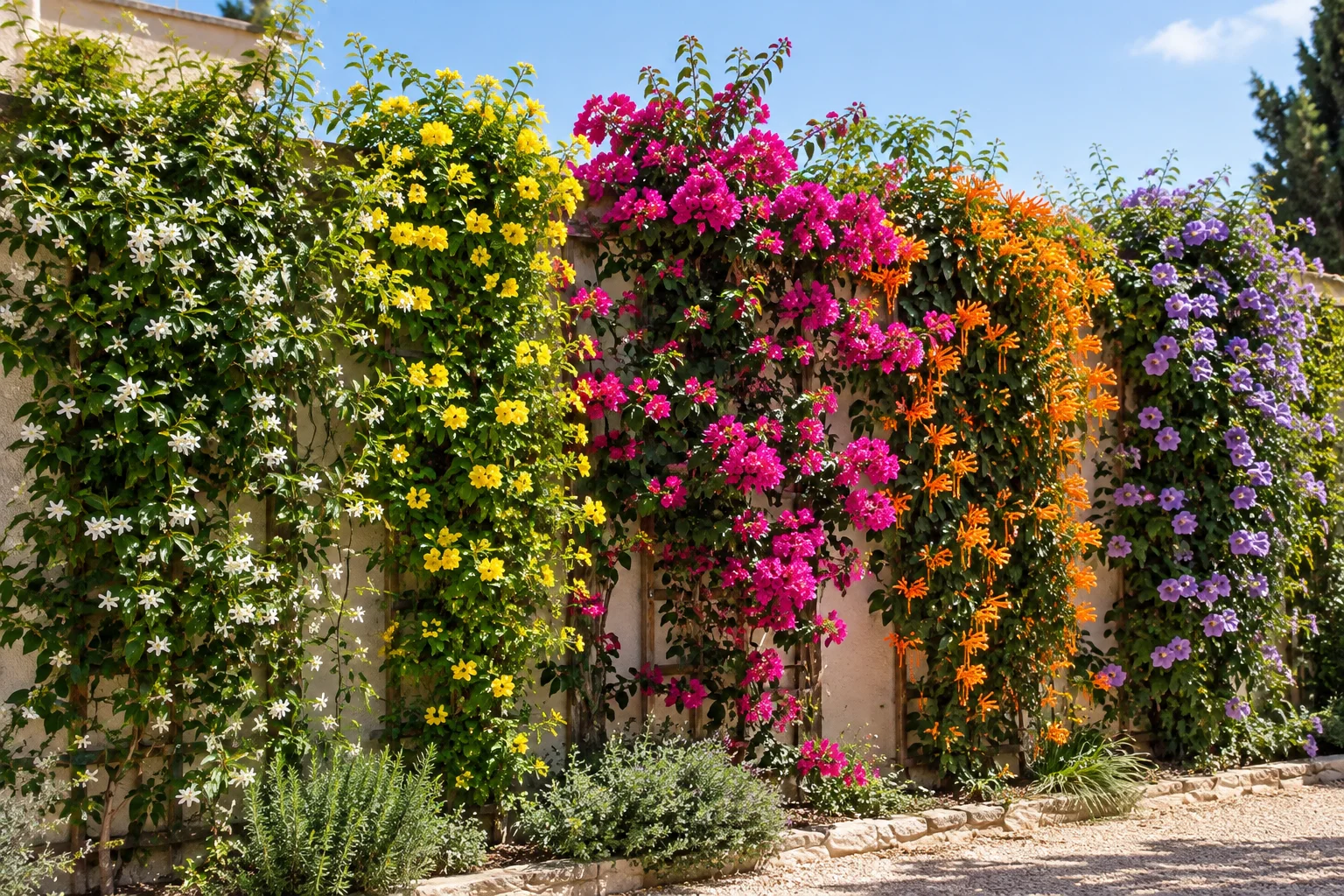
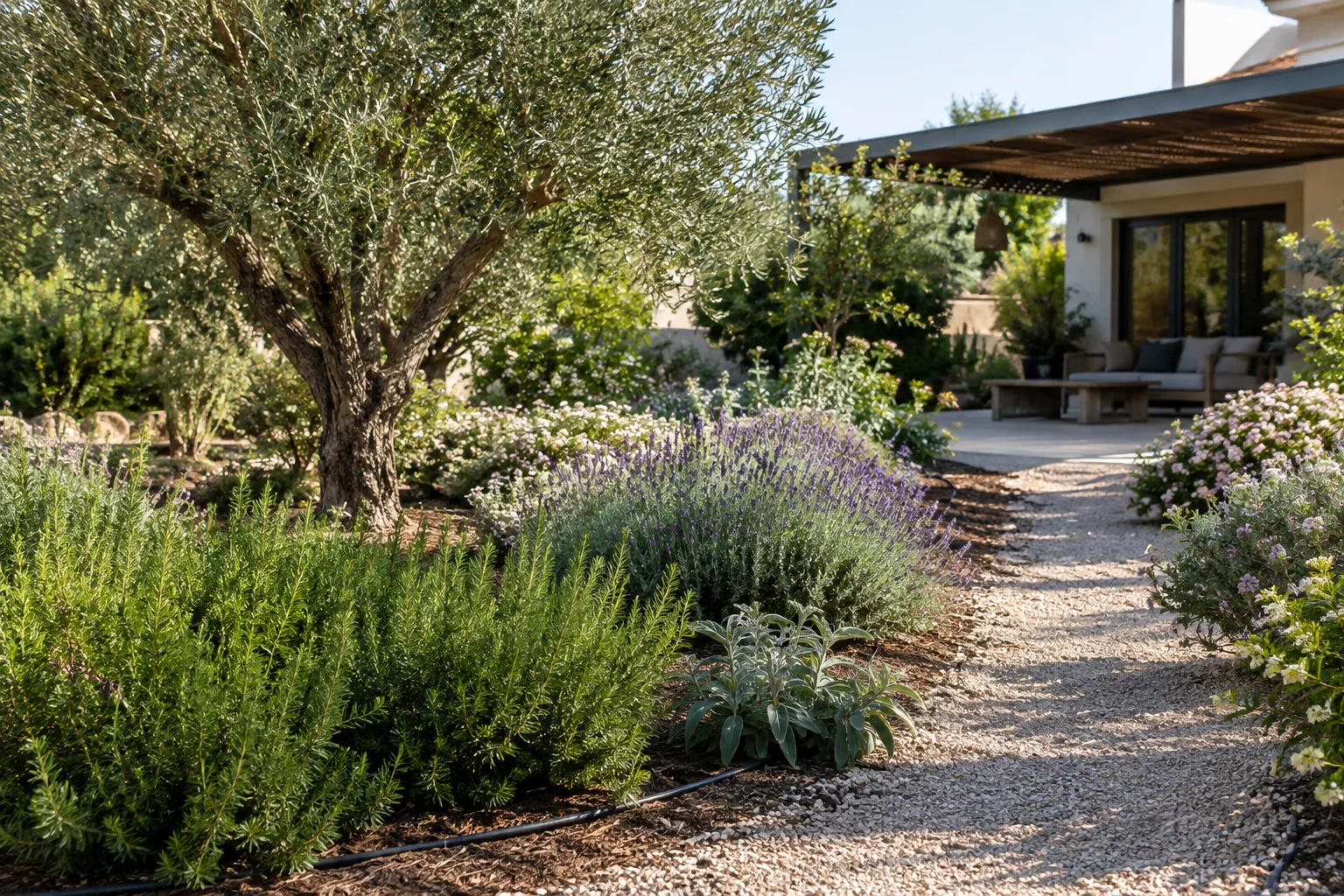
Low-water plants Southern Israel homeowners choose successfully are not simply plants that survive with little attention. Instead, they match the garden’s sun, soil, space and irrigation layout. When these elements work together, a garden can look green, structured and inviting while avoiding unnecessary water use and constant replacement planting.
Strong sun and long dry periods make plant selection especially important. However, a low-water garden still needs a plan. New plants need regular watering while their roots establish. Even drought-tolerant plants perform better when they receive water at the right time and in the right amount.
Start with the garden conditions, not a plant list
Before choosing plants, look at what each part of the garden actually offers. For example, a sunny boundary beside a pale wall can become much hotter than a bed shaded by the house. Likewise, a sheltered courtyard may hold moisture longer than an exposed front garden.
For a useful planting plan, assess the following points:
- Sun exposure: Note full sun, morning sun, afternoon shade and reflected heat from walls or paving.
- Soil and drainage: Compacted soil and poorly drained low spots need attention before planting. Plants that prefer dry conditions can struggle in soil that stays wet around their roots.
- Available space: Check the mature height and width, not only the size of a plant at purchase.
- Garden use: Keep thorny, spiky or sprawling plants away from narrow paths, children’s play areas and seating.
- Existing irrigation: Group plants with similar needs so that one watering zone does not overwater some plants while underwatering others.
This assessment forms the foundation of water-wise garden design in Southern Israel. In addition, it prevents a common mistake. That mistake is placing thirsty lawn plants, shade plants and drought-tolerant shrubs on the same irrigation line.
What “low-water” really means in a home garden
Low-water does not mean no-water. Most trees, shrubs and perennials need consistent irrigation after planting. As a result, their roots can grow beyond the original root ball. The establishment period depends on the plant, season, soil and weather.
After plants establish, suitable species usually need less frequent irrigation than thirsty lawn areas or seasonal bedding displays. Nevertheless, heatwaves, very young plants, containers and exposed sites may require extra attention. Therefore, watch the soil and the plant rather than relying on a fixed rule.
For this reason, drip irrigation is usually a sensible choice for planted beds. It delivers water near the roots and avoids wetting paths, walls and plant foliage. Read our guide to drip irrigation versus sprinklers in Southern Israel to understand where each system works best.
Reliable low-water plant groups for sunny gardens
The best planting palette combines plants with different heights, leaf shapes and flowering times. As a result, it creates a fuller garden than filling every bed with one shrub. The examples below are widely used in hot, sunny Mediterranean-style planting. However, always check availability and suitability for the individual site.
Small trees for structure and shade
A well-positioned tree can become the backbone of a low-water garden. It provides scale, casts useful shade and makes an outdoor seating area feel more settled. However, a tree needs room for its canopy and roots. Therefore, never choose one only for its appearance in a nursery pot.
- Olive: An olive tree offers a classic Mediterranean character and silvery foliage. It suits sunny, well-drained positions and works well as a feature tree or in a relaxed, natural planting scheme.
- Pomegranate: Pomegranate can bring flowers, seasonal interest and fruit to a sunny garden. In addition, allow space for occasional pruning to maintain a practical shape.
- Carob: Carob is a larger choice that can provide substantial presence over time. It is therefore better suited to gardens with generous space, well away from buildings and small patios.
Do not expect a newly planted tree to provide immediate shade. Instead, combine future tree canopy with a pergola, shade sail or another built solution when shade is essential. Planting then softens the structure and improves the garden as it matures.
Evergreen shrubs for privacy and form
Evergreen shrubs create the main body of a planted garden. They can define boundaries, screen a fence and give beds a tidy structure through the year. Rather than installing one dense hedge everywhere, consider varied groups of shrubs with space between them. This approach can look more natural and gives each plant room to develop.
- Myrtle: Myrtle has neat evergreen foliage and can suit formal or informal planting. It is useful where homeowners want a clipped shape or a softer screen.
- Mastic tree or lentisk: This Mediterranean evergreen shrub has a durable, natural look. It can suit sunny, lower-water planting schemes once established.
- Westringia: Often chosen for its compact grey-green foliage, westringia can work in sunny borders and informal low hedges.
- Teucrium: Teucrium varieties can add silver or grey-green foliage. In addition, this foliage contrasts well with darker shrubs and stone surfaces.
Privacy planting is not instant. Meanwhile, a temporary screen, fence or trellis may be more practical while shrubs grow. For more ideas on combining planting with physical screening, see our guide to creating privacy in a sunny Southern Israel garden.
Fragrant herbs and flowering perennials
Herbs and flowering perennials bring scent, colour and movement to the front of a border. They are especially effective beside paths and seating areas. There, you can enjoy their foliage and fragrance. In addition, they break up large areas of gravel or mulch without requiring a high-maintenance display.
- Rosemary: Rosemary suits full sun and is available in upright and trailing forms. Upright plants can provide structure, while trailing forms can soften wall edges and raised planters.
- Lavender: Lavender adds fragrant foliage and flowers. It generally prefers sun and free-draining soil. Therefore, avoid placing it in a bed that remains wet after irrigation.
- Salvia: Many salvias offer long-lasting colour and can be useful in a sunny, water-conscious planting scheme. Choose a variety that suits the available mature size.
- Thyme and oregano: These lower-growing herbs are useful near paths, in raised beds or around the edge of a patio. They need good drainage and should not be constantly soaked.
Flowering plants may need occasional trimming after a flush of flowers. This simple maintenance keeps beds neater and often encourages fresh growth. Overall, a low-water garden should reduce unnecessary work, not eliminate all garden care.
Ground cover and succulents for exposed edges
Ground cover helps protect bare soil, reduces the visual dominance of mulch and ties planting groups together. In hot, exposed corners, succulents can also offer strong shapes with modest water needs. Still, choose their position carefully.
- Trailing rosemary: A useful option for sunny banks, retaining edges and raised planters.
- Ice plant and similar low succulents: These can cover open sunny ground and add seasonal colour. However, good drainage remains important.
- Aloe: Aloes offer architectural leaves and, depending on the variety, flower spikes. Place them away from busy routes if their leaves have sharp edges.
- Agave: Agave can make a dramatic focal point in a large bed. However, its spines make it unsuitable beside walkways, entrances or children’s spaces.
Design planting in water zones
One of the most practical ways to use low-water plants in Southern Israel is to divide the garden into irrigation zones. This means plants with similar watering needs share the same irrigation line and timer setting. As a result, the system can support plants without wasting water on areas that do not need it.
For example, a garden might include a small lawn or vegetable bed on one zone. Newly planted shrubs can sit on another zone. Meanwhile, established Mediterranean shrubs can use a lower-water zone. Containers often need their own approach because they dry out faster than in-ground planting.
Check drippers regularly, especially after garden work or seasonal changes. Otherwise, blocked, displaced or leaking emitters can leave one plant stressed while soaking another. Our practical guide to reducing irrigation water waste explains the checks that help keep a garden system efficient.
Prepare the soil and finish beds with mulch
Good preparation gives low-water plants a better start. First, remove persistent weeds and construction debris. Then loosen severely compacted soil where practical. Finally, shape the bed so water does not collect around plants that need drainage.
After planting, apply a layer of suitable mulch over the soil, keeping it clear of stems and trunks. Organic mulch can improve the appearance of beds and help slow surface moisture loss. Meanwhile, decorative gravel creates a clean Mediterranean look. However, gravel can hold heat in very exposed areas. The right finish depends on the plant selection, garden style and summer heat in the bed.
Avoid covering the entire garden with gravel simply to reduce maintenance. Plants still need enough soil volume, access for pruning and a clear irrigation layout. Instead, thoughtful spacing usually looks better and is easier to manage over time.
Common mistakes that make low-water planting fail
Even drought-tolerant plants can fail when the design ignores their basic needs. In fact, the following issues are more common than choosing the wrong species:
- Planting shade lovers in full afternoon sun.
- Placing plants that need regular water on the same line as drought-tolerant shrubs.
- Watering little and often, which can encourage shallow roots.
- Leaving new plants without enough water while they establish.
- Overcrowding beds, then repeatedly cutting plants back to fit.
- Ignoring drainage in heavy or compacted soil.
- Using thorny or spiky plants beside areas where people walk and play.
It is also worth planning for maintenance access. For example, leave enough space to reach irrigation components, prune shrubs and clear fallen leaves. A beautiful bed becomes frustrating if you cannot care for it safely and easily.
Plan a garden that uses less water and still feels complete
The strongest low-water gardens use repeated plant groups, a few reliable structural shrubs and one or two focal trees. They also connect planting to paths, patios, shade and the way the household uses the space. As a result, the garden feels intentional rather than like a collection of separately chosen plants.
If you are renovating an existing garden, begin by identifying plants worth keeping. Mature trees may provide valuable shade. Likewise, healthy established shrubs can form part of a new design. Then remove plants that repeatedly struggle in the location or demand more water and maintenance than you want to provide.
Creative Garden Co. can help homeowners plan low-water plants for Southern Israel gardens as part of a complete garden design and installation project. We consider sun, layout, irrigation, planting areas and how you want to use the garden. Explore our garden design services in Southern Israel, or contact us to discuss a new garden or a practical, water-conscious renovation.