A successful low-maintenance garden design reduces routine work before the first plant goes into the ground. In Southern Israel, this means planning for strong sun, dry periods, irrigation needs and the way your household uses the space. The aim is not a garden that needs no care. Instead, it is a garden with fewer demanding tasks, less wasted water and a clear structure that stays attractive as plants mature.
Most major gains come from a simple layout, sensible lawn size and durable surfaces. Suitable planting and irrigation zones also reduce ongoing work. Therefore, make these choices early. You can then spend more time enjoying the garden and less time correcting avoidable problems.
Start low-maintenance garden design with everyday use
First, decide what the garden needs to do. A family that eats outside most evenings needs a comfortable shaded seating area and a clear route from the house. Similarly, a household with young children may need an open play surface. Someone who mainly wants greenery and privacy may prefer generous planted borders with a smaller patio.
Give each area one clear purpose. For example, place the dining area close to the kitchen. Put active play space where it is easy to supervise. Keep planting beds away from the main route. This prevents awkward leftover strips that are difficult to mow, irrigate or weed.
It also helps to keep the layout calm. A few well-sized zones are usually easier to manage than many small features, level changes and narrow planting pockets. In addition, clean edges between paving, lawn and beds speed up regular maintenance. They also give the garden a more deliberate appearance.
For a complete approach to planning surfaces, planting and practical features together, see our garden design services in Southern Israel.
Use surfaces to reduce recurring garden work
Hard landscaping can remove a great deal of maintenance when it supports how you live outside. Patios, paths and defined seating areas need occasional cleaning. However, they do not need mowing, regular watering or seasonal replacement. They also provide a stable base for furniture and make the garden easier to use after irrigation.
Choose a practical amount of lawn
Natural grass can be the right choice when children, pets or family activities need a soft living surface. However, a large lawn adds mowing, edging, feeding and watering to the weekly routine. Small, simple lawn shapes are easier to maintain than thin strips around beds, trees and curved borders.
Synthetic grass can reduce mowing and irrigation demands, especially in a small decorative or play area. On the other hand, it still needs cleaning, brushing and occasional attention to stay tidy. It can also feel hot in direct summer sun. Therefore, choose it for a genuine use area rather than covering every part of the garden by default.
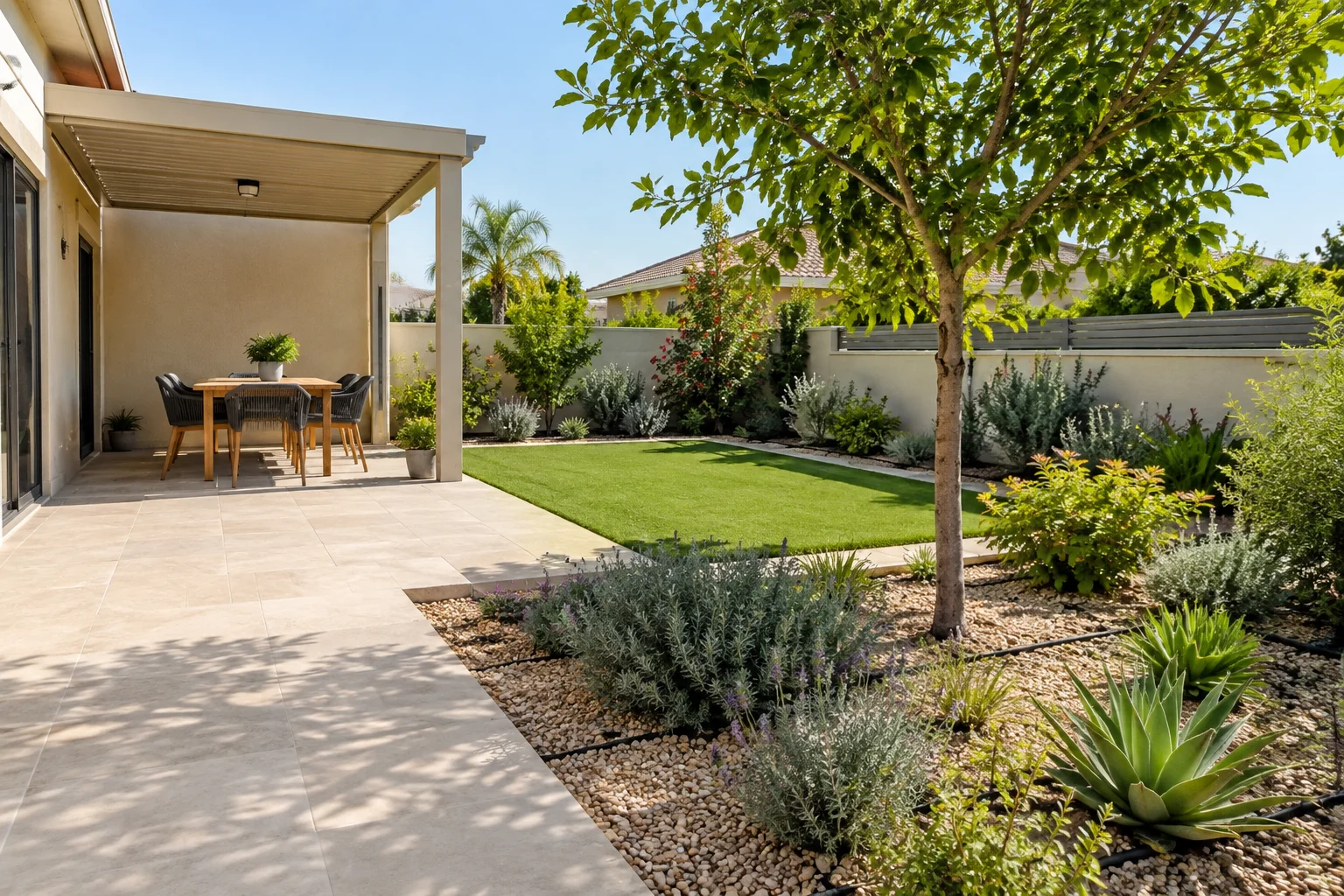
In many gardens, the most practical balance includes a modest lawn and a useful paved seating area. Add planted borders with a finished mulch or gravel surface. As a result, the space stays green without depending on frequent care everywhere.
Keep paths and edges easy to clean
Choose paths that are wide enough for normal movement and for moving bins, furniture or garden equipment. Also, avoid tight gaps between walls and planting where leaves and weeds collect. Use proper edging or borders to hold gravel, mulch and soil in place.
Well-defined edges reduce plant spill onto paths and stop loose materials from moving into lawns or patios. Consequently, routine cleaning becomes simpler. They also make the garden easier to inspect.
Group plants by sun, water and mature size
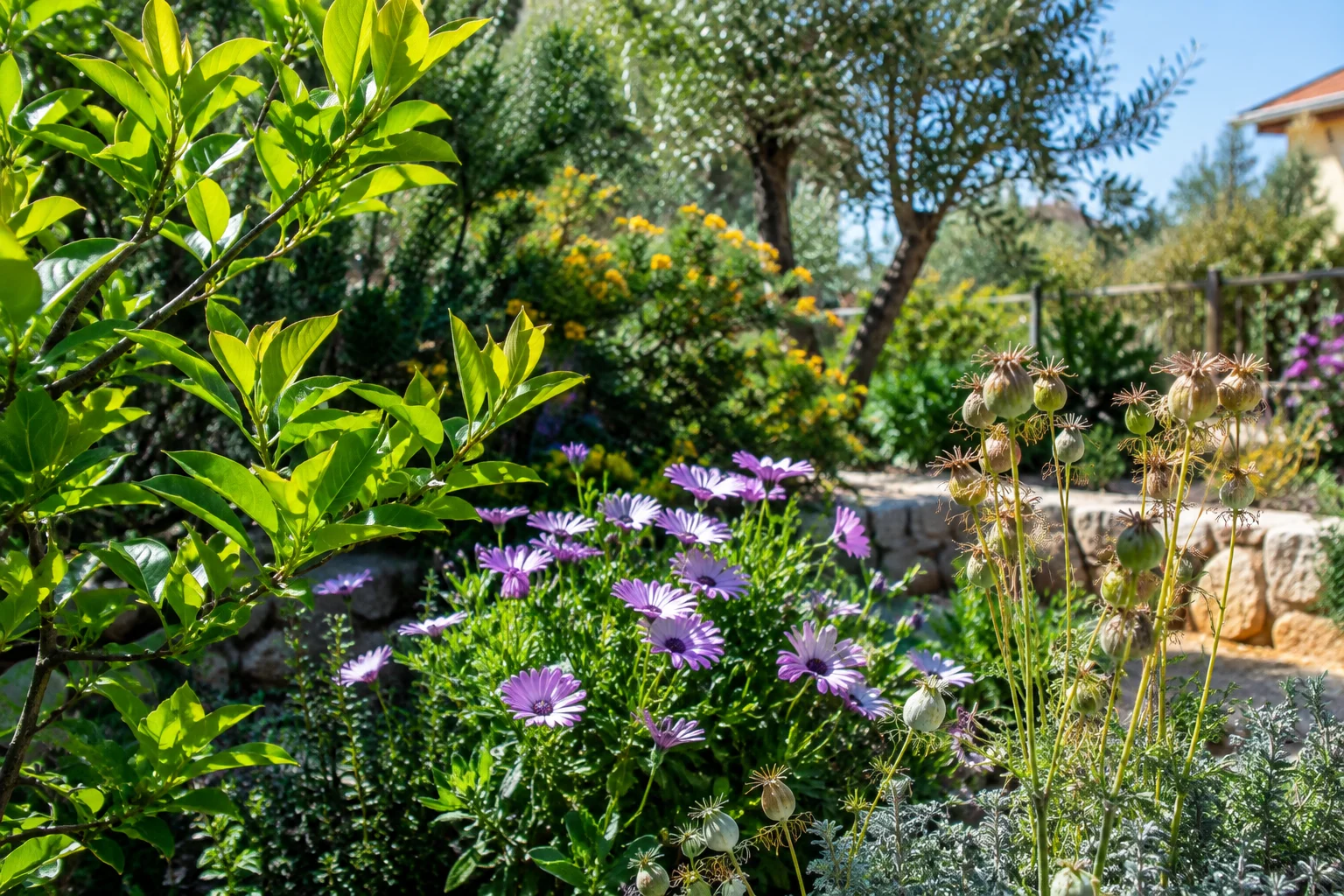
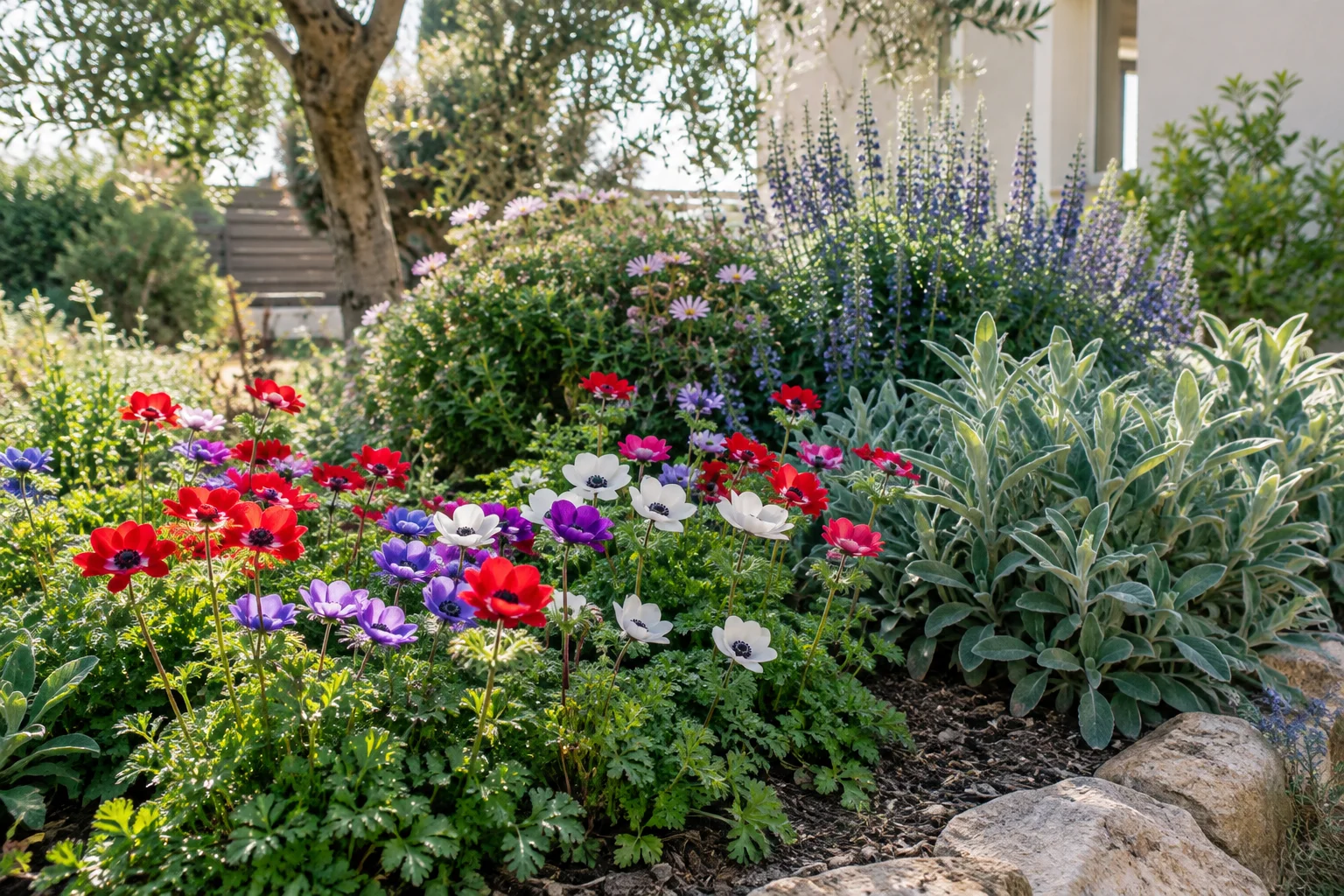
Plant selection matters, but plant placement matters just as much. A low-maintenance garden design should group plants with similar light and water needs. This approach makes irrigation simpler. It also avoids placing thirsty plants beside species that prefer drier conditions.
First, observe the garden’s sun. Areas beside a south- or west-facing wall may receive intense afternoon heat. Meanwhile, other zones may gain useful shade from the house, boundary walls or a pergola. Choose plants for these real conditions, not for a photograph taken at one time of day.
Next, allow enough space for each plant’s mature spread. A small shrub may look tidy on planting day. However, it can become a constant pruning job when packed tightly against a path, window or neighbouring plant. Repeating a limited palette of suitable plants often creates a calmer result. It is also easier to manage than a collection of many species.
For help narrowing the choices, read our guide to low-water plants for Southern Israel gardens. It explains how sun exposure, planting groups and establishment watering affect long-term success.
Use trees and shade thoughtfully
A well-positioned tree can improve comfort, soften a hot view and reduce the need for temporary shade solutions. However, a tree also needs room for roots, canopy growth and future pruning. Do not place one where mature branches will block a path, press against the home or overwhelm a small seating area.
Likewise, use pergolas or other shade structures where people sit, cook or play. Shade can make an outdoor area more usable during hot periods. It can also give sensitive planting a protected microclimate. Still, shade structures need materials and construction that suit outdoor exposure.
Build irrigation zones around plant needs
Efficient irrigation is central to a low-maintenance garden design in Southern Israel. A good system does not water everything for the same length of time. Instead, it separates areas by their planting and water needs.
- Planting-bed zones: Drip irrigation usually delivers water directly to the root area with less overspray onto paths and walls.
- Lawn zones: Natural grass has different watering needs from shrubs and ground cover. Therefore, it should not share a zone with them.
- Pot and feature zones: Containers and newly planted areas may need separate attention, particularly while plants establish.
- Low-water established beds: These should not follow the schedule of thirstier planting elsewhere.
Check the system through the year. A timer that works well in one season may not suit another. In particular, look for blocked drippers, leaks, overspray and water running onto paving. Small faults can stress some plants while wasting water elsewhere.
Our guide on reducing irrigation water waste covers practical checks. These checks help homeowners adjust zones and spot common problems early.
Finish beds with mulch or gravel where appropriate
Bare soil invites weeds and can dry out quickly in exposed parts of the garden. Therefore, add a suitable surface layer to create a more finished planting bed. It also reduces the exposed soil that needs hand weeding.
Organic mulch can support soil moisture and give beds a softer appearance. Over time, however, it breaks down and needs topping up. Gravel or decorative stone can be a durable choice for sunny, dry-style planting. It works best with good edging and in areas that do not collect falling leaves or frequent debris.
Neither option removes maintenance completely. Weeds can still appear, and wind can move lighter materials. Nevertheless, a properly prepared and clearly edged bed is far easier to manage than unplanned soil around scattered plants.
Low-maintenance garden design needs practical access
Every garden needs occasional pruning, irrigation checks, cleaning and plant replacement. Therefore, make sure you can reach the back of each planting area without stepping on plants or pulling through dense growth. Keep valves, filters and irrigation controllers accessible. Do not hide them behind permanent features.
Also, think ahead about garden waste. A few larger, well-spaced shrubs may be easier to prune and clear than many small hedges. If privacy is important, combine a fence or screen with planting. This avoids expecting a fast-growing hedge to do all the work.
When choosing outdoor furniture, leave enough clearance to sweep, move chairs and reach planting behind it. These details may seem small. Yet they decide whether the garden feels effortless or frustrating to use.
Set realistic maintenance expectations
Low maintenance does not mean maintenance-free. Plants need extra attention while they establish, even when they suit heat and sun. In addition, trees and shrubs need occasional shaping. Irrigation needs inspection, and patios benefit from regular sweeping.
The goal is to replace constant, high-effort tasks with predictable care. For example, a structured garden may need seasonal pruning, occasional weeding and irrigation adjustments. It should need less frequent mowing, plant replacement and reshaping of overgrown borders.
If you prefer not to manage that routine yourself, professional garden maintenance in Southern Israel can help keep planting, irrigation and outdoor areas under control after installation.
A simple low-maintenance garden planning checklist
- First, list how your household will use the garden each week.
- Map strong sun, existing shade, views and access routes.
- Limit lawn to the area that has a clear purpose.
- Choose durable paths and seating surfaces before finalising planting.
- Group plants by their sun, water and mature-size requirements.
- Then, plan separate irrigation zones for lawns, beds, pots and low-water areas.
- Use edging and mulch or gravel to define planting beds.
- Finally, leave practical access to plants and irrigation components.
Plan a garden that is easier to live with
The best low-maintenance garden is not empty or purely hard surfaced. Instead, every feature should earn its place and work with local conditions. Thoughtful layout, right-sized planting, suitable irrigation and durable materials can create a greener outdoor space with a more manageable routine.
A considered low-maintenance garden design makes those practical choices work together from the start. Whether you are starting with a bare plot or renovating an established space, Creative Garden Co. can help homeowners across Southern Israel balance appearance, daily use and realistic upkeep.