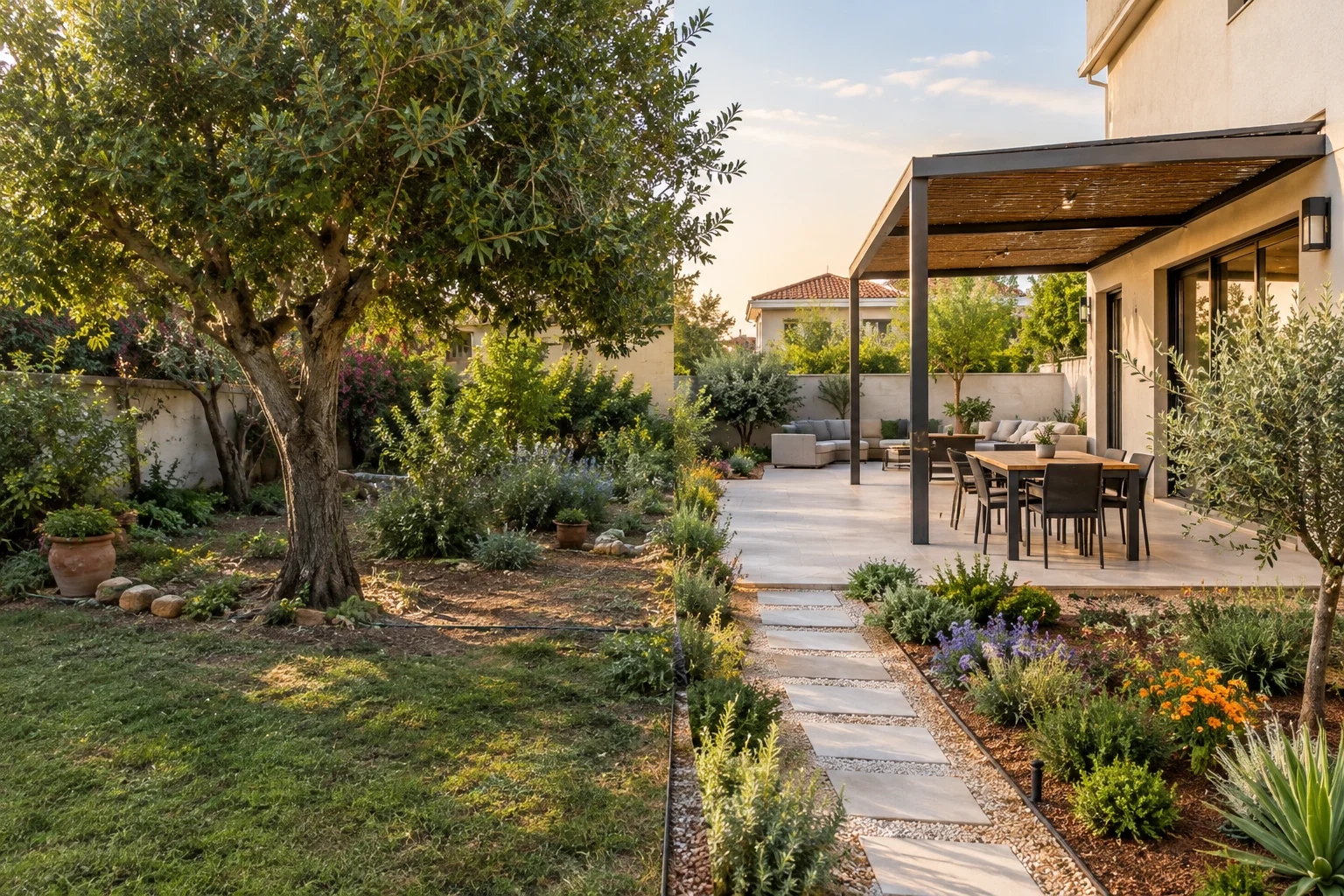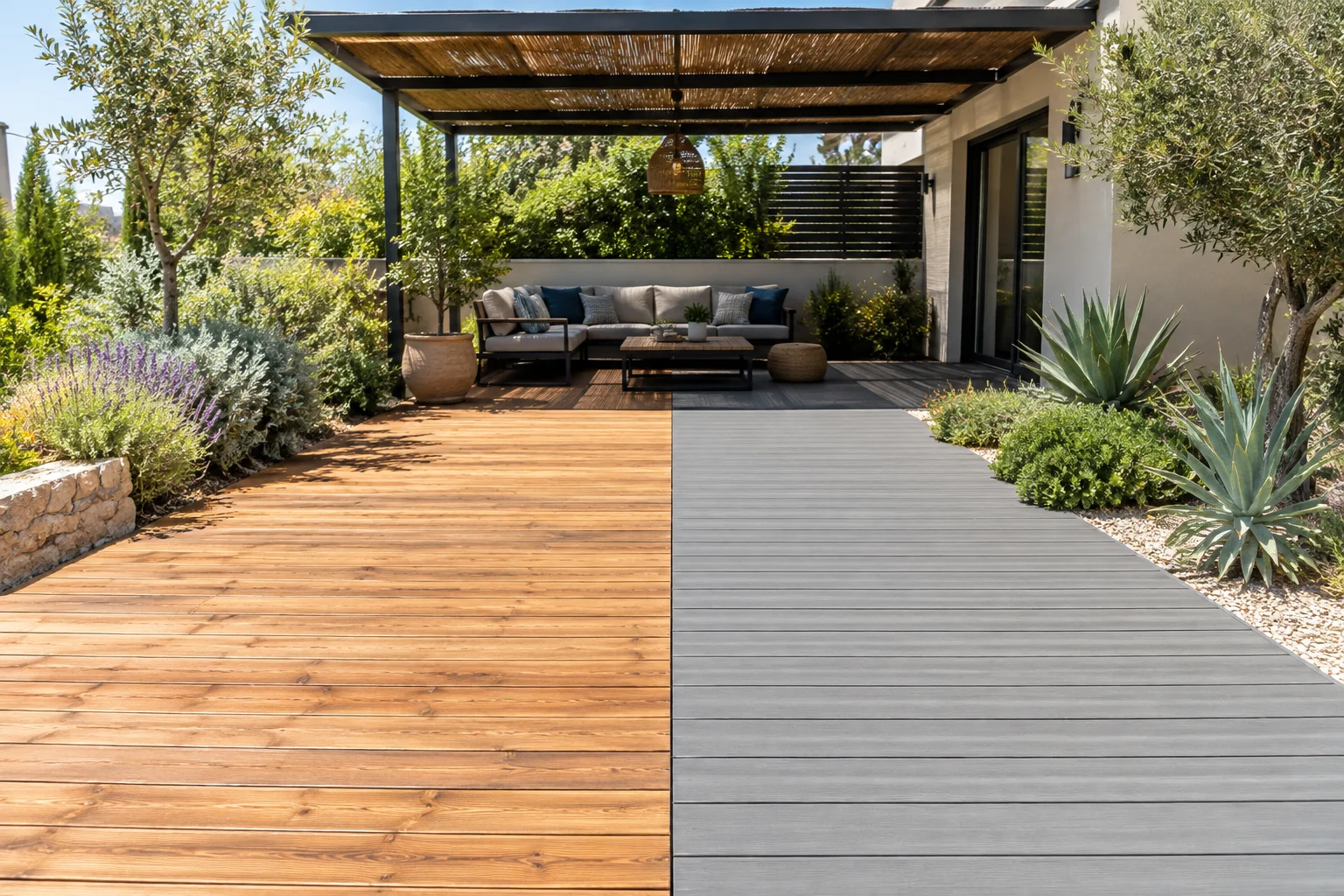
Good garden privacy ideas do more than block a neighbour’s view. They can make a sunny Southern Israel garden feel calmer, more comfortable and far more usable. The best solution usually combines a clear boundary with planting, shade and a layout that directs views away from overlooked areas.
A tall, solid fence may provide fast screening. However, it can also make a small garden feel enclosed, reduce airflow and create a heavy-looking boundary. On the other hand, planting alone looks softer but takes time, water and regular care to become effective. Therefore, choose privacy solutions around the exact view you want to solve. Do not treat every boundary in the same way.
Start by identifying the privacy problem
Before choosing a fence, screen or hedge, spend time in the garden at different times of day. Stand where you normally sit, eat, play with children or use the outdoor space. Then look towards the neighbouring windows, balconies, paths and upper floors that feel exposed.
This simple step often changes the solution. For example, a neighbour may only see one patio corner from an upstairs window. In that case, a full-height fence along the entire boundary could be unnecessary. Instead, a carefully placed screen, small tree canopy or pergola-side panel may solve the view. It also keeps the rest of the garden open.
- Mark the spots where privacy matters most, such as a seating area or poolside space.
- Notice whether the unwanted view comes from ground level or above.
- Check where strong afternoon sun and wind hit the boundary.
- Consider access for maintenance, irrigation repairs and pruning.
- Think about what the screen will look like from inside the home as well as from the garden.
These observations form the basis of practical garden privacy ideas. In addition, they prevent a common mistake: investing in a boundary treatment that blocks the wrong view.
Choose the right type of privacy screen
Most private garden designs use one or more of three approaches: a boundary fence, a freestanding screen or planting. Each option has a different role, cost profile and maintenance requirement.
Boundary fencing for immediate coverage
A fence gives the quickest and most defined form of garden privacy screening. It can also create a clear backdrop for planting, lighting or outdoor furniture. Therefore, it may be the most direct starting point for overlooked rear or side boundaries.
Solid panels provide the most complete visual barrier. However, a fully closed boundary can feel imposing in a compact garden and may limit breezes. It can also cast deeper shade over a planting bed. Use a solid fence where the view is particularly intrusive. Elsewhere, consider softer solutions.
Material choice matters in Southern Israel. Strong sun and dry conditions place ongoing stress on outdoor materials. For this reason, a well-planned custom garden fence design can account for the boundary length, garden style and finish needed for outdoor exposure.
Slatted garden screens for privacy with light and airflow
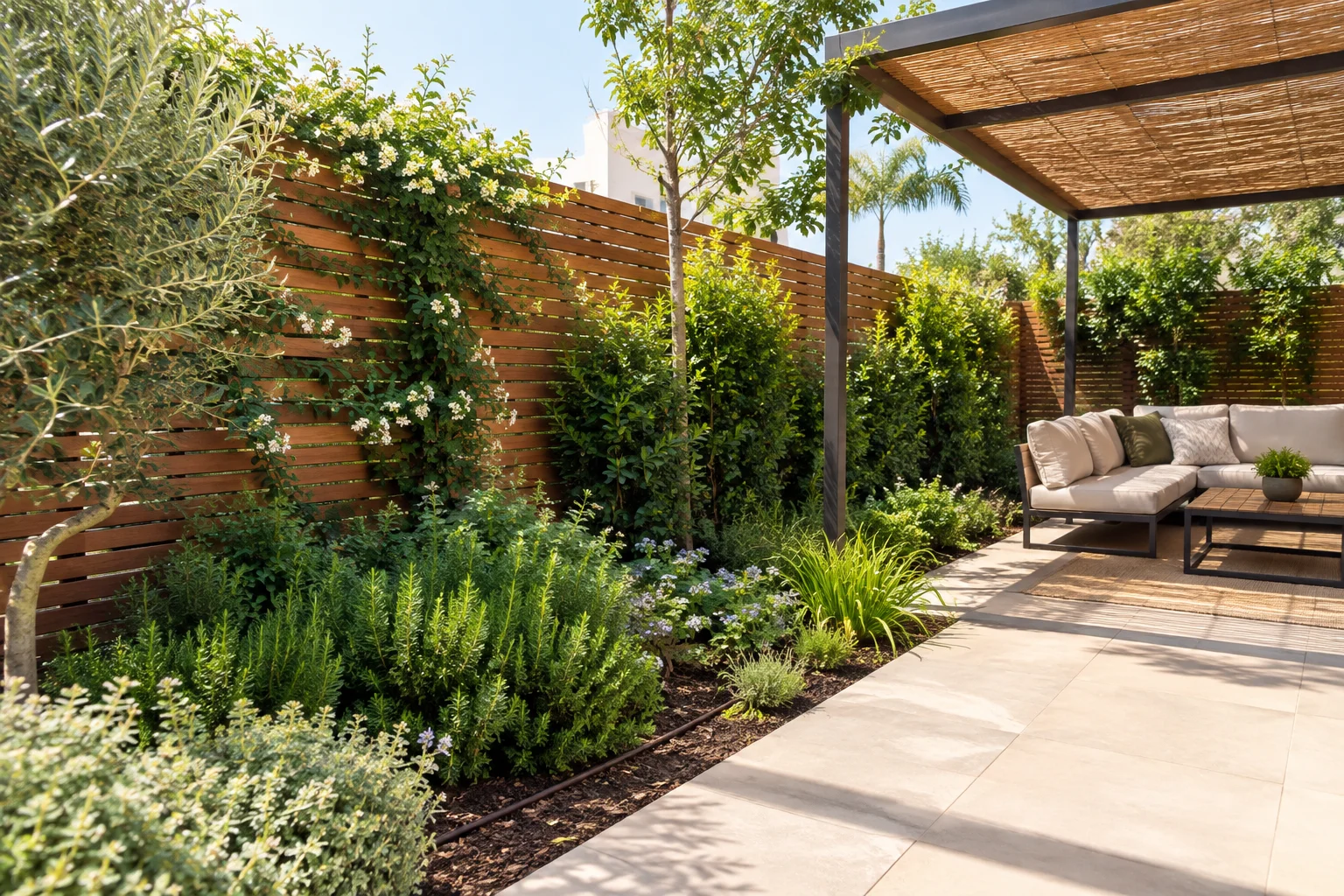
Slatted garden screens work well when you want privacy without a closed-in feeling. Their gaps filter views, bring rhythm to a plain boundary and allow some light and air through. In addition, they can create a feature behind a dining area, outdoor shower, bench or planter.
The spacing and direction of the slats make a real difference. Narrow gaps provide stronger screening from straight-on views. By contrast, wider gaps feel lighter but may not give enough privacy near the boundary. Horizontal slats can make a narrow garden seem wider. Meanwhile, vertical slats can draw the eye upward.
Freestanding screens are particularly valuable for targeted problems. Instead of enclosing the whole garden, you can screen a single overlooked seat or create a private transition between a lawn and patio. As a result, the garden can retain a more open feel. Custom outdoor carpentry can make these elements look integrated rather than added as an afterthought.
Pergola sides and overhead screening
Privacy is not always a boundary issue. A patio can feel exposed from above, especially when neighbouring homes overlook the garden. In that situation, an overhead structure or side panel can work better than a taller fence.
A pergola can define an outdoor room and provide valuable shade. Then, side screens, climbing plants or both can protect the seating area from direct views. Keep the structure open enough for ventilation. This is especially important where afternoon sun makes the space hot.
Use planting to soften and strengthen privacy
Privacy planting makes a boundary feel more natural and less severe. It also adds texture, colour and seasonal interest. However, homeowners should plan for mature size, water needs and future pruning. Planting-day appearance alone should not guide the choice.
For dependable coverage, use layers. A fence or screen can provide immediate privacy, while shrubs, climbers and small trees soften its base. This combined approach often works better than a hedge alone. The hard element works from day one. Meanwhile, the plants improve the garden as they establish.
Build a layered privacy planting scheme
A simple layered arrangement usually includes a taller background, mid-height shrubs and lower plants at the front. As a result, the layers conceal bare stems and reduce the flat effect of one row of identical plants.
- Background: Use suitable evergreen shrubs, screening plants or small trees where there is enough root space.
- Middle layer: Add shrubs with contrasting foliage or flowering periods to create depth.
- Front edge: Use lower planting or ground cover to shade soil and give the bed a finished appearance.
- Vertical layer: Train climbers on a trellis or screen where ground space is limited.
In a narrow side garden, climbers on a well-built support can save valuable floor space. However, they need a proper framework and ongoing training. A fast-growing plant is not always the best choice. It may become difficult to manage or overwhelm nearby structures.
When considering heat-tolerant privacy plants in Israel, assess each planting zone separately. For example, a wall with intense afternoon sun needs different choices from a sheltered, partly shaded corner. Soil depth, reflected heat from paving and irrigation access also affect plant performance.
Plan irrigation before planting a privacy hedge
A dense living screen needs consistent establishment care. This is especially important through hot, dry periods. If plants receive uneven watering, the hedge can develop gaps, weak growth or stressed foliage. As a result, it may deliver less privacy when you expect it to fill out.
Drip irrigation is usually practical for planted privacy borders because it directs water near the root zone. Where possible, separate privacy planting from lawn and shallow-rooted flowers. Different plant groups often need different watering schedules.
It is also wise to leave irrigation access points visible or reachable after plants grow. For a stronger system from the outset, consider professional garden irrigation system installation as part of the overall landscaping work. This is often easier than adding it once beds are full.
Match privacy solutions to the size of your garden
Small gardens benefit from selective screening. A large, solid structure along every side can make the area feel smaller and trap visual weight near the house. Instead, focus on the sitting area, the most overlooked edge and the first views from indoors.
For example, a compact Kiryat Gat garden may use a slatted panel beside a patio, a narrow planted border along one wall and an open view across the remaining space. As a result, it creates a private outdoor room without losing a sense of depth.
Larger gardens offer more space for trees, layered borders and separate zones. Even so, do not place tall planting randomly around the perimeter. First, decide where people will gather and where you want open sightlines. Then use planting and screens to frame those spaces.
Avoid these common privacy design mistakes
Many garden privacy ideas fail because they solve the immediate view but ignore comfort, maintenance or long-term growth. Fortunately, a little planning can avoid expensive changes later.
- Making every screen too high: Extra height can block views and light without solving an overhead privacy issue.
- Planting too close together: Crowded shrubs compete for water and can become harder to maintain.
- Ignoring mature size: A small tree can eventually shade a patio, lift against paving or obstruct a path.
- Forgetting airflow: Completely sealed screens may make a hot seating area less pleasant.
- Choosing one material only: A fence softened by planting usually feels more welcoming than an uninterrupted hard boundary.
- Adding privacy last: Screens, irrigation routes and planting beds are easier to coordinate during a garden renovation.
See the privacy design before construction
It can be difficult to judge the right screen height, planting density or pergola position from a verbal description. Therefore, visual planning can be useful. A concept image can help you compare a solid fence with slatted screens. It can also show how planting may soften a boundary and whether the seating area will still feel spacious.
Creative Garden Co. can use AI garden design visualisation to explore privacy ideas around your existing garden. This offers a practical way to discuss materials, screen placement, planting and shade before construction begins. However, the final design still needs to reflect the site, available space and practical installation details.
Create a garden that feels private and open
The strongest garden privacy ideas combine fast, reliable screening with softer living elements. Start with the views that affect daily life. Then choose fencing, slatted panels, shade structures and planting that suit the garden scale and Southern Israel climate.
If your garden in Kiryat Gat, Carmei Gat, Even Shmuel or the surrounding area feels overlooked, Creative Garden Co. can help you plan a private, practical outdoor space. We can develop the concept, visualise the options and carry out the landscaping, planting, irrigation and custom screening. Together, these elements can bring the design together.