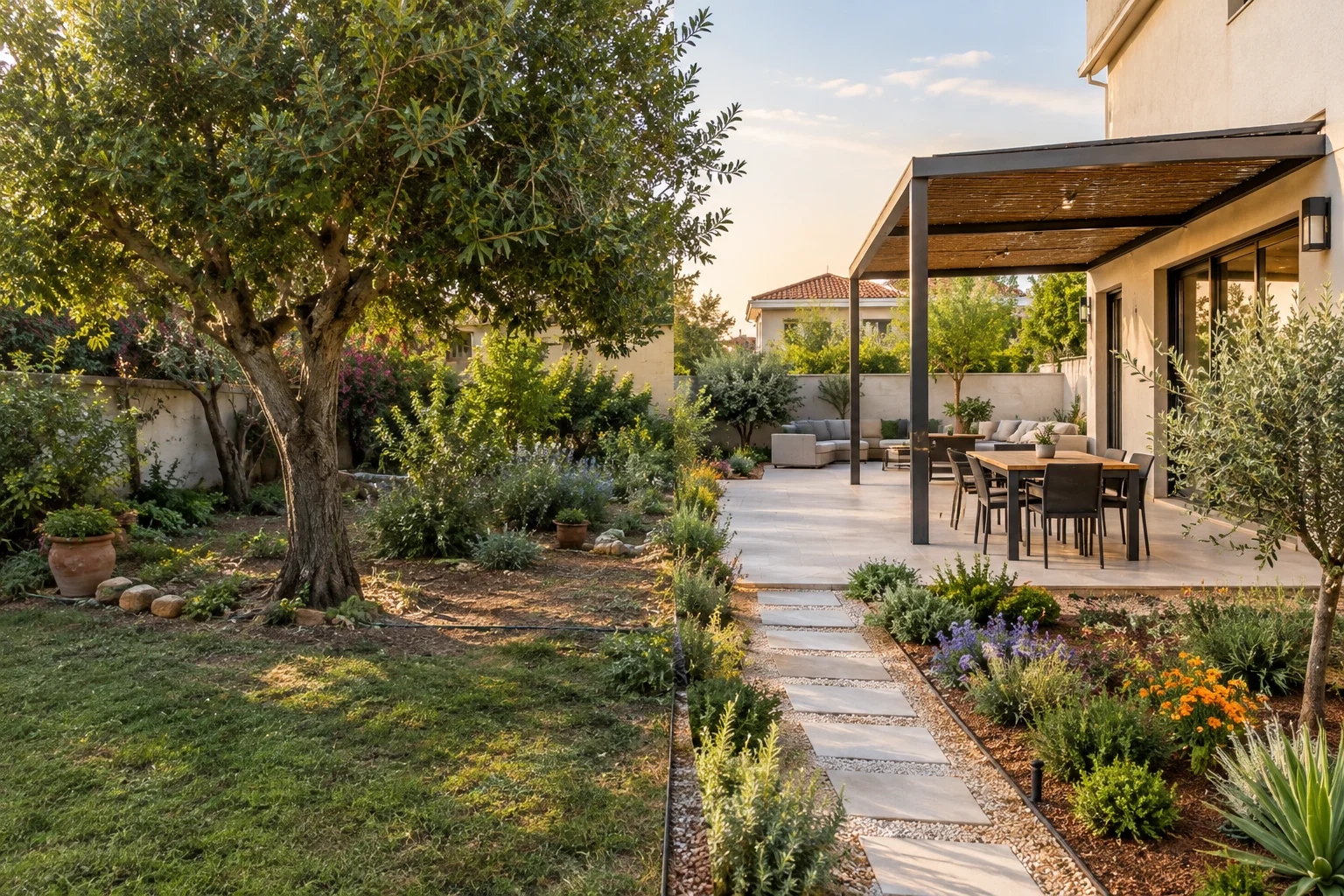
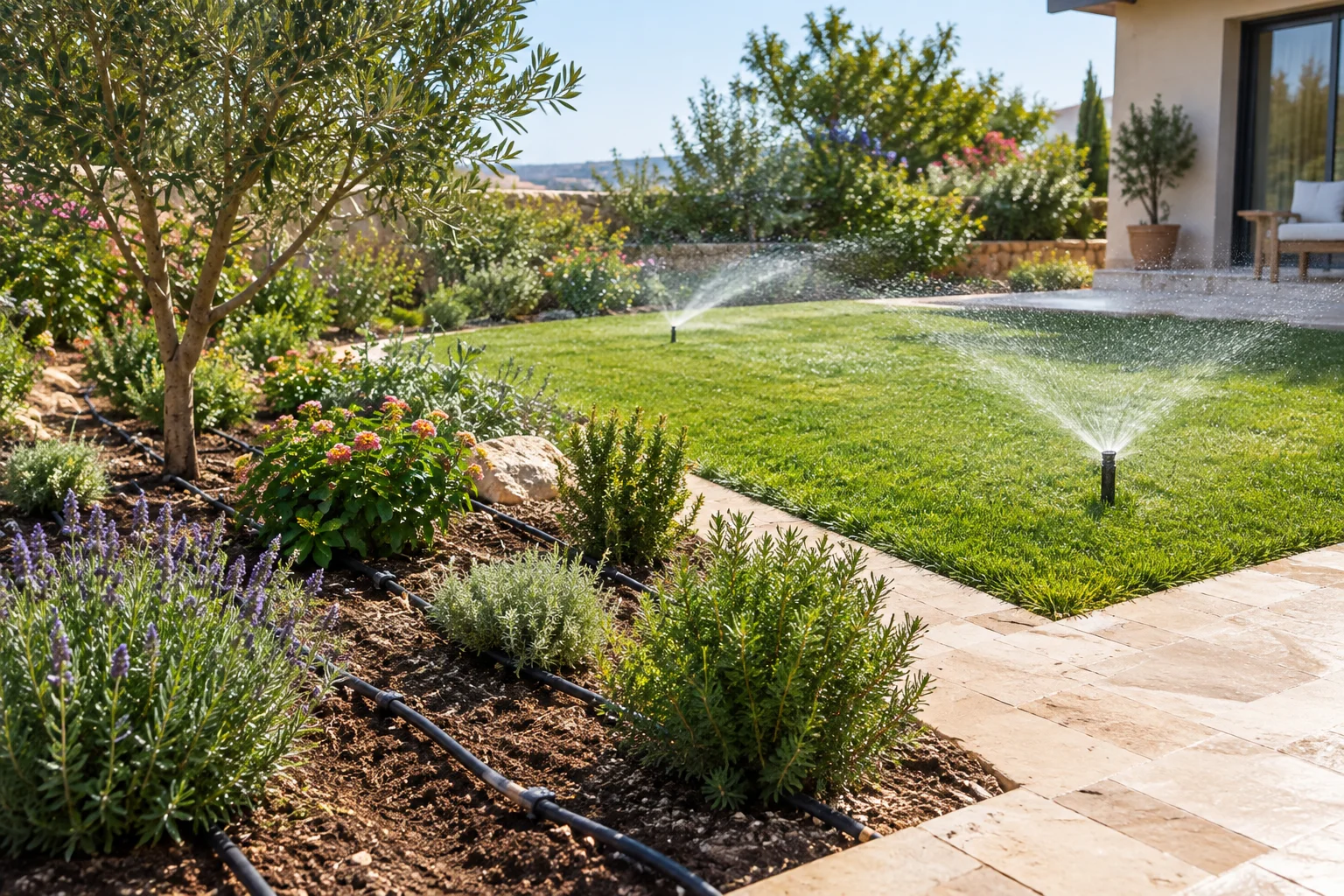
When choosing drip irrigation vs sprinklers, most Southern Israel gardens need both systems. Drip irrigation usually suits beds, hedges, shrubs and trees. Meanwhile, sprinklers usually suit natural lawn. By matching the method to each area, you can keep plants healthier and avoid watering paths, walls and bare soil.
This choice matters in a hot, sunny garden. Water that lands in the wrong place can evaporate quickly, encourage weeds or leave plants unevenly watered. In addition, a well-planned system makes regular garden care simpler during long dry periods.
Drip irrigation vs sprinklers: the quick answer
Use drip irrigation when water needs to reach roots slowly and directly. It is often the practical choice for borders, raised beds, fruit trees, screening plants and containers. Also, tubing can sit under mulch or close to the soil. As a result, it does not spray foliage or hard surfaces.
Use sprinklers when you need even coverage across a planted surface. Most often, that surface is a natural grass lawn. A well-designed sprinkler system spreads water across the whole turf area. However, it needs suitable heads, spacing and pressure to prevent dry patches and overspray.
Therefore, a mixed system often offers the most efficient approach. It separates lawn watering from the different needs of trees and garden beds.
Drip irrigation vs sprinklers for beds, shrubs and trees
Drip irrigation releases water gradually through emitters or dripline. Rather than wetting the whole bed, it targets soil around each plant. This approach works especially well in open, sunny gardens. There, surface water can disappear fast.
Garden beds, shrubs and hedges
For planting beds, drip irrigation usually wins the drip irrigation vs sprinklers decision. Shrubs, ground cover and flowering plants need water at their roots. They do not need daily spray over leaves and empty spaces. In addition, drip lines can follow curved borders and run along hedge lines.
You can place emitters closer together in dense sections. Likewise, you can space them farther apart near larger, established plants. As the garden matures, you can adjust the layout without replacing a whole spray system.
Trees and fruit trees
Young trees benefit from deliberate root-zone watering. Several emitters around the developing root area often work better than a sprinkler. By contrast, a sprinkler can wet the trunk and nearby lawn instead. As the tree grows, move the watering points outward with the expanding roots.
Drip irrigation also helps when fruit trees share space with ornamental planting. For example, you can give that section its own schedule. The trees then do not need to follow the lawn’s watering cycle.
Narrow, awkward and shaded spaces
Dripline works well in narrow side beds, strips beside paths and spaces under a pergola. In contrast, sprinklers often waste water there. Their spray can reach paving, fences or walls. Meanwhile, shaded beds often dry more slowly than exposed lawn. Therefore, they should not share the same timetable.
Advantages and limits of drip irrigation
- Water reaches plant roots directly and reduces overspray.
- Drip irrigation suits mixed planting and irregular bed shapes.
- Many paths and outdoor seating areas stay drier.
- Under mulch, it can provide a cleaner finish.
- However, emitters can clog, suffer damage during gardening work or become buried too deeply.
- Therefore, inspect the system occasionally. A blocked emitter can leave one plant dry while the rest of the bed looks fine.
Drip irrigation vs sprinklers for natural grass lawns
A sprinkler system makes sense for lawn areas. Grass has a dense, shallow root system across the entire surface. Watering only a few points would create uneven growth. Therefore, pop-up heads can cover the lawn evenly when the design suits the lawn shape.
Natural grass lawns
For a rectangular or clearly defined lawn, sprinklers provide broad, consistent coverage. Each head should spray towards the next head. This overlap reduces dry edges and patchy turf.
However, keep lawn sprinklers on a lawn-only zone. If the same heads water a border, patio edge and hedge, something will receive too much water. In Southern Israel, summer quickly exposes poor zoning.
Large ground-cover areas
Sprinklers can also suit a large, uniform ground-cover area. Otherwise, dripline may need many runs of tubing. Even then, consider the plant type, sun exposure and wind. For example, fine sprays can drift, while taller shrubs can block the pattern as they grow.
Advantages and limits of sprinklers
- They provide broad, even coverage across turf.
- Pop-up heads keep a lawn clear for play and everyday use between watering cycles.
- A correct design can water large, open areas efficiently.
- However, spray can drift in wind and evaporate before it reaches the soil.
- Spray can also waste water when it hits paving, walls or planting beds.
- Also, broken heads, leaks and poor pressure can create dry patches or soggy spots.
If an existing system sprays unevenly, leaks or fails to pop up, address the fault before increasing run times. For help, see our sprinkler irrigation repair service for common problems that affect watering performance.
Drip irrigation vs sprinklers: why irrigation zones matter
The zone plan often matters most in the drip irrigation vs sprinklers choice. An irrigation zone groups valves, pipes and outlets under one schedule. Therefore, every area in that zone should have similar watering needs.
For example, a small home garden may need separate zones for:
- Natural lawn with pop-up sprinklers.
- Sunny planting beds with dripline.
- Established trees with dedicated drippers.
- A shaded bed that needs less frequent watering.
- Containers, herbs or newly planted areas that need closer attention.
This approach lets you change one schedule without affecting the whole garden. For instance, a newly planted hedge may need regular watering while it establishes. By comparison, an established shaded border may need far less. One shared zone cannot serve both areas well.
Good zoning also considers available water pressure and flow. Too many sprinkler heads on one line can reduce coverage. Similarly, too much dripline on a poorly planned line can create uneven output. Before installation, a professional site visit should assess the layout, water source and planting plan.
How sun, shade and garden design affect your choice
Southern Israel gardens often combine very different conditions in a compact space. A lawn in full sun, a shaded seating area and a hot boundary wall may sit only a few metres apart. Yet each area loses moisture at a different rate.
First, consider how you will use the garden. A family lawn may justify a dedicated sprinkler zone. On the other hand, a garden focused on beds, trees, paving and outdoor dining may need little spray irrigation.
Next, consider the planting. Grouping plants with similar needs makes irrigation easier to manage. It also supports better long-term maintenance. Our garden design services in Southern Israel can bring planting, lawn, shade and irrigation together in one practical plan.
Finally, think about access. Keep valves, filters and controllers within reach. Also, avoid placing drip tubing where dense planting or fixed decking prevents inspection. A tidy layout saves time when you need later adjustments.
Common mistakes that waste water
Even good equipment performs badly without careful installation and programming. Therefore, avoid these frequent problems:
- Using sprinklers in narrow beds: water lands on paving and walls instead of roots.
- Putting lawn and beds on one zone: grass and shrubs rarely need the same schedule.
- Running irrigation at the hottest part of the day: plants lose more water before they can use it.
- Ignoring leaks or blocked outlets: small faults can affect a whole section of the garden.
- Leaving the schedule unchanged all year: weather, shade and plant growth change the garden’s needs.
- Adding plants without adjusting irrigation: a new tree or hedge may not receive enough water from an old layout.
Regular checks remain important. In particular, routine visits can identify damaged tubing, buried sprinkler heads or plant growth that blocks water. For ongoing help, explore our garden maintenance services in Southern Israel.
Drip irrigation vs sprinklers: choosing the right system
In the drip irrigation vs sprinklers comparison, choose based on the area you need to water. Drip irrigation normally suits beds, hedges and trees. In contrast, sprinklers normally suit natural lawn. Separate zones then help both methods work efficiently.
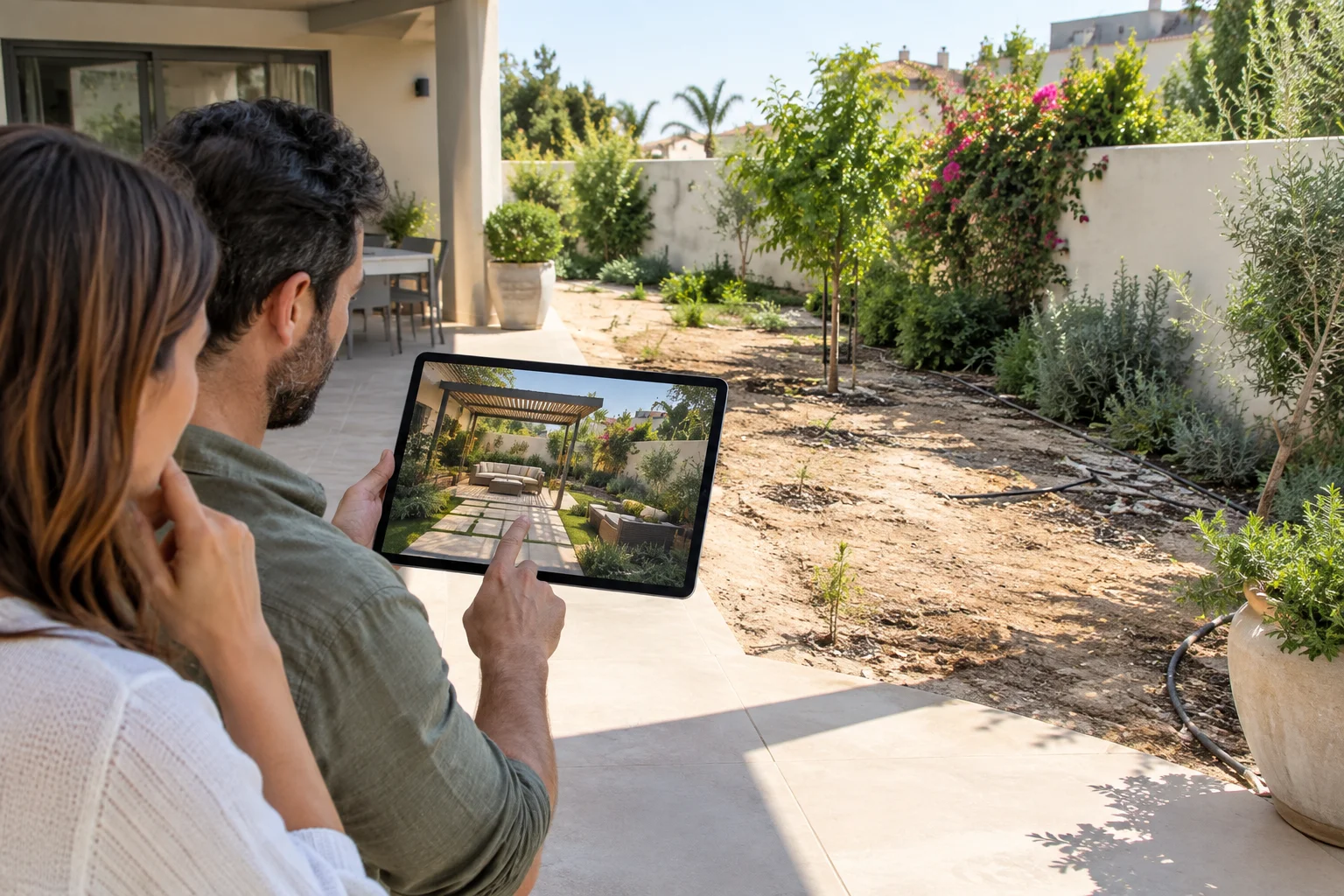
If you are renovating a garden or starting from scratch, plan irrigation before planting, paving and final landscaping. Then, Creative Garden Co. can assess the space and provide garden irrigation system installation for your lawn, planting, water use and outdoor routine. Get in touch to plan a system that keeps your Southern Israel garden healthy without watering areas that do not need it.