Garden sprinkler problems often appear as brown lawn patches, puddles, weak spray or water on paths instead of plants. Sometimes, a careful adjustment or new nozzle solves the issue. However, uneven watering can also signal a hidden leak, blocked line or pressure problem that needs professional irrigation repair.
First, run each irrigation zone while you watch it. This shows where water starts, how far it reaches and whether every sprinkler rises and retracts correctly. In Southern Israel, strong sun can quickly stress lawns and planting. Therefore, early checks can protect both your garden and your water use.
Garden sprinkler problems: start with a safe check
Before touching a sprinkler head, run one zone at a time and watch it for several minutes. Keep clear of moving spray. Also, avoid digging near irrigation pipes unless you know their route. Do not force a stuck pop-up head while the system runs.
Next, make a simple note of the zone, affected area and what you see. For example, write “rear lawn, left corner stays dry” or “front border sprays onto paving.” These details make the cause easier to trace.
- Check that the timer activates the expected zone and run time.
- Look for pooling water, bubbling soil or a damp patch after the zone stops.
- Watch for heads that do not rise, rotate or retract correctly.
- Compare spray distance across the same zone.
- Check whether shrubs, ground cover or lawn edges now block the spray.
If a fault affects several zones, look at the controller, valve, filter or main supply. In that case, do not replace random heads before you identify the wider problem.
1. A garden sprinkler is leaking around the head
A garden sprinkler that leaks at ground level may have a loose fitting, cracked body or damaged seal. Sometimes, water seeps from the lowest head in a zone after the cycle ends. A brief release of leftover water can be normal. However, ongoing flow or a growing wet area is not.
When adjustment may be enough
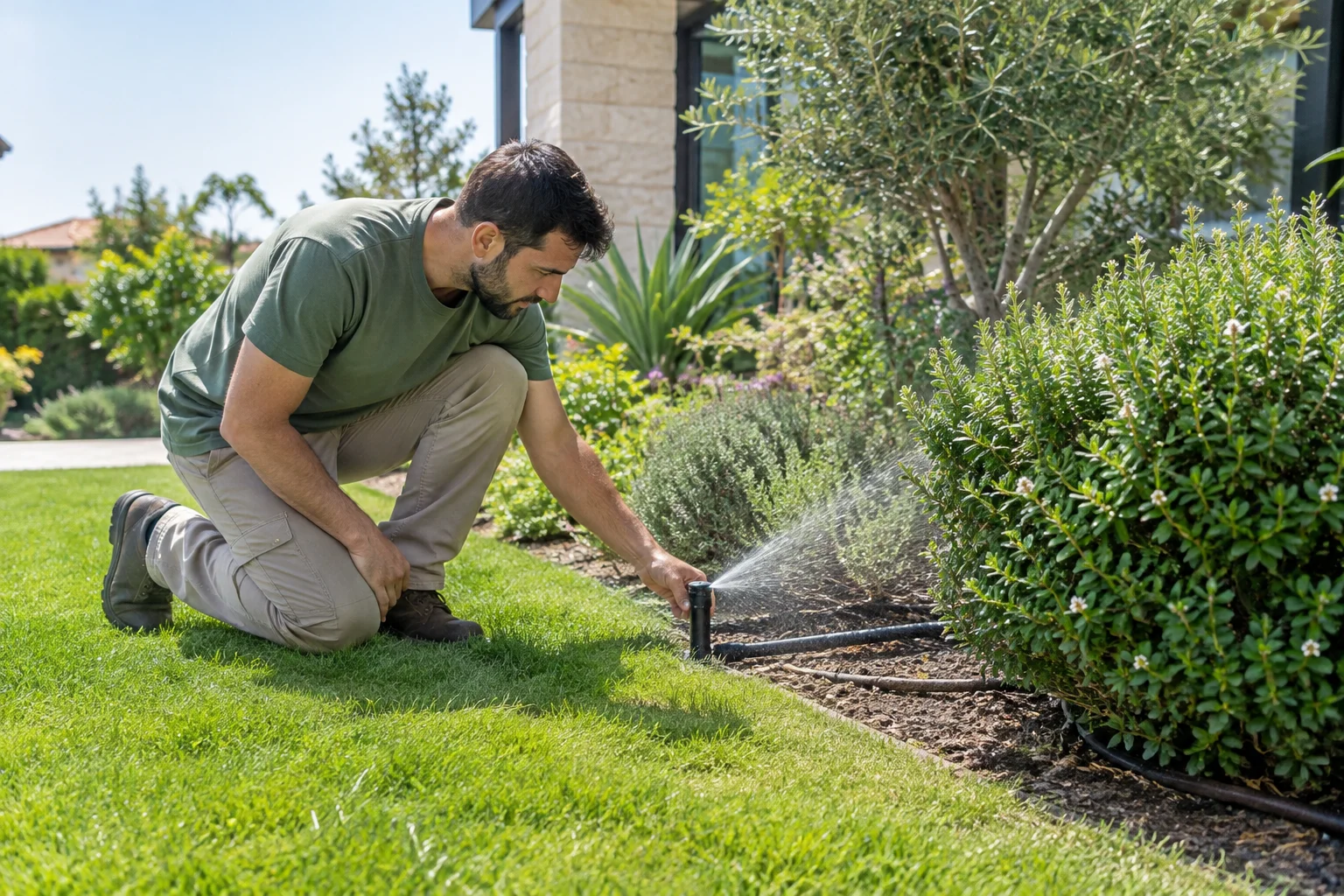
First, clear soil, grass and mulch from around the head. A buried or tilted sprinkler can send water into the ground instead of across the lawn. Then, carefully straighten the head so its top sits level with the finished soil surface.
Next, check whether the nozzle is loose. Switch the zone off before you tighten or clean it. Do not overtighten plastic components, because this can damage the threads.
When repair or replacement is more sensible
Replace the head if you can see cracks in its casing or if it leaks after you level it correctly. If water rises from below the head, a fitting or pipe connection may have failed. This repair often requires digging, cutting pipe and reconnecting it correctly.
A persistent leak wastes water and can soften soil around paving, paths or borders. Therefore, arrange a professional sprinkler and irrigation repair visit for concealed leaks or failed connections.
2. Garden sprinkler problems with low pressure or weak spray
Low sprinkler pressure often causes short spray distance, weak rotation or a head that barely pops up. One weak sprinkler usually points to a local blockage or damaged head. By contrast, weak performance across the whole zone can indicate a larger pressure, valve or pipe issue.
Simple checks for weak sprinkler performance
- Remove visible dirt from the nozzle and small filter screen, where present.
- Trim grass or plants that interfere with the pop-up mechanism.
- Check that nearby heads have no missing nozzles or excessive spray.
- Confirm that the correct valve opens when the zone runs.
A clogged nozzle often needs only a straightforward fix. However, do not use sharp objects, as they can alter the nozzle opening. A distorted nozzle can create a poor spray pattern even after cleaning.
Pressure can also drop when an underground pipe leaks or when changes overload the zone. For instance, extra heads on an existing line may leave every head underperforming. A proper garden irrigation system installation plan separates areas by watering needs and available flow.
3. One sprinkler head is not working
A sprinkler head may stop working because of a blockage, damage or lack of water. First, check whether nearby heads in the same zone work normally. This comparison helps you decide whether the fault affects one head or the whole zone.
If nearby heads work, turn off the zone and clear soil around the faulty head. Then, lift grass carefully and inspect the nozzle and riser for obvious damage. Grit inside the head or a broken internal spring can keep it stuck down.
Replace a damaged head with a compatible type and nozzle. The new head should provide a similar pattern and reach the surrounding heads. Otherwise, a wide-radius nozzle among short-range heads can cause dry gaps and oversaturated patches.
If several heads fail together, inspect the valve, wiring, controller or pipework. A technician can test the zone methodically instead of replacing parts that did not cause the fault.
4. Dry zones, brown lawn patches or thirsty plants
Dry areas do not always mean the garden needs longer watering. Often, the layout no longer gives head-to-head coverage. A blocked nozzle, shifted head, plant growth or a changed garden layout can leave a small area outside the spray pattern.
Run the zone in daylight and look for areas with no visible overlap. Then, check the soil under the dry patch. Dry soil beside wet ground usually points to a coverage issue. However, if the soil is damp and the plant still struggles, also consider shade, root health, drainage or plant suitability.
How to correct uneven coverage
A simple adjustment may solve the problem when a sprinkler turns the wrong way or sprays too narrowly. Many heads allow controlled arc and distance changes. However, follow the manufacturer’s method for your specific head, because adjustment points vary.
On the other hand, a changed planting bed or new path may need a different head position or nozzle. Avoid increasing the timer for the whole zone. That approach overwaters healthy areas while the dry patch still misses water.
For lawns, beds and trees with different needs, separate zones usually work better than one compromise schedule. Our guide to drip irrigation versus sprinklers in Southern Israel explains where each method works best.
5. Sprinkler overspray onto paths, walls or windows
Sprinkler overspray sends water onto paving, walls, fences and windows instead of the garden. A shifted nozzle, incorrect arc, excessive pressure or a tilted head can cause it.
First, clear the head and make sure it stands upright. Then, reduce the arc or spray distance only enough to keep water in the planting or lawn area. Watch a full cycle after the adjustment. Otherwise, a smaller arc can create a dry zone beside the path.
Overspray matters because water on hard surfaces does not help plants. In addition, it can make paths slippery during irrigation and increase water use. Review our practical tips to reduce irrigation water waste after you resolve the immediate fault.
6. Garden sprinkler problems with timers and zones
Timer faults can look like sprinkler problems when the real cause is a schedule, programming or zone-control error. For example, a zone may not start, may run at an unexpected time or may continue longer than intended.
Begin at the controller display. Check the current time, selected programme, start times and assigned days. Also, make sure that more than one active programme does not water the same zone. Seasonal adjustments can help, but they should reflect actual garden conditions rather than guesswork.
If the timer shows an active zone but no water reaches the garden, the controller may work while a valve or electrical connection needs attention. Likewise, a valve that fails to close can keep a zone running or allow water to seep after the cycle.
Do not leave a malfunctioning zone unattended. Instead, turn off the affected programme, or shut off the irrigation supply if water continues to run. Then, arrange irrigation repair to identify a controller, wiring, solenoid or valve fault.
7. A hidden pipe leak or damaged irrigation line
Underground pipe damage can create one of the costliest garden sprinkler problems when nobody notices it. Signs include unusually wet soil, water bubbling from the ground, sinking areas, weak pressure or a zone that uses much more water than before.
Tree roots, garden work, ground movement and accidental damage can affect buried pipework. In addition, a joint below the surface can fail. Although digging at a wet spot may seem sensible, the visible area does not always show the exact break location.
When to call for irrigation repair
Call for professional help when water rises through soil, pressure drops across a zone, a valve box floods or pipework sits near hard landscaping. A repair should restore the connection, test the zone and confirm that surrounding heads still cover the garden correctly.
After the repair, check whether the area needs levelling, turf repair or replacement planting. This step matters especially in lawns, where disturbed soil can leave an uneven surface after the leak stops.
Decide whether to adjust, repair or replace
Use the simplest effective solution, but do not ignore signs of a wider system problem. An adjustment suits a tilted head, growth blockage or incorrect aim. Meanwhile, repair suits failed connections, valves, wiring and pipes when the overall system remains suitable.
Replacement makes sense when a head has cracks, repeatedly sticks or has the wrong nozzle for the area. If faults keep appearing in different places, the design, zoning or ageing components may need a fuller review.
- Adjust: incorrect arc, minor spray-distance issue, buried or tilted head.
- Repair: leaking fitting, failed valve, damaged wiring, broken pipe or blocked component.
- Replace: cracked head, worn mechanism, missing or unsuitable nozzle.
- Review the system: repeated dry zones, widespread low pressure or a substantially changed garden.
Keep garden sprinkler problems from returning
Inspect the system at the start of the warmer season and after garden renovation, planting work or paving installation. Also, walk each zone occasionally while it runs. This simple habit catches changed spray patterns before a lawn patch dries out or a leak grows.
Keep heads clear of mulch and soil, trim plants away from spray paths and update schedules as seasons or planting needs change. Most importantly, set each zone for the plants and surface it serves. Do not use one setting for the entire garden.
If you have garden sprinkler problems in Kiryat Gat or elsewhere in Southern Israel, Creative Garden Co. can identify the cause and carry out practical sprinkler or irrigation system repairs. Contact us to restore even watering, protect your planting and keep your garden working efficiently.