Knowing how to choose a garden designer can prevent an attractive idea from clashing with your garden, budget or daily life. The right designer will ask how you use the space. They will also assess the site carefully and explain how the garden can work over time.
For Kiryat Gat homeowners, practical planning matters from the start. Strong sun, heat, water use, shade and durable materials all shape the result. Therefore, use these eight questions when comparing designers, whether you are renovating an old garden or starting with a blank area.
1. Will you visit the garden and understand how we live?
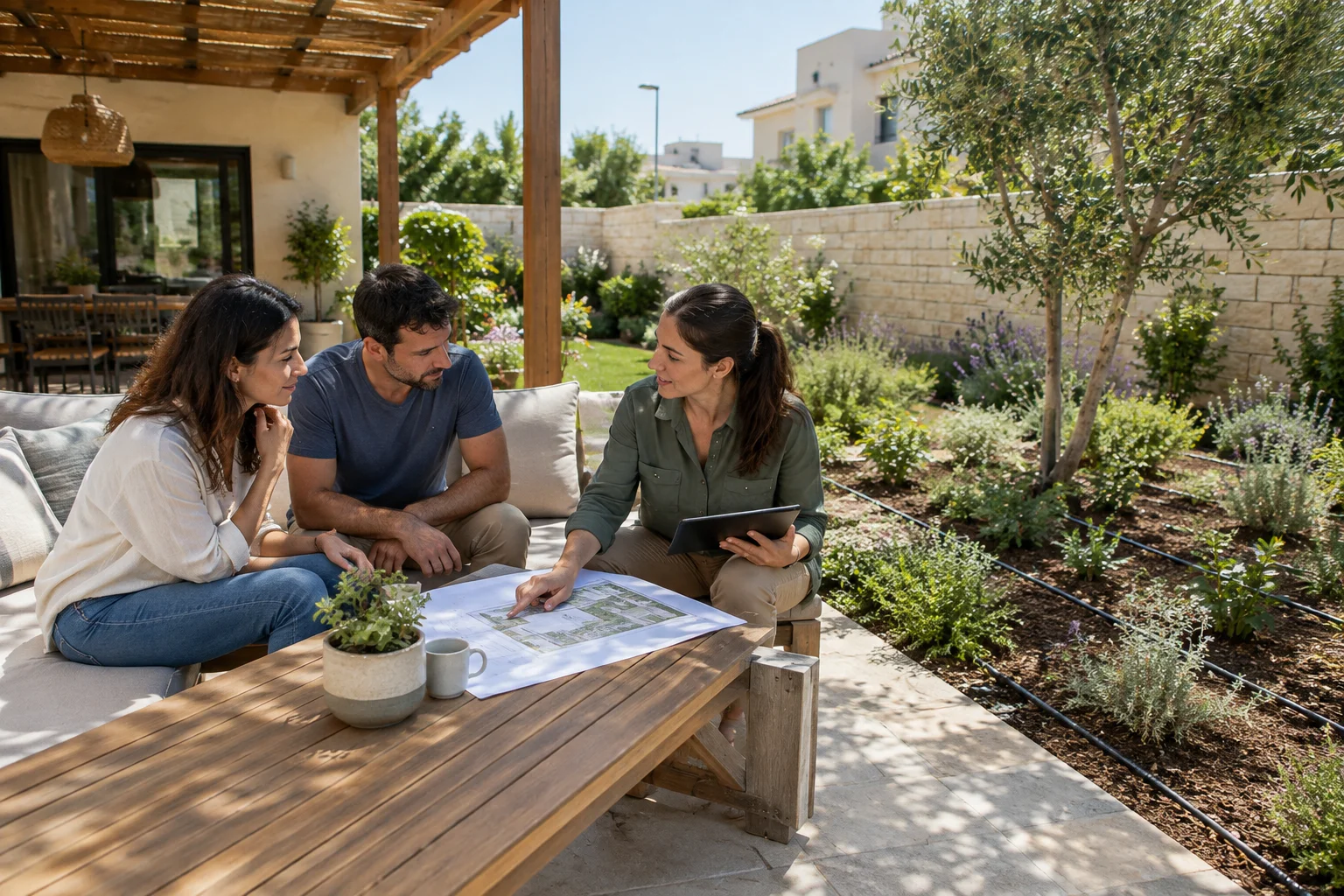
A useful design starts with the property, not a standard layout. Ask whether the designer will check access, levels, trees, boundaries, drainage paths, sunlight and existing irrigation. They should also ask who uses the garden and when.
For example, a family that wants a safe play surface has different needs from homeowners who mainly want shaded dining. Likewise, a small side garden may need screening, storage and a direct route to the entrance. It may not need a large lawn.
Before the consultation, note what frustrates you about the current garden. Then list what must change. Include needs such as privacy, entertaining space, low-maintenance planting, a pet area or room for children. A thorough garden design consultation in Kiryat Gat should turn those needs into clear priorities.
2. Can you explain the layout before discussing finishes?
When you choose a garden designer, ask how they decide where each area belongs. Layout comes before decorative details. It sets the position of seating, paths, lawn, planting, shade, storage and outdoor construction.
A good layout makes daily movement easier. It also gives each area a clear purpose. For instance, a dining space needs easy access from the house. Meanwhile, planting beds should not make maintenance or irrigation harder.
Ask the designer to explain the reason behind each recommendation. They should discuss compromises too. For example, a larger deck may reduce planting space. Similarly, a dense privacy screen can affect airflow and sunlight.
Clear reasoning matters more than a list of fashionable features. As a result, you can judge whether the plan suits your real needs.
3. How will the design respond to sun, shade and heat?
In a sunny southern Israel garden, shade often forms a core part of comfort. Ask where afternoon sun hits the garden and how the designer plans to respond. The answer may include a pergola, shade sail, trees, screens or a different seating location.
However, each shade solution involves trade-offs. A pergola creates a defined outdoor room, but it needs the right position and materials. Trees can soften the garden over time. Yet they need space, irrigation and care while they establish.
Screens may improve privacy. On the other hand, they can cast shade onto nearby planting. Materials need careful thought as well. Surfaces in strong sun can feel uncomfortable underfoot or show wear differently over time.
Therefore, ask why a proposed paving, deck, fence or lawn surface suits the location. A designer should consider exposure, intended use and maintenance together.
4. What planting and irrigation approach do you recommend?
Planting should match the conditions in each part of the garden. Ask which areas receive full sun, partial shade or reflected heat from walls and paving. Then ask how the proposed trees, shrubs and ground cover suit those conditions.
Also ask how much ongoing care the plants will need. Irrigation deserves early attention too. Plants with very different water needs should not automatically share a watering zone.
Sensible zoning helps you water each area appropriately. In addition, it can make later problems easier to spot. When you choose a garden designer, look for practical answers rather than promises of a no-maintenance garden.
Every living garden needs some care. Still, suitable plants, accessible beds and well-planned irrigation can make routine work more manageable. Homeowners planning an upgrade can also review these ideas for reducing irrigation water waste in a Southern Israel garden.
5. Can I see an AI garden visualisation, and what does it mean?
An AI garden visualisation can help you compare design directions before work begins. It may show how a new patio, planting scheme, fence, pergola or lawn could change the feel of the garden. This can help when a verbal description feels hard to picture.
Nevertheless, a visualisation is a design tool, not a construction guarantee. Images may not show exact measurements, hidden ground conditions, drainage needs, material availability or final plant growth. The project still needs a site assessment, practical decisions and an agreed scope.
Ask how the designer uses visuals during the process. At Creative Garden Co., our AI garden design and visualisation service in Kiryat Gat helps homeowners explore possibilities. We then refine those ideas around the real garden and project requirements.
In addition, this guide can help you prepare: getting photos and details ready for an AI garden visualisation.
6. How will you help me set a realistic project scope and budget?
A responsible designer should help you separate essential work from optional upgrades. Ground preparation, irrigation repairs, drainage solutions and access may need attention before decorative elements. In contrast, furniture, lighting or extra planting may suit a later phase.
Ask what could change the final cost. Also ask what information remains unknown. Uneven levels, difficult access, old surfaces and extensive construction can all require a different approach from a simple planting refresh.
Clear discussions now can prevent assumptions from becoming disappointments. It also helps to set priorities before you ask for ideas. For example, say if shade and a usable patio matter most.
Likewise, explain if the project needs stages. Our guide to garden renovation costs in Kiryat Gat explains the main choices that can shape a renovation budget.
7. Who will carry out the landscaping and construction?
Some designers provide concepts only. Others also coordinate or complete the installation. Neither approach is automatically better. However, you should know who takes responsibility for each stage before you commit.
Ask who handles clearance, ground preparation, irrigation, planting, hard landscaping and outdoor features. In addition, ask how the designer will share the plan with the people doing the work. A clear handover reduces the risk of losing important details between design and installation.
If one company designs and builds the garden, ask how it checks that site conditions support the concept. If you use separate providers, make sure your designer supplies enough practical information for accurate quotes and construction. Ultimately, a defined scope matters more than a beautiful image alone.
8. What happens after the garden is finished?
A new or renovated garden changes over time. Plants establish, irrigation schedules need seasonal attention and outdoor timber or surfaces may need routine care. Therefore, ask what maintenance the proposed garden needs and whether it suits the time you want to spend on it.
This question helps when you compare a lush, planting-heavy concept with a simpler garden. More planting can add softness, privacy and seasonal interest. On the other hand, it may need more pruning, weeding and irrigation checks.
A simpler layout may be easier to manage. Yet it can feel less green without careful design. Ask for a straightforward explanation of first-month care and longer-term tasks.
A designer who plans for maintenance can make better choices about plant spacing, access, materials and irrigation from the start.
A simple checklist before you choose a garden designer
Use these points to compare your options after each consultation:
- Did they ask how you want to use the garden?
- Did they assess sunlight, access, levels, boundaries and existing conditions?
- Did they explain the layout before suggesting decorative features?
- Did they discuss shade, irrigation, planting and materials in practical terms?
- Did they clearly explain what a visualisation can and cannot show?
- Did they identify priorities, unknowns and possible project phases?
- Did they explain who will build the design and manage each stage?
- Did they discuss the maintenance the finished garden will require?
Make the first conversation count
To choose a garden designer with confidence, focus on thoughtful questions, clear explanations and a plan that suits your property. The best choice does not always offer the most dramatic first idea. Instead, look for a provider who understands your goals and can turn them into a garden that works in real conditions.
Creative Garden Co. helps homeowners in Kiryat Gat and nearby areas plan new gardens and practical renovations. Our work can cover the initial consultation, visualisation, landscaping and outdoor construction. If you are ready to discuss your garden, contact us and start with your space, priorities and realistic next steps.