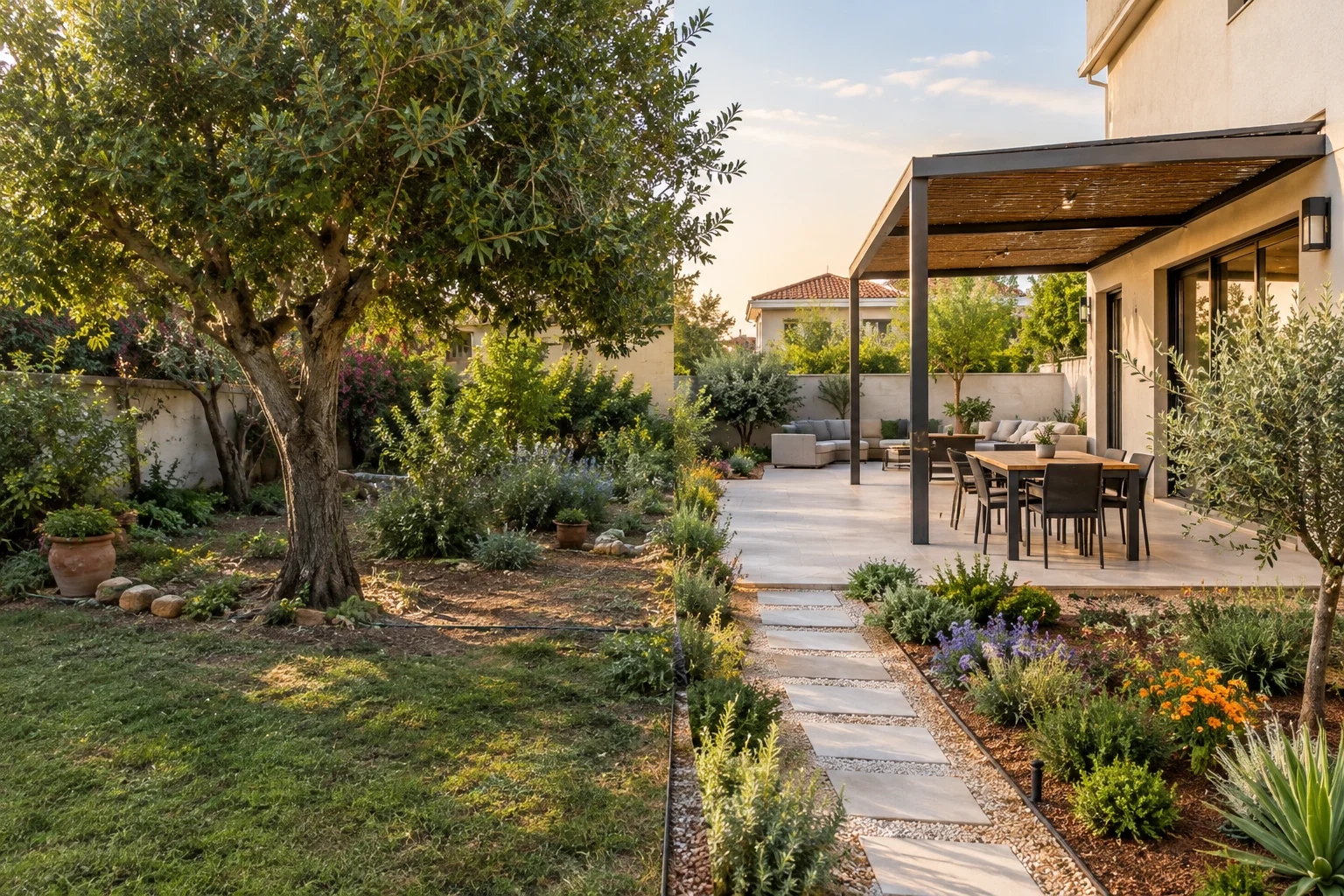
A garden design consultation in Kiryat Gat should begin with the real life of your home, not with a generic planting list. A new yard in Carmei Gat may be bare and exposed to the sun. An established property may have overgrown shrubs, a leaking irrigation line, uneven paving, or a corner that has never been useful. The right plan turns those facts into an outdoor space that feels good to use every day.
For some families, that means a shaded area where children can play while adults sit nearby. For others, it is a deck for Friday evening meals, a clean entrance that improves curb appeal, or a low-maintenance garden that does not become another weekend chore. Good design is not about filling every open area with plants. It is about giving every part of the yard a purpose.
Start With How the Yard Needs to Work
Before choosing wood, stone, trees, or flowers, a consultation needs to answer a few practical questions. Who uses the garden most? Where does the strongest afternoon sun fall? Is there enough room to host friends, park bicycles, or create a safe play zone? Are you looking for a complete transformation, or do you need to improve one difficult area without rebuilding everything?
These answers shape the plan. A family with young children may benefit from clear sightlines from the patio to the play area, durable ground cover, and shade that can handle daily use. A homeowner who entertains often may prioritize a pergola, outdoor seating, lighting points, and a path that keeps guests from walking through planting beds. A smaller garden may need fewer elements, but each one must work harder.
This is also where budget becomes useful rather than limiting. Some projects make sense as a full design-and-build installation. Others are better completed in stages, starting with drainage, irrigation, shade, or the main seating area. A thoughtful consultation helps establish what should happen first so money is spent on the parts of the garden that will make the biggest difference.
What Happens in a Garden Design Consultation in Kiryat Gat
A productive garden design consultation in Kiryat Gat looks closely at the existing site. Measurements matter because a pergola that looks balanced in a photo may overwhelm a compact patio, while a narrow path can make a generous yard feel awkward. The layout of the home, boundary lines, access points, walls, utilities, and existing trees all affect what can be built and where.
Look at the Ground Before the Greenery
The garden is only as reliable as the groundwork beneath it. This means checking slopes, drainage patterns, compacted areas, and the condition of existing paving. Water that collects beside the house or runs across a walkway should be addressed before new planting begins. The same applies to old irrigation systems. A beautiful garden becomes frustrating quickly if plants receive uneven watering or a hidden pipe leaks beneath the soil.
Sun exposure is another local reality. Southern Israel can be demanding on lawns, soft planting, and outdoor furniture. Some areas receive intense direct sun for most of the day, while a wall or neighboring structure may create a surprisingly shaded corner. The plant palette, irrigation zones, and shade structure should respond to those conditions instead of fighting them.
Turn Preferences Into a Clear Visual Direction
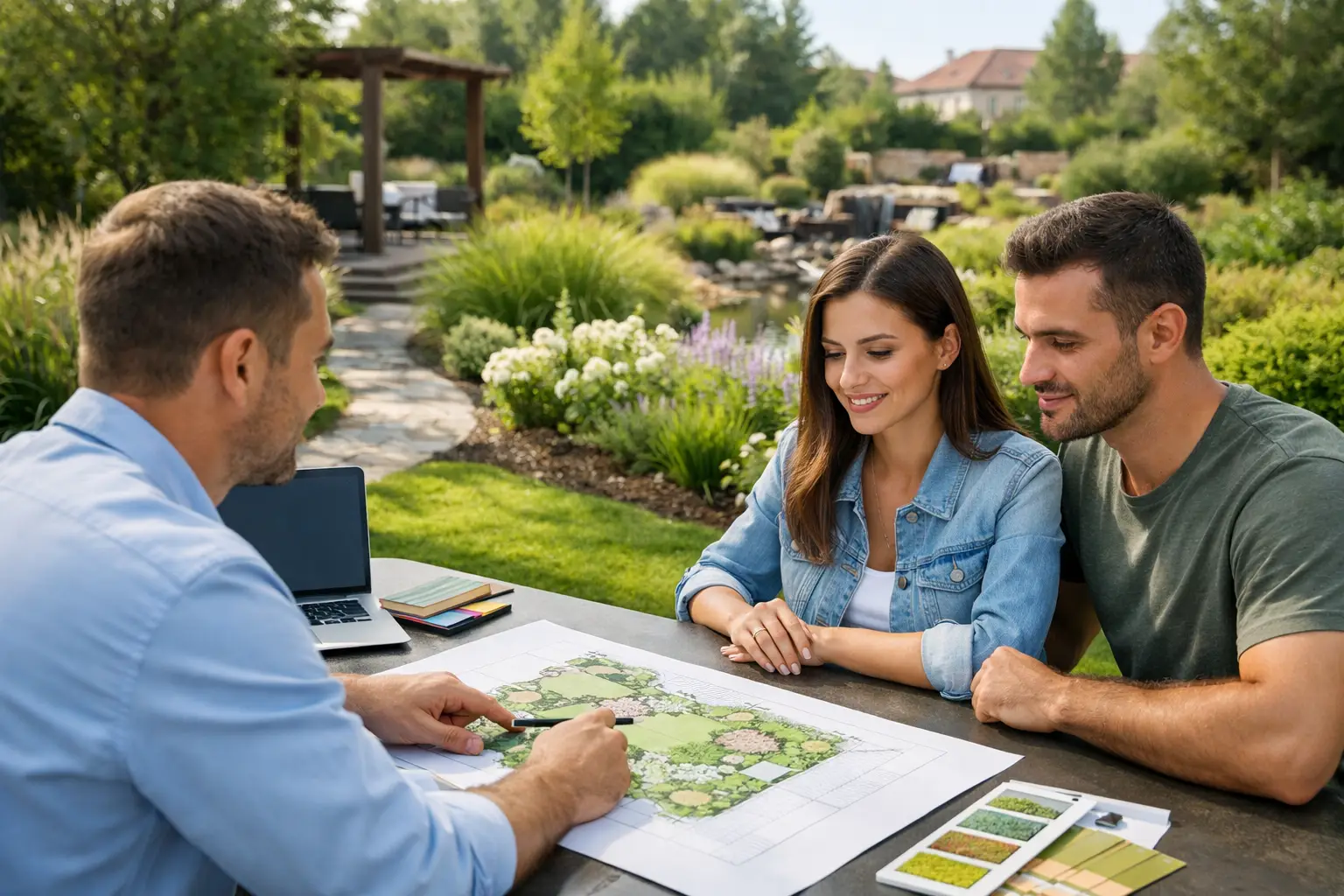
Most homeowners know what they like when they see it, even if they cannot name the style. They may be drawn to clean modern lines, natural wood, Mediterranean planting, a more tropical feel, or a garden that is mostly green and calm. Mood boards and visual renders help turn those preferences into decisions before construction begins.
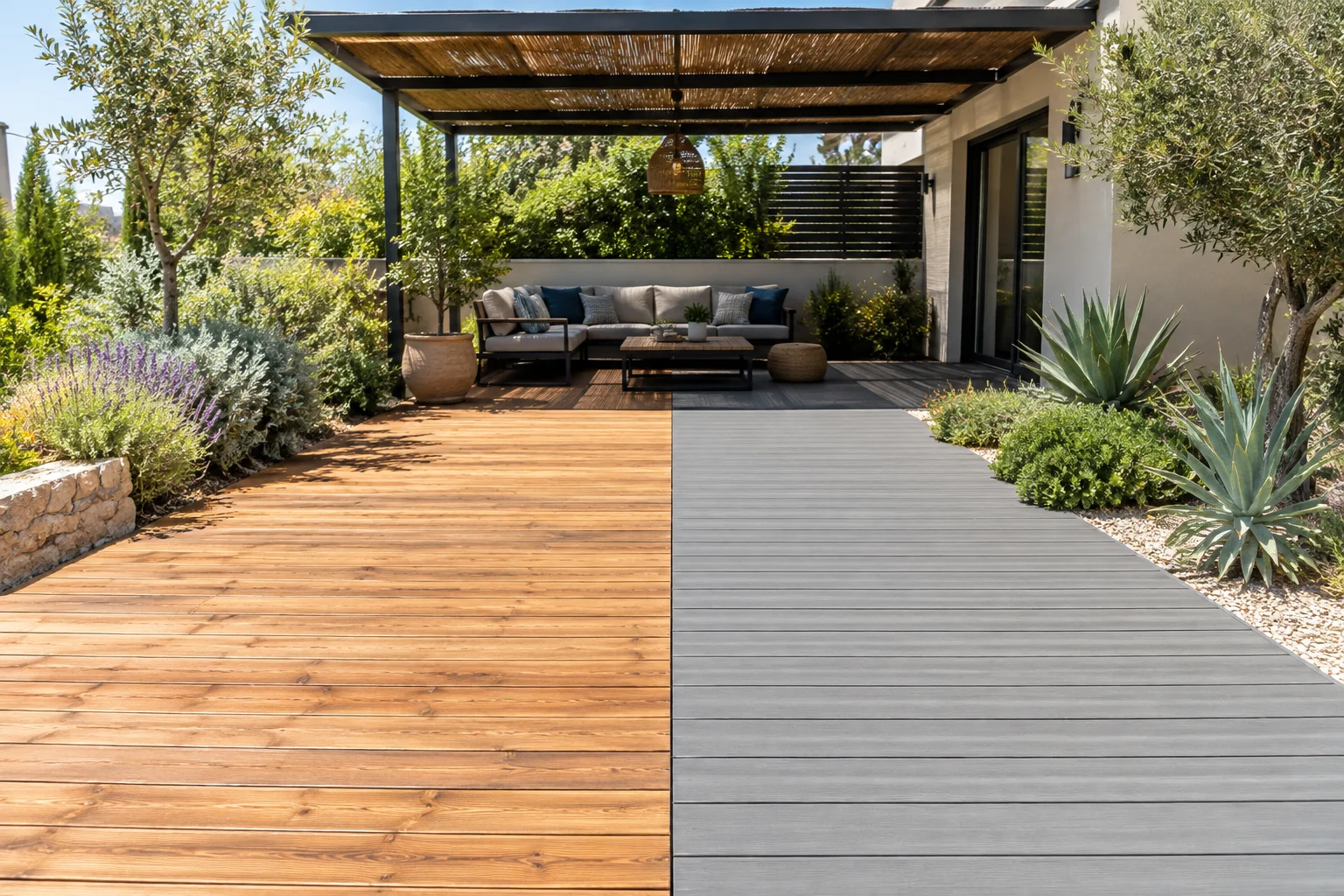
A visual plan is especially helpful when several materials need to work together. Wood decking, fences, stone, planters, gravel, turf, and planting all have different textures and maintenance needs. Seeing the relationship between them can prevent a common mistake: choosing each item separately and ending up with a yard that feels busy or disconnected.
At Creative Garden Co., the planning process can connect that visual direction to on-site construction, planting, irrigation work, and custom carpentry. That single point of responsibility is valuable when the design includes features that must fit precisely, such as a pergola attached to an existing patio, a fence that follows an uneven boundary, or built-in seating sized for a particular corner.
Choose Features That Earn Their Space
Every garden has limits. Even a large yard can feel crowded when too many features compete for attention. The goal is not to include every possible upgrade. It is to select the features that solve the most important needs.
Shade is often the first priority. A custom wooden pergola can create a comfortable outdoor room, but its placement needs care. It should provide protection when you actually use the space, not cast unwanted shade over plants that need sun or block airflow near the house. A deck can make an uneven outdoor area more usable, yet it needs durable materials, proper levels, and a design that allows water to drain away correctly.
Fencing can offer privacy and define the garden, but solid fencing may make a small space feel enclosed. Sometimes a combination of wood, planting, and open sections gives better results. Playhouses and custom outdoor furniture can make a family garden more personal, provided there is still enough clear area for movement and maintenance.
Planting deserves the same practical thinking. Mature trees can add immediate character and shade, while lower planting can soften walls and paths. However, large trees need room for roots and future growth. Dense planting looks impressive at installation, but it may require more pruning and water as it fills in. The best choice depends on how much ongoing care you want and how the garden will look in two or three years, not only on installation day.
Plan for Irrigation and Maintenance From the Beginning
A garden should not require constant rescue work. Irrigation zones need to match the needs of different areas: trees, planting beds, pots, lawn, and water-wise planting do not all need the same schedule. A consultation is the right time to identify broken sprinklers, weak coverage, damaged pipes, or areas where water is being wasted.
Maintenance also affects design decisions. A crisp, formal look with shaped hedges can be beautiful, but it requires regular trimming. A palm tree adds height and presence, but old fronds need safe removal. Gravel may reduce mowing, although leaves and debris still need periodic cleanup. There is no single low-maintenance formula. The most successful gardens match the maintenance plan to the homeowner’s time, expectations, and budget.
For busy residents, recurring care can protect the investment after installation. Pruning, weed control, leaf removal, seasonal cleanup, tree styling, and irrigation checks keep a garden from gradually losing its shape. For homeowners who enjoy hands-on gardening, a simpler maintenance schedule may be enough. The key is being honest about what the space will need after the first exciting week is over.
Questions Worth Asking Before Work Begins
A consultation should leave you with more than inspiration. You should understand the order of work, from clearing and site preparation through construction, irrigation, planting, and final cleanup. Ask which existing features are worth keeping, what may need repair, and how the project will handle access for materials and equipment.
It is also sensible to ask how the design will perform across seasons. Will the seating area be pleasant in summer? Which plants may look sparse in winter? How will new wood weather in direct sun? What happens if a future outdoor kitchen, storage unit, or play area is added later? Planning for possible changes can save expensive rework.
If you are upgrading an existing garden rather than starting from bare soil, ask which improvements will create the clearest visual change. Sometimes the answer is a full redesign. Sometimes pruning neglected trees, repairing irrigation, renewing a driveway edge, adding a fence, and reshaping the main planting beds can transform the property without replacing everything.
A Garden Should Feel Finished, Not Just Installed
The best outdoor spaces have a sense of order. The path leads somewhere. The shaded area invites you to sit down. Plants frame the garden instead of hiding it. Woodwork fits the dimensions of the home rather than looking added as an afterthought. Just as important, the garden has a realistic plan for watering, cleanup, and seasonal care.
Whether your yard in Kiryat Gat is unfinished, overgrown, or simply no longer suits your family, begin by walking through it with a clear list of how you want to live outside. That conversation can turn an uncertain patch of land into a space that is practical on a busy Tuesday and special when friends come over.