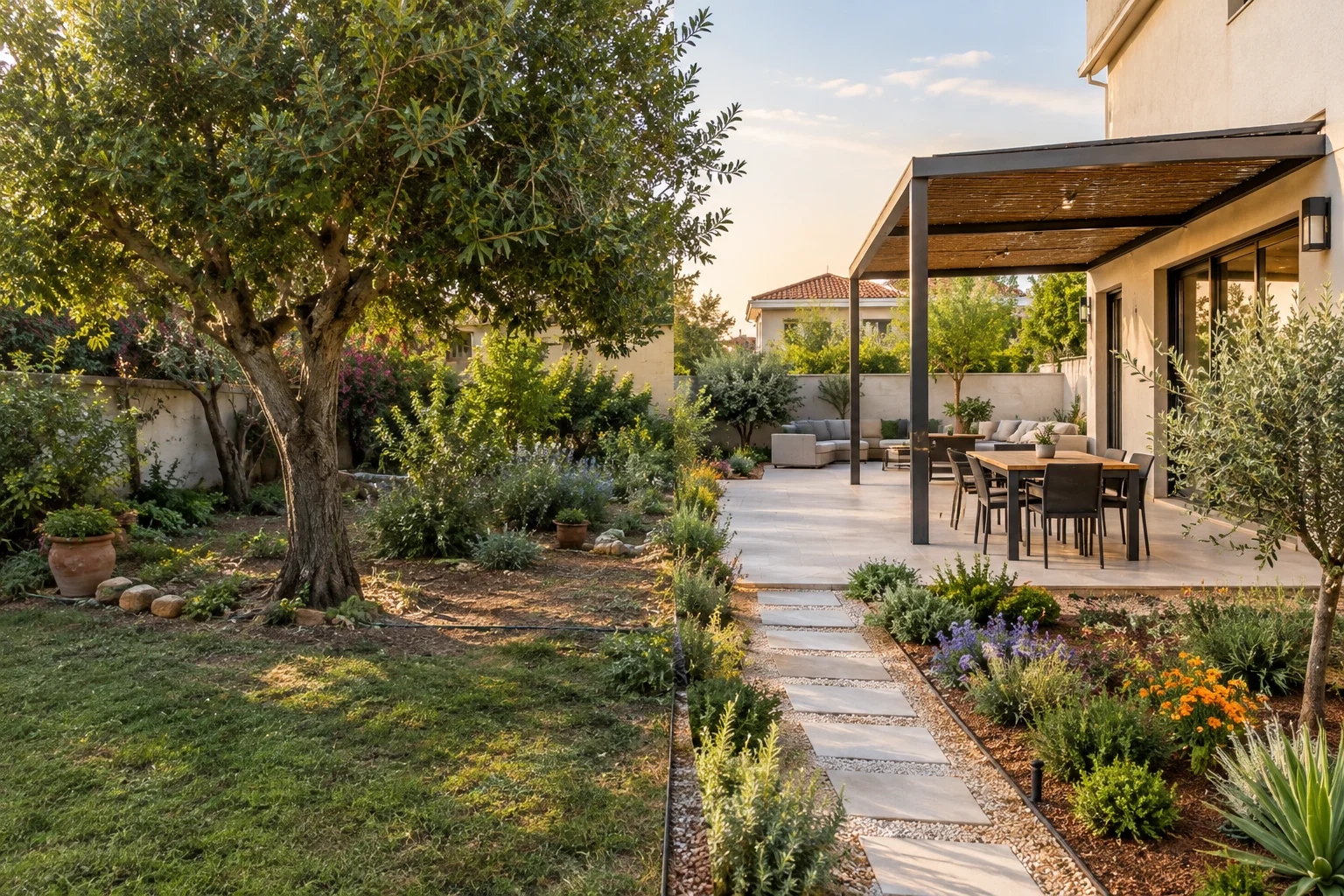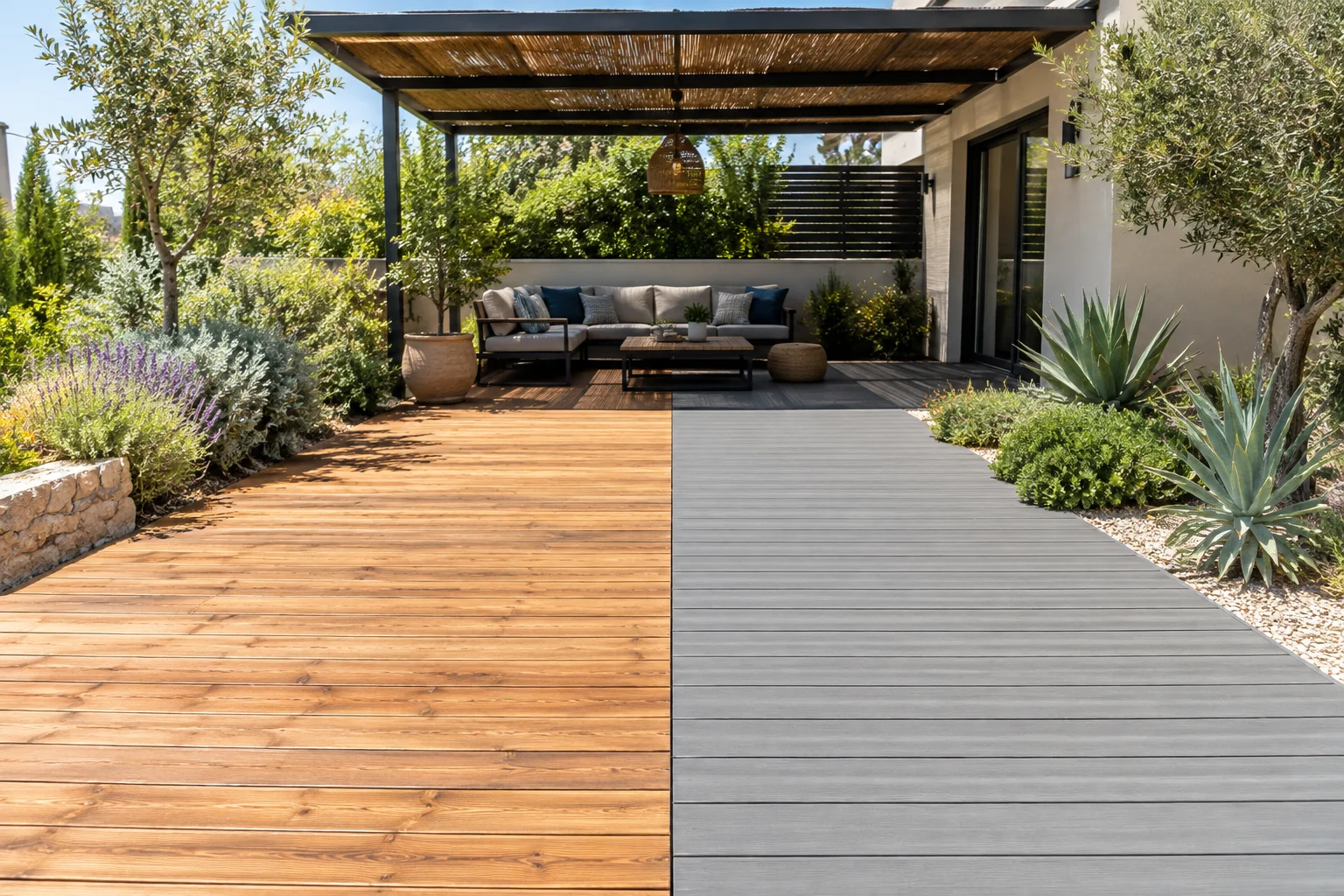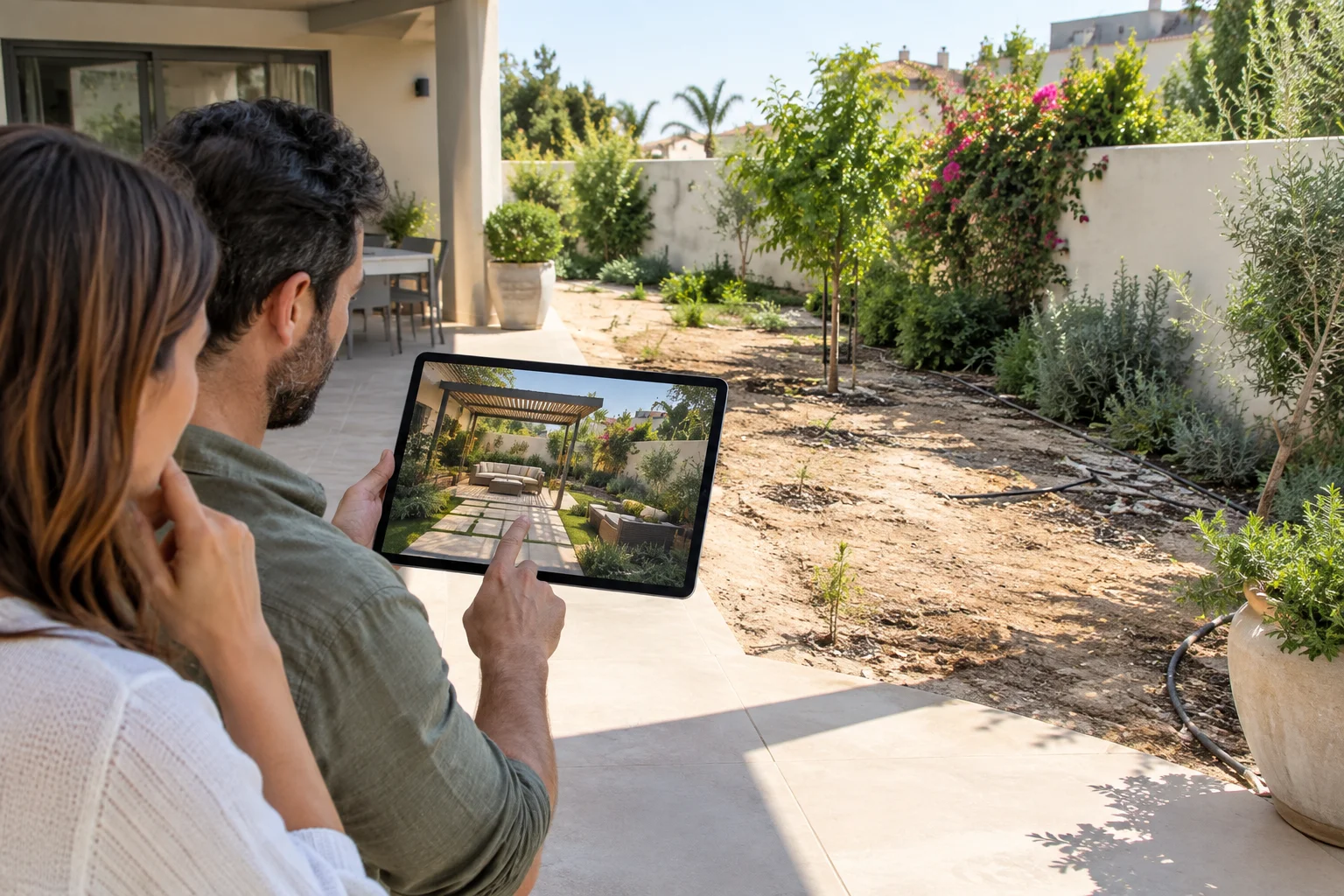
A mature olive tree can be the most valuable feature in a garden long before any decking, pergola, or planting bed is added. Relocating mature olive trees is therefore not a routine landscaping task. It is a careful operation that affects the tree’s roots, water supply, canopy balance, and ability to recover over the following seasons.
For homeowners improving an unfinished garden, adding a pool or outdoor living area, or changing access and parking arrangements, moving an established olive may be the right decision. But the question is not simply whether the tree can be moved. The real question is whether the tree, the new location, and the aftercare plan are all suitable for a successful move.
When relocating mature olive trees makes sense
Olive trees are remarkably tough. Their characterful trunks, silvery leaves, and resilience in warm, dry conditions make them a natural fit for gardens across Southern Israel. A healthy mature tree can often be relocated successfully, especially when its roots are handled correctly and it receives consistent care afterward.
The move is usually worthwhile when the tree has genuine visual or sentimental value, when it is blocking a planned construction area, or when it will have more space and better growing conditions elsewhere in the garden. An old olive can also give a new landscape immediate presence. Rather than waiting years for young trees to fill out, the garden begins with shade, structure, and a sense of permanence.
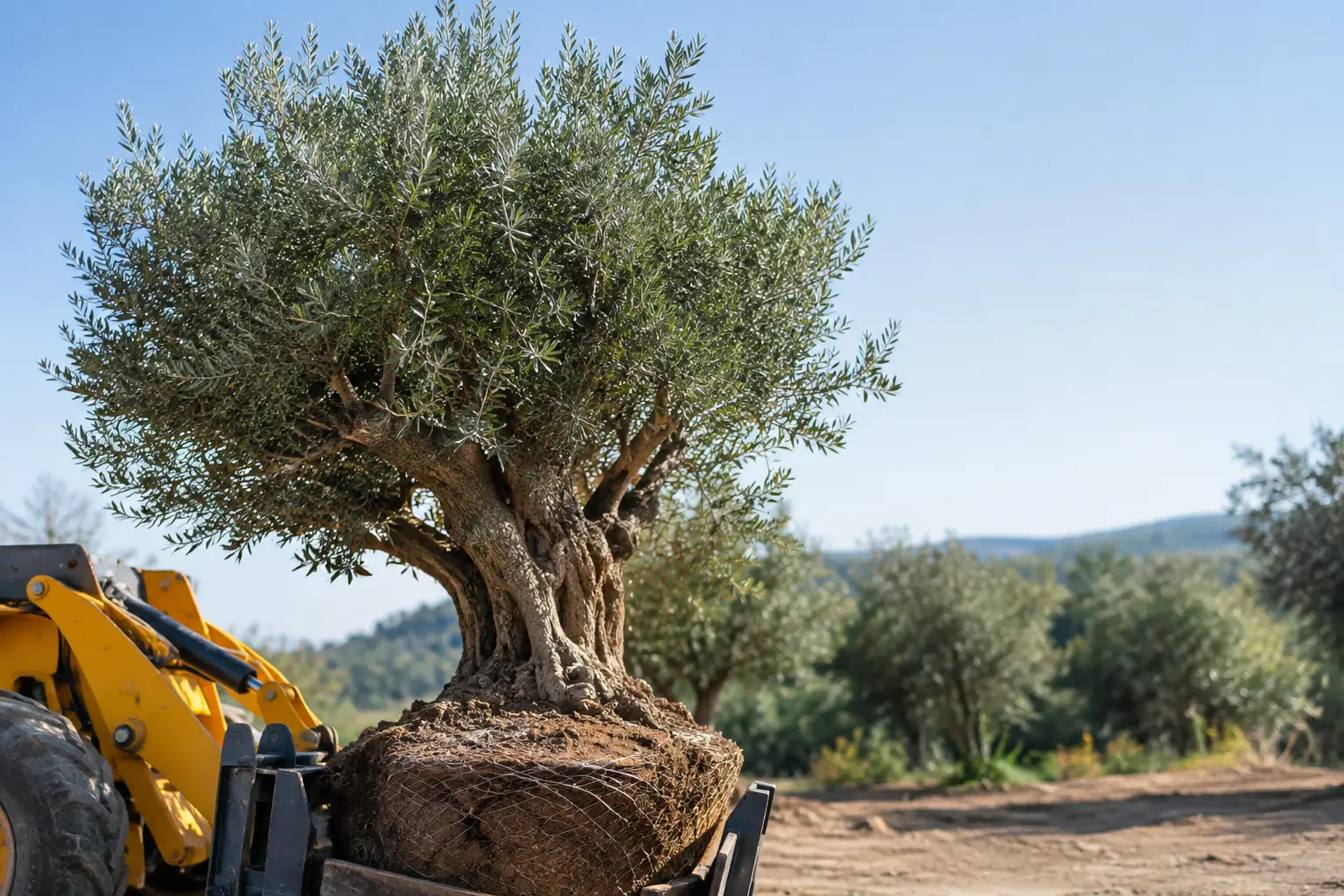
There are trade-offs. A large specimen requires specialist machinery, a properly sized root ball, clear access for lifting equipment, and a prepared destination. It is also more expensive than planting a young olive tree. If the existing tree is severely unhealthy, poorly positioned, or growing too close to foundations and underground services, replacement may sometimes be the more practical choice.
Start with the tree, not the design
Before changing the garden layout, assess the olive tree itself. Trunk condition, branch structure, signs of disease, previous pruning, and the likely spread of the roots all affect the plan. A tree with a stable trunk and healthy foliage is a stronger candidate than one that has been declining for years.
Size matters, but it is not only about height. A broad canopy and substantial trunk usually mean a larger, heavier root ball. Mature olives may look compact above ground while holding a wide root system below it. The goal is to preserve enough of the active roots to give the tree a realistic chance to establish in its new position.
The surrounding site must be assessed as well. Narrow side access, overhead wires, retaining walls, paved areas, irrigation lines, and neighboring structures can all complicate a lift. Good planning prevents the common and costly mistake of digging around a tree before confirming that it can physically be removed from its current spot.
The new location needs to earn the tree
A mature olive should not be moved from one compromised position to another. Choose a site with ample sun, good drainage, and room for the canopy to develop without constant hard pruning. Consider how the tree will work with daily life in the garden: shade near a seating area, a focal point at the entrance, or a sculptural feature beside a deck or pergola.
Allow enough distance from walls, fences, pools, and paved surfaces. Olive roots are not usually as aggressive as those of some other large trees, but a mature specimen needs space. A position that looks generous on a plan can feel very different once the canopy is established and people are moving around the garden.
Timing and preparation protect the roots
In Southern Israel, heat is one of the biggest considerations. Moving a mature olive during intense summer conditions adds stress at the exact time the tree needs moisture most. The preferred timing often falls during the cooler part of the year, when temperatures are milder and the tree can focus more energy on root recovery. Exact timing depends on the tree’s condition, weather patterns, and the site, so there is no single date that suits every move.
Preparation begins before the lifting day. The destination hole should be ready, sized for the root ball, and checked for drainage. A tree should spend as little time out of the ground as possible. Delays between lifting and replanting expose roots to drying wind and sun, which can set recovery back significantly.
The soil removed from the new hole is usually suitable for backfilling, provided it drains well and is free of construction waste. Filling the planting hole with overly rich material can discourage roots from growing outward into the surrounding soil. What the tree needs most is firm contact between its root ball and the native soil, followed by deep, controlled watering.
How a mature olive tree is moved
A professional relocation starts by defining the root ball. The size is based on the tree’s trunk diameter, overall condition, and practical lifting limits. The team carefully excavates around the tree, retaining as much soil around the roots as possible. For a major specimen, the root ball may need wrapping or support before lifting.
Canopy pruning may be used to reduce stress and remove weak, damaged, or awkward branches. This is not the time for aggressive reshaping simply to make transport easier. Heavy pruning removes leaf area that the tree needs for recovery. The right approach balances the root loss below ground with a tidy, manageable canopy above it.
Once lifted, the tree is placed at the correct height in its new hole. Planting too deeply can lead to poor drainage and root problems, while planting too high leaves roots exposed. The trunk should sit at approximately the same soil level it had before. Backfill is added gradually, watered in to settle the soil, and checked for air pockets.
For larger trees, temporary staking or bracing may be necessary. The objective is not to hold the tree rigidly forever, but to prevent root-ball movement while new anchoring roots develop. Any supports should be inspected and removed when they are no longer needed.
Aftercare determines whether the move succeeds
The lifting day gets attention, but the months that follow are just as important. A relocated olive may look fine initially and still struggle later if watering is inconsistent. Newly moved roots cannot immediately reach moisture beyond the root ball, so irrigation must be focused, deep, and adjusted for the season.
In the first weeks, soil should be checked beneath the surface rather than judged by its appearance on top. Overwatering can be as damaging as underwatering, particularly in heavy soil or areas with poor drainage. The aim is evenly moist root-zone soil, not a permanently saturated planting hole.
A mulch layer around the base can help conserve moisture and moderate soil temperature. Keep it clear of the trunk to avoid trapping dampness against the bark. Weed control matters too, since competing growth can take water from a tree that is still trying to rebuild its root system.
Leaf drop, slower growth, and some branch dieback can occur after transplanting. These are signs to monitor, not automatic proof of failure. The key is to watch the whole tree over time: new buds, leaf color, branch flexibility, soil moisture, and the stability of the trunk. Pruning should remain light until the tree has had time to recover.
Build the garden around the olive tree
A mature olive is often most effective when it becomes the anchor for the wider outdoor plan. Its trunk can frame a gravel seating area, soften the edge of a terrace, or create shade beside custom outdoor furniture. Low-water planting, thoughtful lighting, and a well-positioned irrigation system can make the tree feel established in its new home rather than placed as an afterthought.
This is where an integrated approach saves homeowners from unnecessary disruption. Garden design, site preparation, irrigation adjustments, construction work, planting, and continuing maintenance need to support one another. If a deck, pergola, fence, or play area is planned nearby, those dimensions should be resolved before the olive is moved.
A mature olive has already spent decades adapting to its place. Give its next location the same care, and it can continue to bring shade, beauty, and a strong sense of home to the garden for many years ahead.