Garden planters can add structure, greenery and privacy to a new or renovated garden. They also reduce the need for large planting beds. However, the wrong planter can expose roots to excess heat. It can also cause drainage issues or become hard to move when full. Therefore, choose the location first. Then select materials, sizes and planting that suit conditions around your home.
A well-chosen planter can frame an entrance or soften a patio edge. It can also divide a seating area or bring planting closer to a deck. In contrast, unplanned small pots can make a garden feel cluttered. They also create more maintenance than expected.
Start with the conditions around the planter
Do not choose outdoor planters from a photograph alone. Instead, check each location at different times of day. Full sun, reflected heat, wind and maintenance access all affect the decision.
Check sun and reflected heat
A planter beside a pale wall, glass door or paved area may receive more heat than expected. Dark containers can also become very warm in direct sun. Therefore, a planter near a shaded entrance may perform differently on an exposed patio.
Where afternoon sun is intense, choose a generous container over a small one. More growing medium gives roots a more stable environment. In addition, consider how a pergola, screen or nearby tree may change the sun over time.
Consider wind, movement and daily access
Wind can dry container planting quickly. It can also make tall, narrow planters unstable. For exposed corners, choose a lower, wider form. Alternatively, include a secure position in the landscaping plan. Avoid trip hazards beside doors, paths and outdoor dining areas.
Access matters too. A planter behind fixed furniture can be difficult to inspect, clean or replant. Therefore, leave room to reach the planting and clear drainage outlets. This approach helps in compact Carmei Gat gardens. There, every edge often has more than one job.
Compare planter materials before choosing a finish
Planter materials affect appearance, weight, heat response and care needs. No single material suits every garden. Instead, match the container to its location, style and intended permanence.
Fibre cement, fibreglass and lightweight composite planters
These planters can provide a clean, contemporary appearance without solid stone or concrete weight. They can suit upper terraces, decks and areas with limited load tolerance. In addition, they offer a large visual presence. Many styles work well in pairs beside entrances or along patio boundaries.
However, lightweight does not mean weightless when a planter holds soil, plants and water. Product quality, thickness and drainage openings can vary. Therefore, check the maker’s guidance before buying several containers. Also inspect each planter before committing to a large group.
Terracotta and ceramic planters
Terracotta and ceramic can add colour and traditional character. They often work well as a few visible accent planters near seating or an entrance. However, they can weigh more than they appear. Their finish may also weather over time.
Some terracotta containers are porous. As a result, their growing medium may dry differently from sealed planters. Assess the container and planting together. Do not assume one watering approach suits every pot. If a ceramic planter is glazed, check for suitable drainage before planting.
Concrete and stone planters
Concrete and stone planters create a substantial, permanent look. They can define a boundary or anchor pergola-side planting. They can also form part of a raised garden edge. Consequently, their visual weight often suits larger gardens. They also complement renovations with paving, masonry or rendered walls.
On the other hand, filled concrete or stone planters can be extremely heavy. They need a suitable base. Do not treat them as movable furniture. Instead, plan their final position before installation. Take particular care near decks, raised patios or surfaces that need professional support assessment.
Timber planters and custom joinery
Timber planters can connect a seating area, deck or pergola with the garden. They help when standard shapes do not fit the space. For example, they can suit a narrow boundary strip or built-in bench arrangement. A custom design can also align planter height with a screen, seat or outdoor kitchen edge.
Nevertheless, outdoor timber needs a considered material choice and construction detail. It also needs a realistic care plan. Lining, drainage and wet soil contact all matter. Therefore, discuss built-in planters with an outdoor carpentry specialist early. This can prevent awkward gaps, inaccessible planting and conflicts with the wider garden.
Choose planter size for roots, scale and filled weight
Large garden planters usually offer more flexibility than small decorative pots. They hold more growing medium and give roots more room. They also create a stronger visual statement. In addition, they often need less frequent attention than very small containers. However, every planted container still needs monitoring.
First, choose a size that suits the planting at maturity. Do not base your choice on its size at purchase. A small nursery plant can make a large planter look empty initially. Yet plants added to fill every gap may compete later.
Next, calculate the practical load. The planter, wet growing medium, drainage layers and mature plants all add weight. A container that moves easily when empty may need equipment when full. Therefore, seek professional advice before placing one on a deck, balcony, roof area or raised structure.
- Use broad, low planters where stability matters.
- Use taller planters only for a clear purpose, such as screening or marking an entrance.
- Keep large containers clear of inspection covers, drainage channels and access routes.
- Also leave enough space between a planter and walls for cleaning and plant care.
- Repeat one or two sizes and finishes to create order rather than visual noise.
Plan drainage and overflow before filling the container
Drainage is essential for container planting. Excess water needs a route out of each planter. This matters after rain and when irrigation changes for new plants. Therefore, use decorative pots without drainage outlets as cover pots. Do not use them as the main planted container.
Just as importantly, decide where water will go after it leaves the planter. Runoff should not repeatedly soak a wall or stain a patio. It should not collect at a doorway or flow toward the house. In a new garden, include this decision in finished levels and wider drainage planning.
Where appropriate, place containers on feet or supports. This keeps outlets open and lets water escape. Do not block drainage holes with paving, soil or solid saucers. Instead, assess the planter, surface and nearby drainage as one complete setting.
Match planting to the planter location
Container planting needs the same assessment as planting in the ground. Consider sun, wind, root room and the expected care level. For example, a plant that suits a shaded area may struggle in a bright paved corner. This can happen even within the same garden.
Group plants with similar needs where possible. For instance, plan containers along a sunny boundary as one planting zone. Meanwhile, shaded entrance containers may need a different approach. For broader guidance, see our guide to planning low-water planting for Southern Israel gardens.
Newly planted containers need close observation while plants establish. Heat, wind and root-system size can all affect their needs. Rather than following a fixed watering duration, inspect the planter and plant condition regularly. Then adjust the care plan with a professional if needed.
Use planters as part of the garden layout
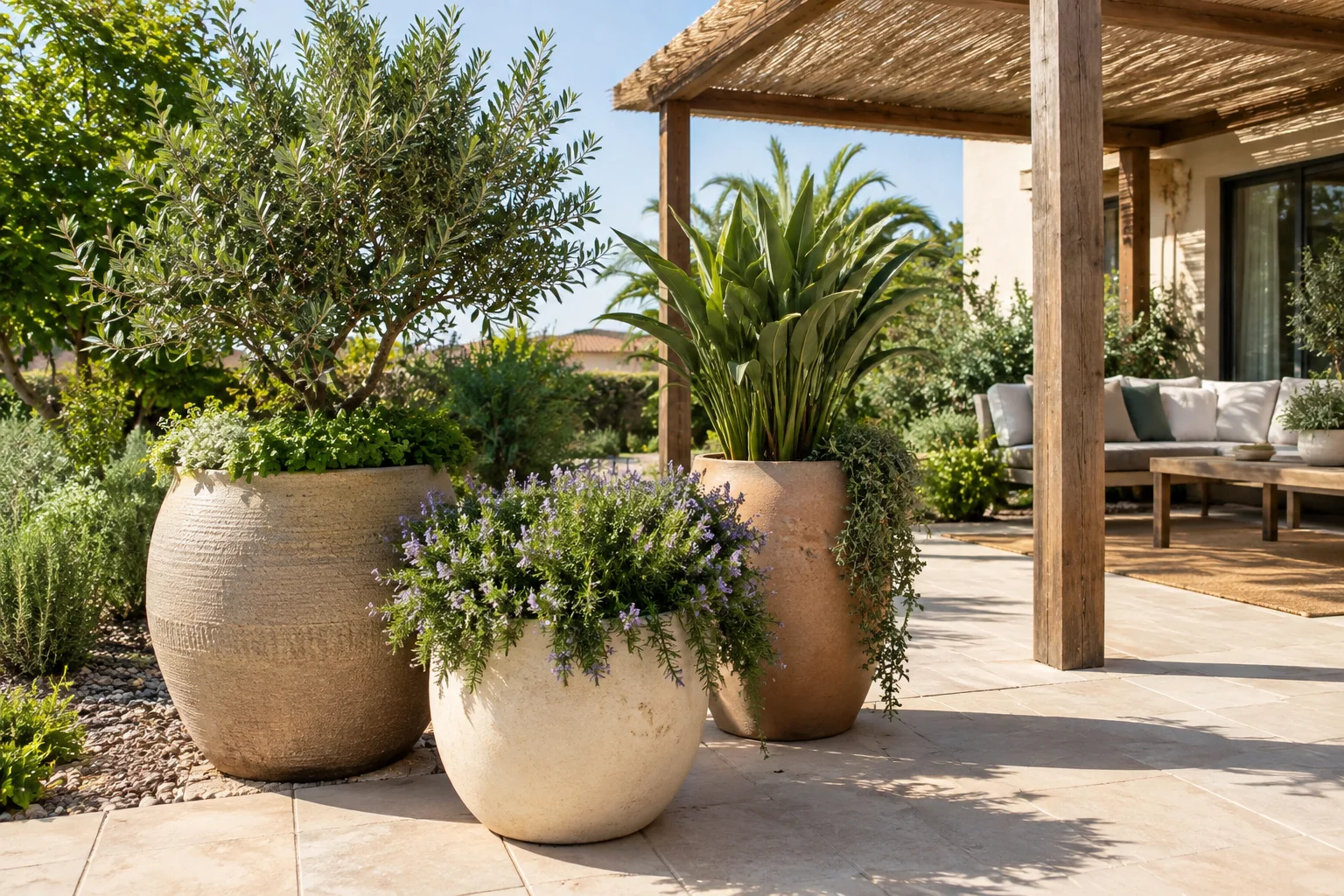
The best garden planters serve a purpose beyond decoration. A pair can make an entrance feel intentional. Likewise, a long raised planter can separate a dining patio from a lawn. Repeated containers can soften a boundary without taking space from seating or play.
For example, a new-build garden may use a built-in planter beside a patio. It can create a planted backdrop for outdoor meals. Alternatively, an existing garden may use two substantial containers to mark a transition. In each case, preserve circulation, views and garden access.
Coordinate containers with nearby surfaces, furniture and shade structures. A separately selected planter can look disconnected. In contrast, repeated timber, paving colours and planter finishes create a calmer result. Therefore, make planter choices within a wider landscaping plan for your home garden.
Questions to discuss before ordering garden planters
A short discussion before purchase can prevent an expensive planter from becoming awkward. First, photograph the intended location. Then note rough dimensions and decide what the planter must achieve.
- How many hours of direct sun and reflected heat will this location receive?
- Will the filled planter remain stable and properly supported on this surface?
- Where will drainage water flow after irrigation or rain?
- What planting scale should the container support over time?
- Does the planter need to provide screening, edging, colour or a focal point?
- Can you reach it easily for planting, cleaning and seasonal care?
- Will its material and finish suit planned patio, pergola, decking or boundary features?
Make planters a useful part of your garden, not an afterthought
Choosing garden planters well means balancing style with sun, drainage, weight and planting needs. Start with fewer, larger containers in purposeful locations. Then build the planting scheme around their conditions. This usually creates a more settled result than adding unrelated pots later.
If you are planning a new garden or renovating an outdoor space in Kiryat Gat, Carmei Gat, Even Shmuel or Southern Israel, Creative Garden Co. can help. We can incorporate planters, planting, shade and hard landscaping into one practical design. Contact us to discuss how your outdoor space should look and work.