Choosing between natural or synthetic grass is a major decision in a new garden or renovation. In Southern Israel, strong sun, heat and long dry periods make appearance only one part of the choice. Instead, consider how your family uses the garden, how much care you want, and how the surface performs in summer.
Natural grass creates a living, softer garden feel, but it needs watering, mowing and regular care. Synthetic grass removes most routine lawn work and avoids lawn irrigation. However, it still needs a well-prepared base, drainage and occasional cleaning. For many homes, a mixed design works best. A smaller lawn with planting, shade and hard surfaces can be more practical than one material across the whole garden.
Quick answer: which lawn is right for you?
Choose natural grass if you value a living surface, enjoy garden care, and can provide suitable irrigation and seasonal maintenance. It often suits gardens where lawn forms an important part of the planting scheme. It also needs enough regular use to justify that care.
Choose synthetic grass if you want a consistently green surface with no lawn watering or mowing. For example, it can suit small gardens, shaded corners, rental properties, and compact play or seating areas. In these cases, a neat surface may matter more than a living lawn.
For gardens with intense direct sun, do not overlook shade. Both surfaces can feel uncomfortable during the hottest hours. Therefore, a pergola, shade sail or well-placed tree may improve garden use more than the lawn choice alone.
Natural or synthetic grass in Southern Israel: the main differences
Water use and irrigation
Natural grass needs regular irrigation to stay healthy and green in hot, dry conditions. Its exact water needs depend on grass type, sun exposure, soil, lawn size and season. In addition, irrigation must apply water evenly and at suitable times.
Give a natural lawn its own irrigation zone. This lets you water it differently from trees, shrubs and planting beds. Otherwise, one schedule can overwater plants or stress the lawn. Our guide to drip irrigation versus sprinklers in Southern Israel explains why separate zones matter when planning a garden.
Synthetic grass does not need water to grow. Therefore, it can reduce water use for the lawn itself. It may still need an occasional rinse to remove dust or freshen a pet area. That differs greatly from routine irrigation, although it does not always mean zero water use.
Summer heat and comfort underfoot
Natural grass can feel more comfortable underfoot when it stays healthy and adequately watered. As a living surface that holds moisture, it generally retains less heat than artificial fibres and a compacted base. However, stressed or sparse grass will not offer the same result.
Synthetic grass can become hot in strong direct sun, especially around midday in exposed areas. Heat levels depend on the product, colour, sun exposure and nearby materials. Moreover, dark paving, walls and reflective windows can make the area feel hotter.
If children play outside in summer, plan for shade rather than expecting either lawn surface to solve heat exposure. Test an exposed garden at different times before you choose a play area. In addition, keep a shaded route between the house and the main seating area.
Appearance and the feel of the garden
Natural grass changes with the seasons, weather and level of care. Many homeowners value that variation. It works especially well beside trees, shrubs and flower beds because it gives the garden a softer, connected look.
Synthetic grass keeps an even green appearance throughout the year. A quality installation can look tidy and inviting, particularly beside real planting, stone borders or raised beds. However, a large artificial surface without plants, shade or texture can make a garden feel flat.
When comparing natural or synthetic grass, look beyond a sample piece. Instead, view the full garden from the home, patio and entrance. The lawn should support the overall design rather than dominate it.
Maintenance: what each option really requires
Natural grass needs mowing, edging, weeding, feeding when appropriate, irrigation checks and occasional repairs. It also needs attention during hot periods, when poor coverage or irrigation faults quickly show. For homeowners who enjoy hands-on gardening, these tasks can feel satisfying. However, others may find them a regular burden.
Synthetic grass avoids mowing, fertilising and lawn irrigation. Nevertheless, it is not maintenance-free. Remove leaves, dust and garden debris regularly. Also, brush fibres in high-traffic areas and clean spills or pet waste promptly. Weeds may appear around edges or through gaps when preparation and upkeep fall short.
Neither option removes the need to maintain the rest of the garden. Planting beds still need pruning, irrigation and weed control. Therefore, pair a smaller lawn with resilient planting if you want less ongoing work. These low-water plants for Southern Israel gardens can add colour and structure without making every border demanding.
Children, pets and everyday use
For children and active family gardens
Both lawn types can offer a useful play surface with proper installation and care. Natural grass gives children a living, softer surface. However, heavy play can create bare patches and compact the soil. The lawn also needs time to recover after frequent use.
Synthetic grass stays visually consistent under regular foot traffic. For example, it can work well in a compact play zone where natural grass would struggle to establish. However, summer surface temperature remains the key limitation. Include shade, water access and supervision in your plan for a synthetic play area.
For dogs and other pets
Natural grass can be pleasant for pets, yet digging, urine marks and worn running routes can damage it. Consequently, busy pet areas may need reseeding or repair. Good drainage also matters because wet or muddy patches quickly make a garden less enjoyable.
Synthetic grass can be easier to keep visually tidy when the installer creates a suitable drainage base and the owner cleans it regularly. Remove solid waste promptly and rinse affected areas when needed. If a pet repeatedly uses one area, designate that zone from the start. This approach avoids expecting the whole lawn to perform equally.
Installation and drainage are not optional details
A lawn performs only as well as the ground beneath it. For natural grass, preparation usually includes shaping levels, improving or adding suitable soil, and ensuring full irrigation coverage. Otherwise, poor preparation can cause uneven growth, puddling or thin areas.
Synthetic grass needs a stable, level and well-draining base. The installer must create correct falls so water moves away from buildings and does not collect below the surface. In addition, plan edges, joins and access points carefully. A roll of turf over uneven ground is unlikely to stay neat for long.
Before installing either lawn type, locate irrigation lines, drainage points, utility covers and changes in ground level. This step matters especially during renovations, where earlier work may sit below the surface. A full garden design and installation plan considers these practical details alongside the finished appearance.
When a mixed approach makes more sense
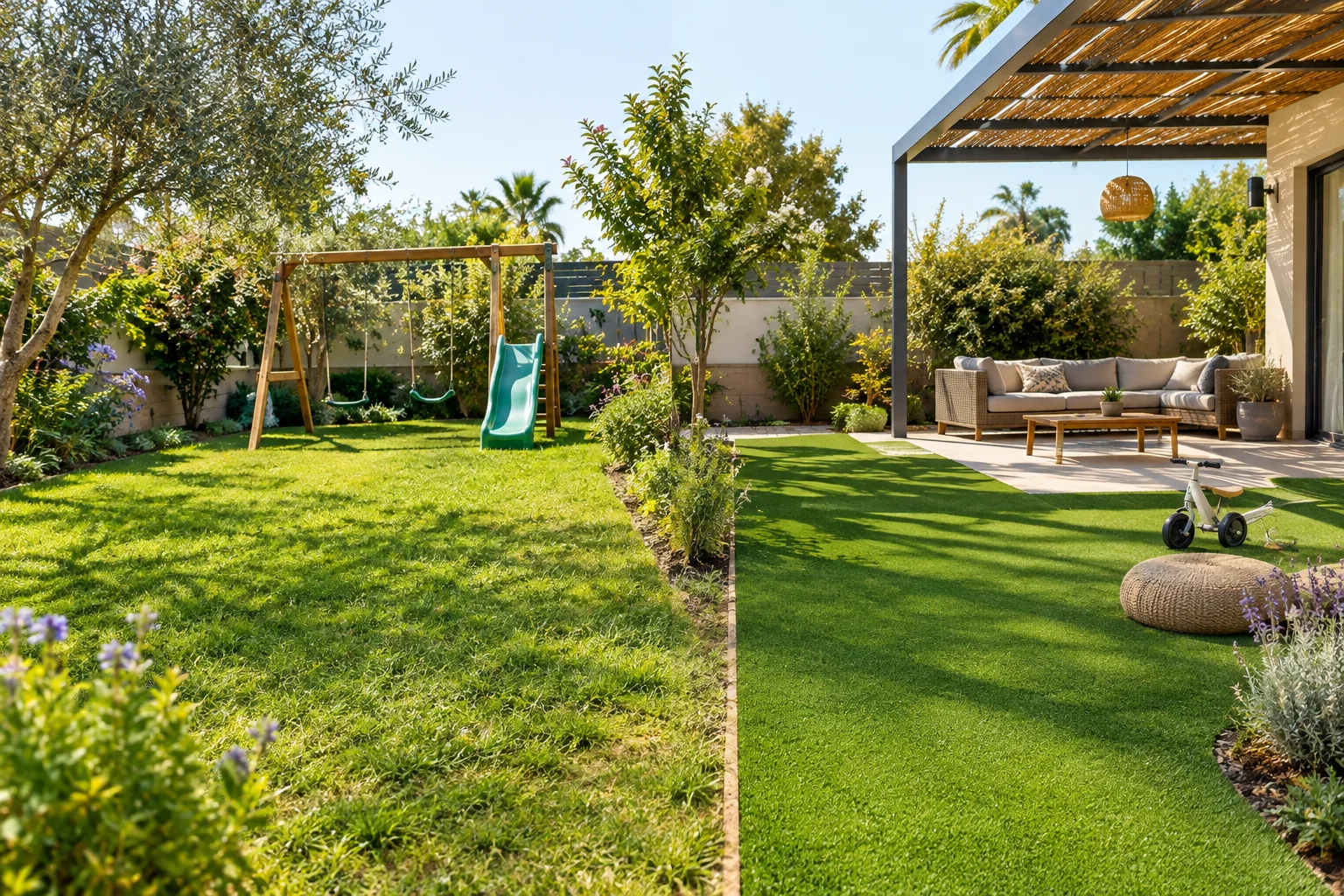
A mixed layout often gives homeowners a stronger balance of comfort, appearance and maintenance. For example, use natural grass for a modest central lawn and synthetic grass in a difficult narrow side area. Then add planting beds around both. Alternatively, place a synthetic play zone near the house while larger planted areas provide shade, privacy and seasonal interest.
Reducing lawn area does not reduce the garden. Instead, a well-designed path, patio, shaded seating space and planted border can make a modest garden feel more useful than an oversized lawn. This approach also gives every surface a clear purpose.
When deciding between natural or synthetic grass, start with your daily routine. Consider where people will sit, where children or pets will run, and how much direct sun each area receives. Then choose the material that suits each zone and its care needs.
A practical checklist before you choose
- Measure the lawn area instead of estimating it visually.
- Watch where sun and shade fall when you expect to use the garden.
- Decide whether the lawn is mainly for appearance, play, pets, entertaining or a combination.
- Check whether current irrigation and drainage can support your preferred option.
- Allow for planting, shade and paths rather than treating lawn as the only garden surface.
- For synthetic grass, ask how the installer will prepare the base, drainage, joins and edges.
- For natural grass, plan a separate irrigation zone and an achievable maintenance routine.
The best choice is the one that fits your garden
There is no universal winner in the natural or synthetic grass decision. Natural grass suits homeowners who want a living garden and can meet its water and care needs. Meanwhile, synthetic grass suits households that prioritise a neat, low-maintenance surface while accepting heat and cleaning considerations.
Creative Garden Co. helps homeowners across Southern Israel plan lawn areas within complete garden transformations. We consider sun, drainage, irrigation, planting, shade and family use. Then, we create a practical design that you can build and maintain with confidence. Contact us to discuss your new garden or lawn renovation.