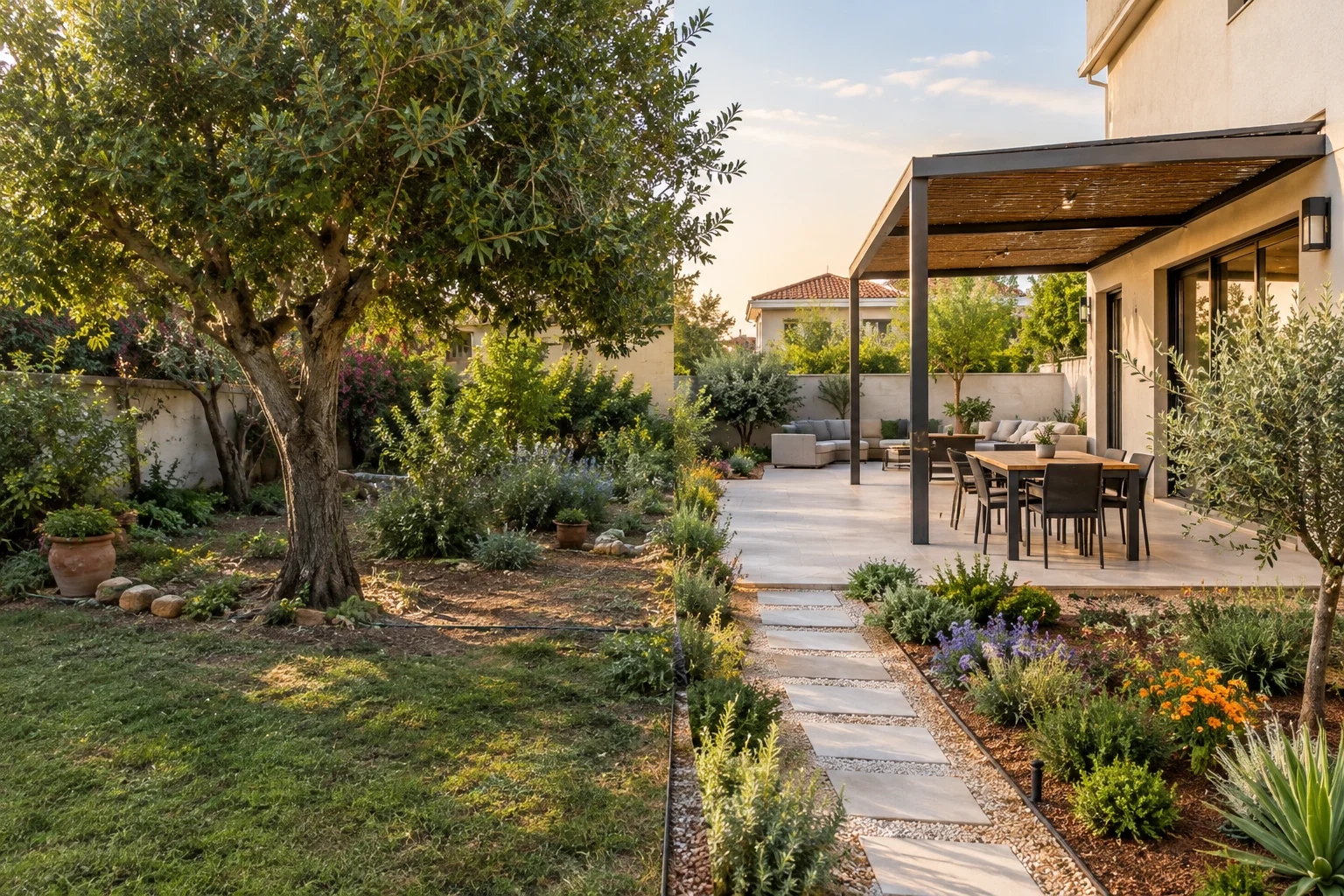
To reduce irrigation water waste, make sure each garden area receives water in the right way, at the right time, and for the right length of time. In Southern Israel, strong sun and long dry periods quickly expose poor irrigation habits. For example, a leaking line or badly aimed sprinkler can waste water while leaving plants stressed.
Fortunately, most waste comes from a few fixable problems. By checking your system, creating sensible zones, and adjusting watering through the year, you can keep plants healthier. You can also make better use of every watering cycle.
Where garden irrigation water waste usually happens
Water waste is not always obvious. A system may run on schedule yet still lose water through leaks, runoff, evaporation, or poor coverage. Therefore, walk around the garden while each irrigation zone runs several times each year.
- Overspray: Sprinklers water paving, walls, fences, or driveways instead of plants.
- Runoff: Water flows across compacted soil, slopes, or hard surfaces before it can soak in.
- Leaks: Split drip pipe, loose fittings, and damaged sprinkler heads can release a surprising amount of water.
- Uneven pressure: Some areas flood while distant plants receive too little water.
- Incorrect timing: A timer runs in the hottest part of the day, after rain, or longer than the soil can absorb.
- Mixed planting: Lawn, thirsty pots, and established shrubs all run from the same zone.
First, identify the cause before increasing run times. More water rarely solves a design or repair problem. Instead, it can hide the problem until plants, soil, or paving show the effects.
Use irrigation zones that match the garden
Good zoning is one of the most effective ways to reduce irrigation water waste. An irrigation zone is a group of plants watered by the same valve and timer setting. However, plants with different needs should not share a zone.
For example, a lawn usually needs a different schedule from a shrub border. Likewise, newly planted trees need more focused watering than mature plants. Containers dry out quickly in sunny spots, so they often need their own short, controlled cycle.
A practical approach to zoning
- Group plants by similar water needs, rather than by what sits closest together.
- Keep drip-irrigated beds separate from spray-irrigated lawn areas.
- Separate sunny beds from beds that receive significant shade.
- Give pots, vegetable beds, and new planting their own zone where possible.
- Use separate zones for slopes or narrow strips, since they need slower delivery.
This does not mean every small corner needs its own valve. Instead, create sensible groups that let you adjust watering without overwatering another area. If you redesign a garden, plan irrigation alongside paths, beds, lawn, and shaded seating. Our garden design service in Southern Israel can help bring these decisions together before installation begins.
Choose the delivery method carefully
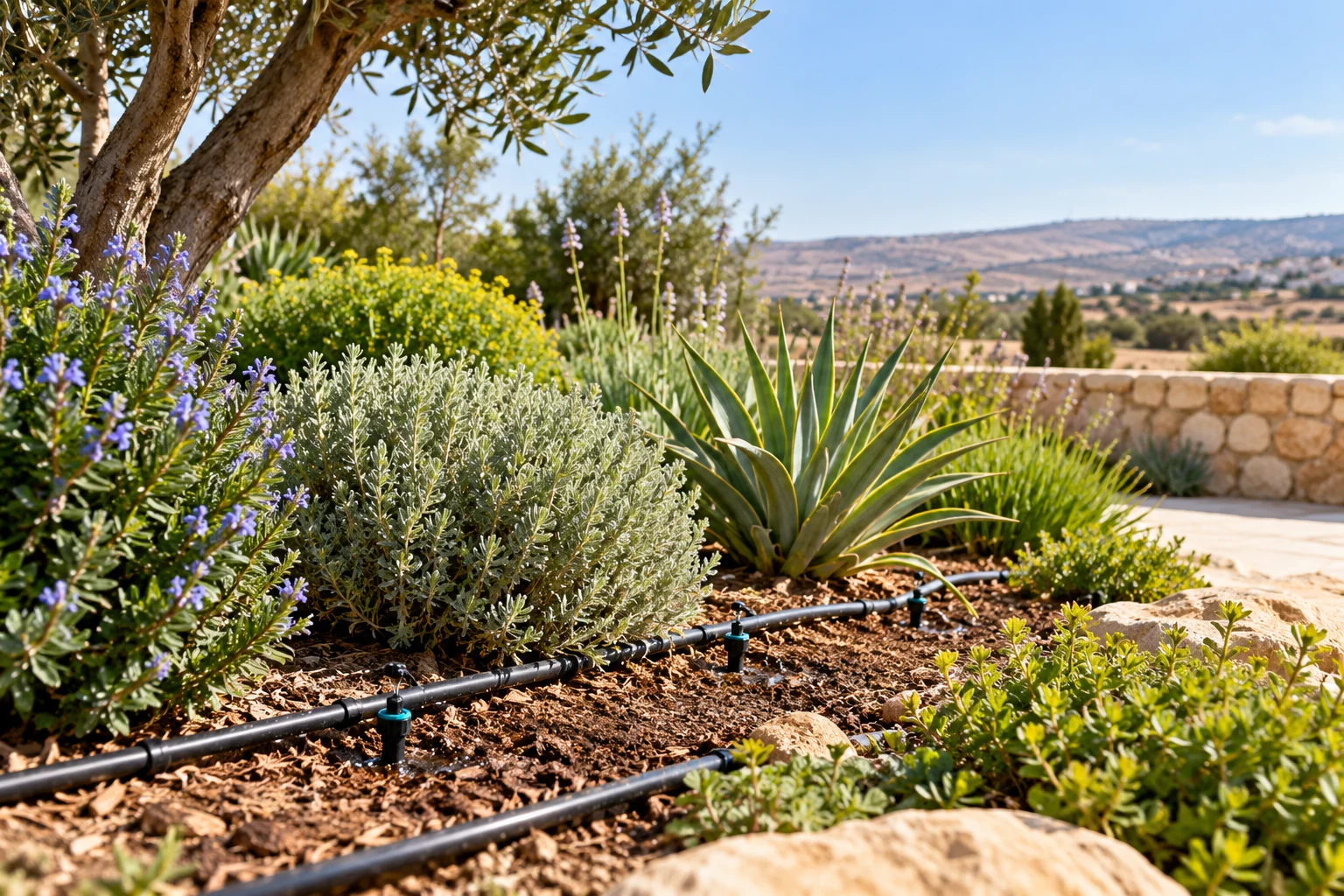
Drip irrigation usually suits planting beds, hedges, trees, and many containers. It delivers water close to the root zone. As a result, less water lands on bare soil, foliage, and nearby paving.
Drip irrigation also reduces losses from wind. Wind can carry fine spray away from its intended area. Sprinklers still have a useful role, especially for lawn. However, each head should match the lawn’s shape and size.
A sprinkler that throws water onto a path is not watering efficiently, even if the grass looks green. Therefore, check that heads sit upright, rise properly, and remain clear of grass, soil, or plants. Then adjust the arc and nozzle so water stays within the lawn or planted area. For more detail, read our guide to drip irrigation versus sprinklers in Southern Israel.
Check pressure, coverage and sprinkler overspray
Pressure problems create two common forms of garden irrigation water waste. Excessive pressure can produce fine mist. This mist drifts and evaporates quickly in warm or windy conditions. Low pressure, on the other hand, can leave weak coverage at the end of a line.
Run one zone at a time and watch the full cycle. Look for misting, puddles, dry patches, and heads that fail to pop up or rotate. Also, check whether sprinklers in the same zone deliver similar patterns. If not, the system may need cleaning, adjustment, or repair.
Do not extend the whole zone to compensate for one dry patch. First, find out why that spot is dry. For instance, a blocked nozzle, plant growth, a broken head, or poor spacing may cause the problem.
Find and repair leaks early
Leak checks are essential if you want to reduce irrigation water waste. Small leaks can be hard to spot. They may sit below mulch, inside dense planting, or appear only when one zone runs. Yet they can create wet patches, algae on paving, or unusually vigorous weeds.
Common irrigation leak signs
- A damp patch appears when the system is off.
- Water pools around a sprinkler head or drips from a fitting.
- One section of drip line has much weaker flow than the rest.
- The soil sinks or washes away near pipes and fittings.
- A valve continues to release water after the timer finishes.
- Your garden has a dry area beside an unexpectedly wet one.
Inspect accessible pipework, emitters, joins, and sprinkler heads. Then replace visibly damaged components promptly. Also, clear soil or roots from around heads where needed. If hidden pipework, a valve fault, or unreliable pressure causes the issue, professional diagnosis can prevent repeated surface repairs. Creative Garden Co. provides sprinkler irrigation repairs to help homeowners identify faults and restore efficient coverage.
Set a timer schedule that suits the season
An irrigation timer should not use one setting all year. Plants grow, temperatures change, and daylight shifts. Therefore, review the schedule at the start of hotter weather and again when conditions cool.
Watering in the early morning is often practical because temperatures are lower and wind is lighter. This gives water time to soak into the root zone before intense heat arrives. In contrast, midday watering loses more moisture to evaporation. It may also give soil too little time to absorb water properly.
Run time matters as much as start time. If water flows across soil or onto paving, use shorter cycles with a pause between them. This cycle-and-soak approach gives compacted soil or slopes time to absorb water. As a result, less water runs away before the next cycle begins.
Importantly, do not set the timer based only on dry surface soil. Check below the surface near the root zone. A light scratch with a hand trowel can show whether water reaches the depth where roots need it.
Improve the soil and protect moisture around plants
Irrigation works best when soil can take in and hold water. Bare, compacted soil heats up quickly and can shed water across the surface. Meanwhile, healthy soil with organic matter absorbs moisture more evenly.
Mulch also helps conserve moisture around trees, shrubs, and planting beds. A suitable mulch layer reduces direct sun on the soil and slows evaporation. However, keep mulch clear of stems and tree trunks. Mulch piled against them can trap unwanted moisture.
In addition, choose plants that suit their position. A plant that struggles in full afternoon sun may need frequent watering just to survive. More suitable planting can create a more resilient garden. It can also reduce demand on the irrigation system.
A simple monthly irrigation check
A short routine can help you reduce irrigation water waste before small faults become costly or damaging. Set aside time once a month during the main watering season. Then complete these checks:
- Run every zone and look for spray on paths, walls, and outdoor furniture.
- Check emitters, drip lines, fittings, and sprinkler heads for leaks or damage.
- Clear clogged emitters and remove soil or plant growth from sprinkler heads.
- Look for dry areas, pooling water, or runoff at the edge of beds.
- Test the soil below the surface and adjust run times if necessary.
- Review whether new plants, pruning, or changed shade have altered the garden’s needs.
Regular checks are especially useful after garden work, strong winds, or rapid plant growth. For example, a moved pot, a root pushing up a line, or a newly grown shrub can change coverage without warning.
When an irrigation upgrade is the better answer
Sometimes, adjustments are enough. However, an older or poorly planned system may keep wasting water because its zones, pipework, or method no longer suit the garden. This often happens after a lawn becomes a planting bed, a patio grows, or mature plants create new shade.
A professional garden irrigation system installation can create a clearer layout with suitable zones, correctly placed drip lines, and sprinkler coverage that matches the usable lawn. It can also make future maintenance easier. For example, valves, filters, and controls can remain accessible.
Creative Garden Co. helps homeowners across Southern Israel improve irrigation during garden repairs, renovations, and complete landscaping projects. If your system leaks, waters unevenly, or no longer suits your garden, contact us. We can assess the layout and plan a practical solution that reduces waste while keeping the garden healthy.