A garden renovation timeline depends on what must change below ground and what you want above it. A simple tidy-up with fresh planting may take only a few working days. However, a full transformation can take several weeks, from the first visit to the final installation. This type of project may include clearance, new levels, drainage, irrigation, paving, shade and planting.
It helps to plan the work in stages instead of relying on one promised finish date. Good preparation prevents disruptive changes later. In Kiryat Gat and across Southern Israel, strong sun, irrigation and shade need attention from the start. The guide below explains the usual sequence and shows how homeowners can prepare.
A realistic overview of the garden renovation timeline
Every site differs, so a contractor needs to understand the garden and proposed work before giving a reliable duration. Still, a modest renovation that keeps the layout may finish in days or over a short work period. By contrast, a larger reconstruction needs more planning and several coordinated installation stages.
For example, refreshing planting, repairing irrigation and renewing a small lawn differs greatly from removing surfaces and changing levels. Building a patio or pergola also adds work. Likewise, a mature tree can provide worthwhile shade, yet its roots and canopy may call for a more careful method.
It also helps to separate construction from establishment. Paving, irrigation and planting may be complete, but new plants need time and correct watering to fill out. Therefore, plan first for a usable finished space. Then allow a settling-in period for the living parts of the garden.
Stage 1: Site assessment and garden renovation planning
The first stage examines what is already on site. The review covers access, boundaries, sunlight, trees, slopes, drainage, irrigation and how your household uses the space. As a result, the contractor can identify practical limits before work starts.
Next, decide what must stay, what you can improve and what you should remove. For instance, a healthy established tree may provide valuable shade in a sunny garden. On the other hand, an overgrown bed with unsuitable plants may need clearance and replanting.
Clear priorities make the rest of the garden renovation timeline more predictable. Consider these practical questions before work begins:
- Do you need a shaded dining or seating area?
- Will children, pets or frequent guests use the garden?
- Are low-water planting and easier maintenance priorities?
- Do levels direct water towards the house, patio or neighbouring boundary?
- Are there walls, trees, paving or irrigation components worth keeping?
Our garden renovation checklist can help you organise these choices before you request a detailed scope. Early decisions reduce the chance of changing completed work later.
Stage 2: Design decisions, scope and material selection
Once you set the priorities, you can agree the layout and materials. This stage may move quickly for a straightforward refresh. However, it can take longer when the project includes new zones, structures, retaining elements or several material options.
A clear scope shows how paths, patios, planting beds, grass, irrigation and shade features work together. For a larger transformation, a visual concept helps homeowners compare ideas before construction. However, an image supports planning; it does not guarantee that every detail will suit the actual site.
Material choices also affect timing. Readily available pavers or standard components can simplify scheduling. In contrast, custom carpentry, specific plants or made-to-measure features may need more lead time. Confirm selections early when your garden makeover timeline depends on an event, move-in date or holiday period.
At this point, the garden renovation timeline becomes easier to plan because the scope, materials and order of work are clear.
For more on work that can form one coordinated project, see our garden renovation and transformation service.
Stage 3: Clearance, protection and site access
Construction starts by making the site safe and accessible. The team may remove weeds, unwanted shrubs, old lawn, damaged edging, loose paving, waste and obsolete irrigation parts. Before heavier work starts, they identify and protect any valuable plants or trees that will remain.
Access is a major factor at this stage. Direct side access usually lets materials and waste move more easily. By comparison, narrow routes through the home, steps, tight passages or shared areas can slow deliveries, clearance and excavation.
Clearance often uncovers issues hidden by dense growth or old surfaces. For example, installers may find leaking pipes, shallow roots, uneven ground or poorly placed irrigation. Finding these conditions early helps the project. Nevertheless, they can change the work order.
Stage 4: Ground levels, drainage and base preparation
Groundwork is one of the most important garden renovation stages. Yet homeowners see little of it once the project ends. Before installers add paving, synthetic grass, decking or planting beds, they may clear, shape, compact or build up the ground to create the intended levels.
Correct falls around patios and the house matter greatly. Water needs a sensible route instead of sitting against a wall or flowing into an unsuitable area. If the garden has level changes, drains or inspection covers, the team must consider them before installing surfaces.
Therefore, do not rush groundwork just to reach the visible finish. A patio or lawn surface relies on good preparation. For a closer look at this issue, read our guide to garden drainage and ground levels before landscaping.
Stage 5: Irrigation and below-ground services
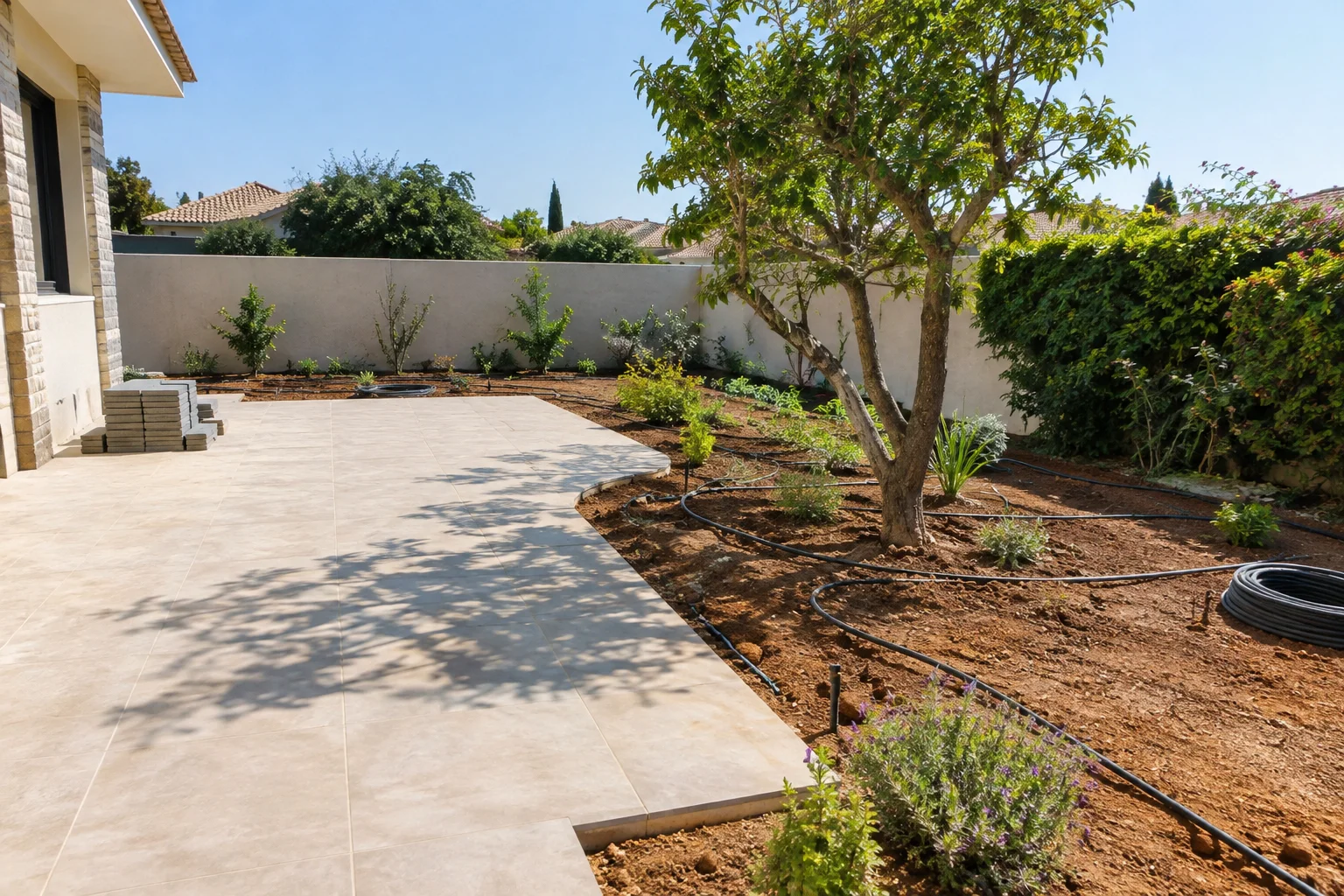
Installers usually add irrigation after key ground preparation and before final planting or finished surfaces. This order lets them position pipes and drip lines without avoidable disruption later. As a result, the completed garden needs less digging in the future.
A practical system separates areas with different needs. Trees, beds, pots and lawn may need different watering methods or schedules. In Southern Israel, thoughtful zoning can support healthier planting and avoid unnecessary water use.
Existing systems also deserve inspection during a garden reconstruction. Old pipework may leak, have blocked drippers, give weak coverage or suit the old layout only. Therefore, repair or adapt the system now rather than dig into new paving or established beds later.
Learn more in our guide to planning garden irrigation zones.
Stage 6: Hard landscaping and outdoor structures
Hard landscaping gives the garden its durable framework. Depending on the design, this stage can include patios, paths, edging, walls, raised planters, decks, fencing, screens and pergolas. Installers usually complete this work before final planting because they need clear access for materials and equipment.
This is often the longest visible part of a garden renovation timeline. Timing depends on the required preparation, layout complexity, relevant curing or setting time, weather and bespoke components. Consequently, a simple path may progress faster than a detailed patio with several features.
Shade structures need careful placement, not simply attractive proportions. Their orientation, patio location and your usual garden hours affect the shade they provide. It is much easier to settle these choices before plants and furniture arrive.
Stage 7: Planting, lawn and finishing details
Planting usually comes near the end of installation. By then, paths and seating areas are defined, irrigation is ready and beds have their final shape. The team can then position plants for mature size, sunlight, shade and maintenance access.
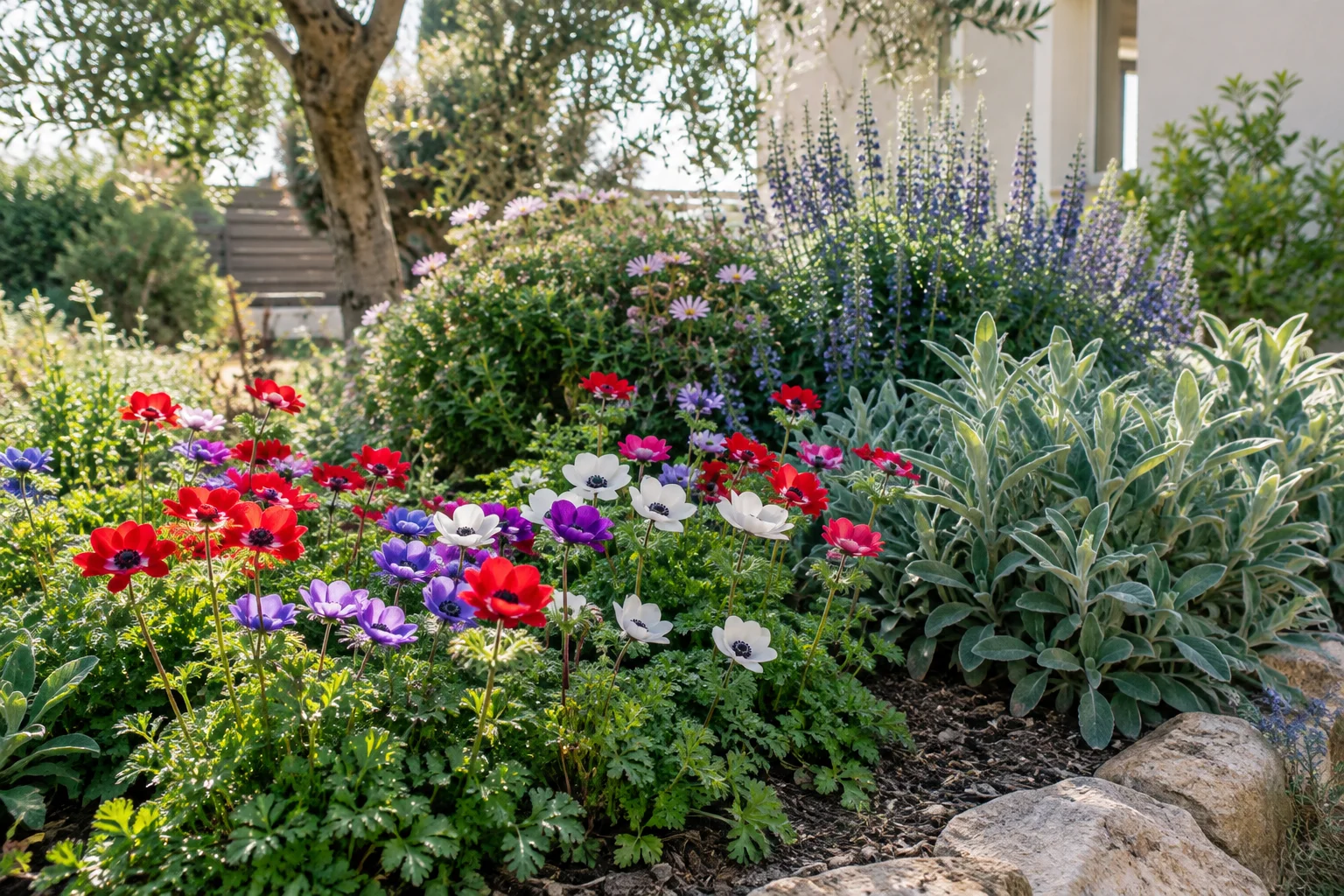
New planting needs to suit the location rather than just fill open soil. For example, a hot, exposed garden may need sun-tolerant plants. Gardeners can also arrange plants so larger shrubs or trees will not crowd smaller ones over time. In addition, mulch, borders and ground cover can give beds a finished appearance.
Install natural or synthetic grass only after the base, edges and nearby work are ready. Finally, the team checks irrigation, surface levels, gates, paths and cleanup. They can also make small adjustments that improve everyday use.
What can delay a garden renovation?
Even a well-planned project may need adjustment. Weather can make some outdoor tasks impractical, while high heat can affect the best time for certain planting work. In addition, material availability and delivery dates can alter the sequence.
Site discoveries are another common cause of change. Hidden drainage problems, unstable paving, difficult access, unknown irrigation lines or retained-tree roots may require a revised approach. These issues do not always reflect poor planning. Instead, they often become clear only after work begins.
Homeowner changes can also extend the process. Changing paving, adding a pergola after groundwork or moving a patio during installation usually affects later work. Therefore, settle major layout and material choices before ordering wherever possible.
How to keep your garden makeover timeline on track
- Set clear priorities for use, shade, privacy, planting and maintenance before design work starts.
- Share site information early, including access limits, known irrigation issues and features you want to retain.
- Choose major materials and outdoor features before you fix the installation schedule.
- Allow access for deliveries, waste removal and installers throughout the project.
- Expect some flexibility for weather, site conditions and the needs of retained trees or plants.
- Plan aftercare for new planting, including irrigation checks and early maintenance.
Plan the sequence, not just the finished look
A successful garden renovation involves more than adding plants at the end. The strongest results follow the right sequence: assess the site, agree the layout, prepare the ground, install irrigation, build durable features and complete the planting. As a result, each stage supports the next one.
If you are considering a garden renovation in Kiryat Gat or elsewhere in Southern Israel, Creative Garden Co. can assess your existing space and help create a practical phased plan. Contact us to discuss the scope, likely stages and the best route towards a garden that works for everyday life.