In Southern Israel, winter flowers add welcome colour and life to gardens during cooler months. Many of these vibrant plants arise from bulbs and tubers — specialized underground structures that sustain growth through seasonal changes. Understanding these underground stores helps you choose the right plants and care for them properly for beautiful, lasting displays.
1. What Are Bulbs and Tubers?
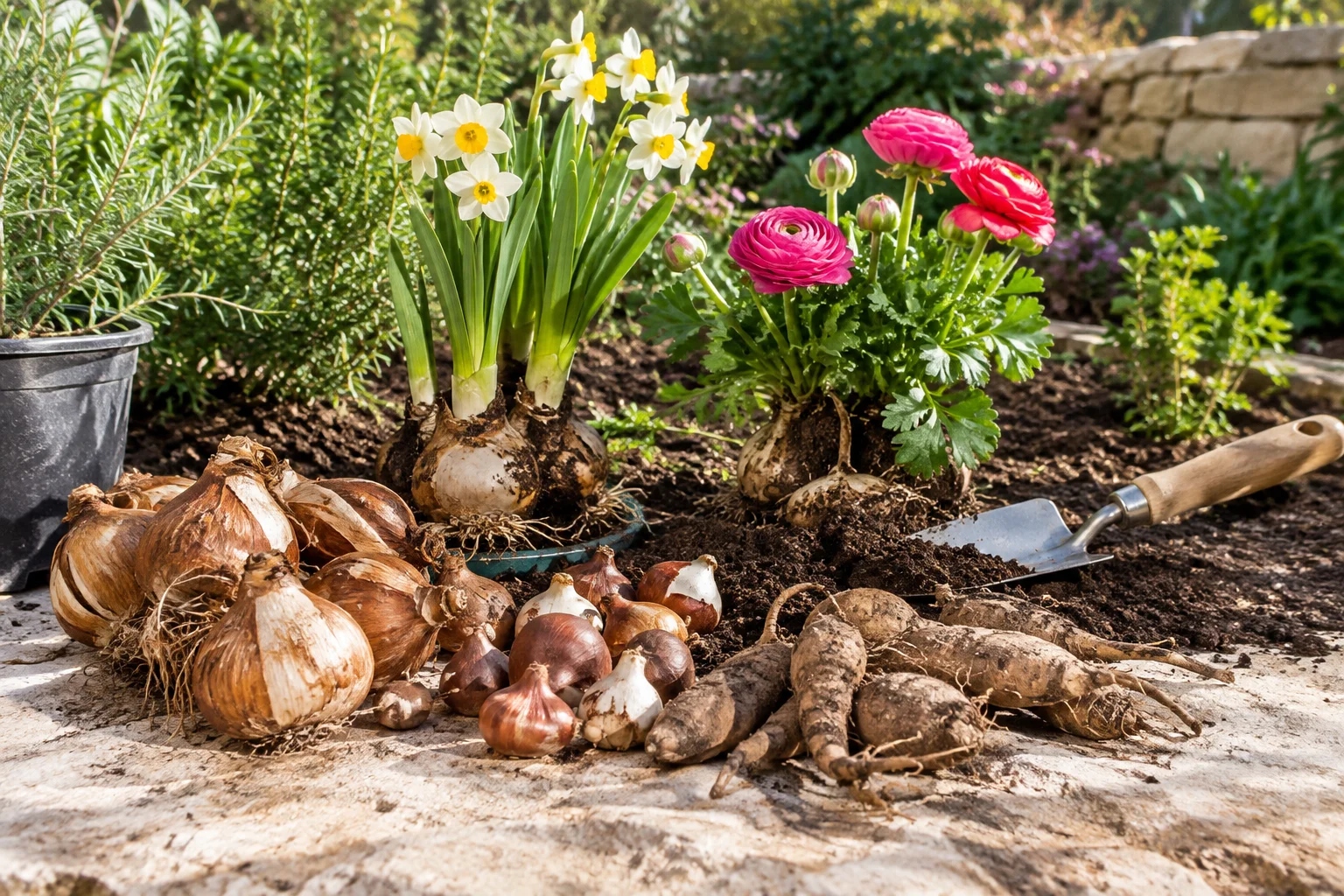
Bulbs and tubers are underground plant parts that act as storage organs. They store food nutrients and moisture, enabling the plant to survive hotter, drier periods and resume growth and flowering in the cooler, wetter season.
- Bulbs (like narcissus, tulips and some irises) have layered fleshy scales wrapped around a central shoot. They are compact, rounded, and usually produce spring or winter flowers.
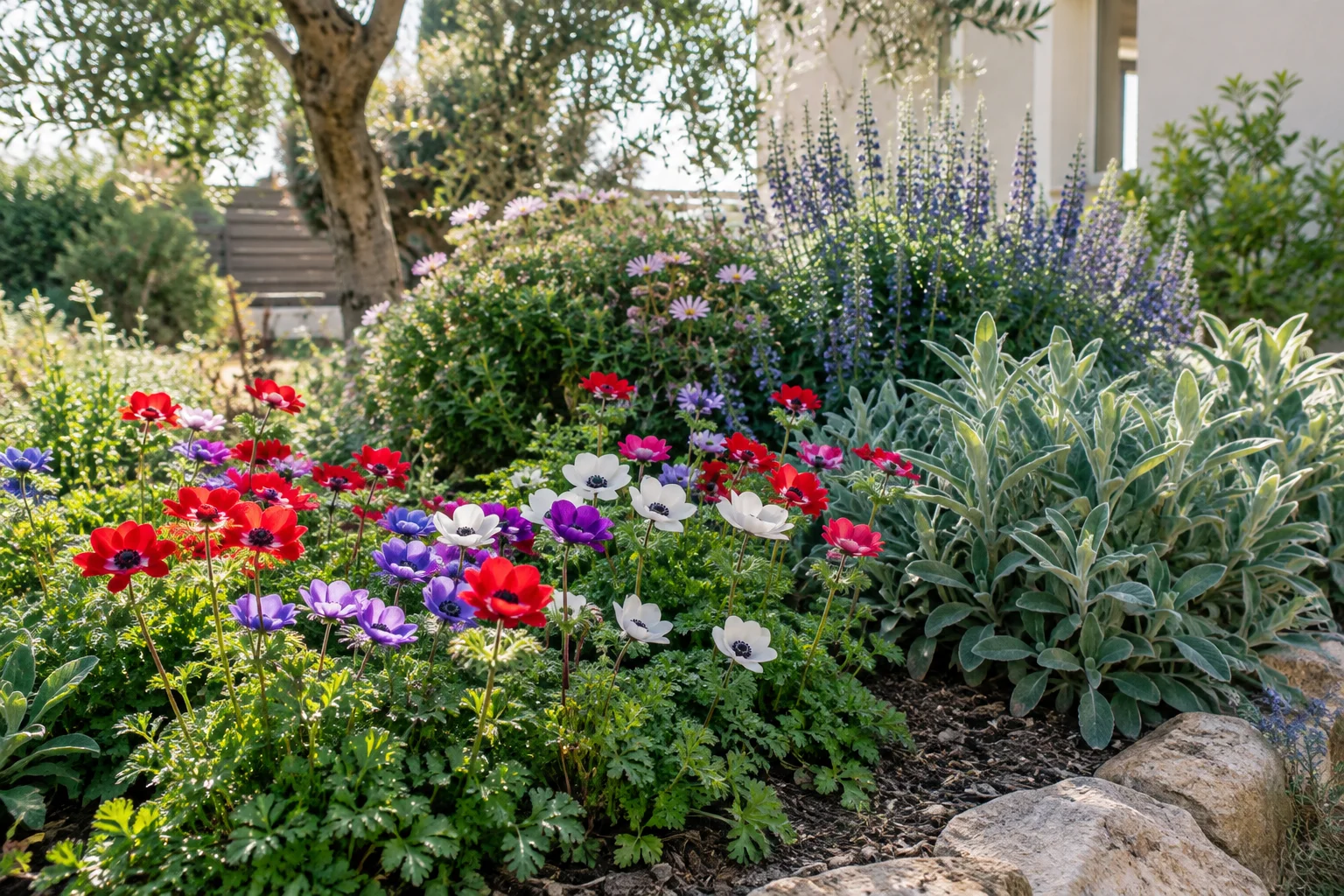
- Tubers (such as ranunculus and anemones) are swollen underground stems or roots with buds called “eyes” that sprout new plants. Tubers are less structured than bulbs but similarly serve as nutrient stores.
These storage organs ensure winter-flowering species have resources to grow even when aboveground conditions are unfavourable for photosynthesis.
2. Why Proper Planting Conditions Matter
Planting bulbs and tubers in Southern Israel requires attention to soil and watering because stagnant water can encourage rot, especially in these underground stores. Notably:
- Ensure planting sites have well-draining soil to avoid stagnant water around the bulbs or tubers.
- Avoid using fresh manure near them, as it may cause excessive nitrogen release and harm the bulbs’ delicate tissues.
- There is no universal planting depth for all species; planting depth varies depending on the type of bulb or tuber and local microclimate conditions.
Consulting professional services, like the garden maintenance experts at Creative Garden Co., can ensure bulbs and tubers are planted correctly and cared for through the season.
3. Choosing Healthy Nursery-Grown Plants Over Wild Collection
For cooler season and winter flower displays in beds or containers, it’s best to source bulbs and tubers from reputable nurseries rather than collecting wild plants. Reasons include:
- Nursery-grown plants have been cultivated for garden environments and are less likely to introduce pests or diseases.
- They offer predictable flowering and are adapted to nursery conditions, improving establishment success.
- Wild collection can threaten native plant populations and is generally discouraged.
Some common winter-flowering bulbs and tubers suitable for Southern Israel gardens include narcissus, tulips, irises, anemones, and ranunculus, all available at specialized nurseries like Meltser Nurseries.
Summary
Bulbs and tubers serve as vital underground stores that enable winter flowers to thrive in Southern Israel’s climate. Proper planting with well-drained soil, avoiding stagnant water and fresh manure, and sourcing healthy nursery plants are key to success. Whether planting in garden beds or containers, understanding these plant structures helps you plan for vibrant winter displays.
For help with planting and ongoing care, a professional garden maintenance service can provide tailored advice and support to keep your bulbs and tubers flourishing year after year.