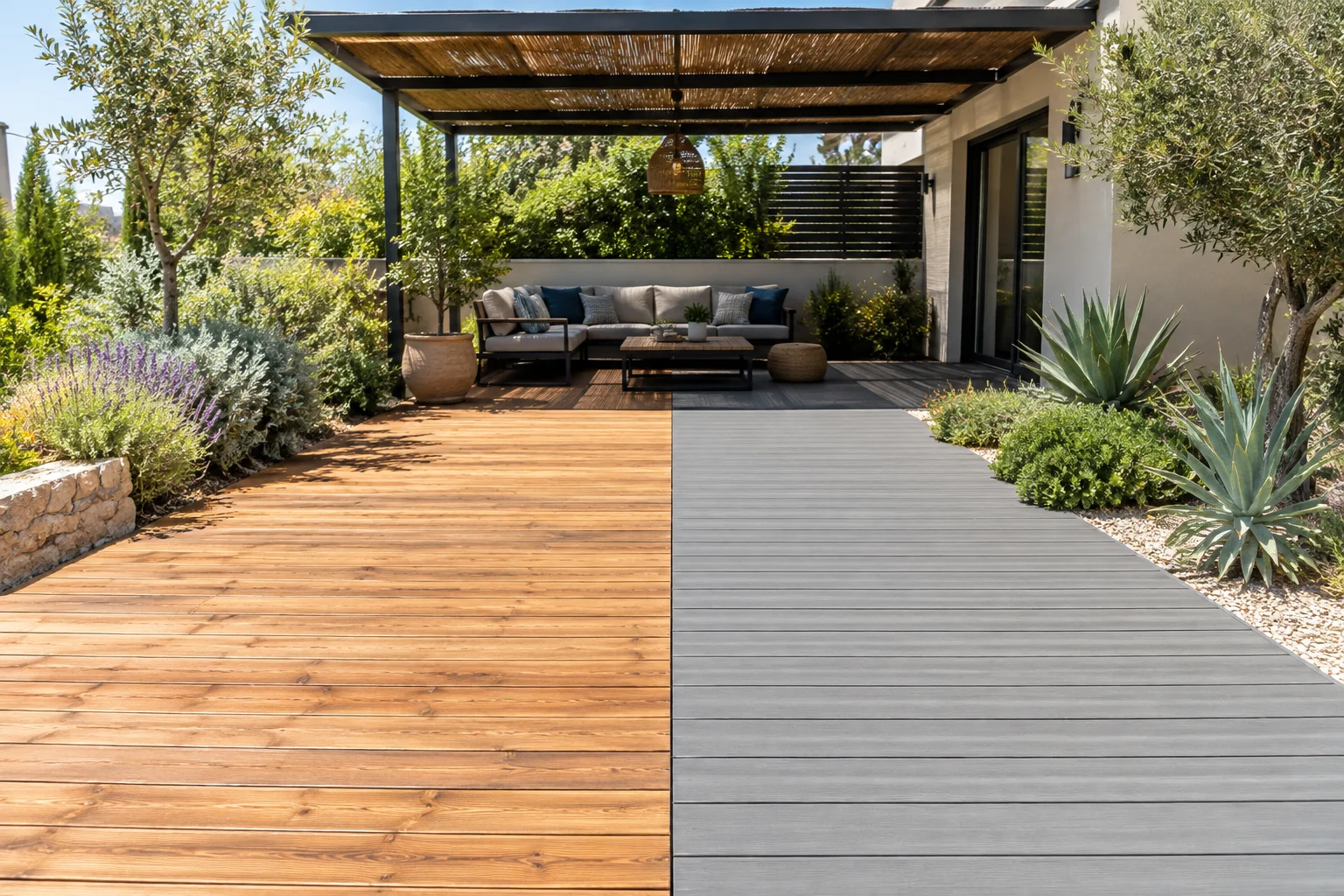
Choosing between wood vs composite decking affects how your garden looks, feels and performs for years. In Southern Israel, strong sun, summer heat and regular outdoor use make this more than a style decision. Therefore, choose the material that suits your garden, maintenance routine and plans for the space.
Natural wood offers warmth, character and flexibility for a custom-built deck. Meanwhile, composite decking often provides a more consistent finish and lower routine maintenance. However, neither option suits every garden automatically. A poolside deck, exposed seating area and shaded entrance each place different demands on the surface.
Wood vs composite decking: the quick answer
Choose wood decking if you value a natural appearance, need an unusual shape and can provide periodic care. It also works well as part of a wider timber scheme with fencing, planters or a pergola.
Choose composite decking if you prefer a uniform look and want less sanding, staining or oiling. As a result, it can suit busy households. Still, consider product quality, colour and heat exposure carefully.
Most importantly, do not choose from a small sample alone. Instead, view full-length boards outdoors and consider the garden’s sun pattern. Then decide how the deck will connect to paths, planting, shade and the house.
How Southern Israel’s climate changes the decision
A deck in Southern Israel must cope with long periods of strong sunshine and high surface temperatures. Therefore, its position matters as much as its material. A dark deck in full afternoon sun can become uncomfortable under bare feet, whether it uses wood or composite.
Wood can dry, fade and move as it responds to heat and changing moisture. Likewise, composite boards can expand and contract in exposed areas. For that reason, use correct board spacing, suitable fixings and a well-planned support structure for either material.
Shade makes a major difference. For example, a well-positioned custom pergola can make a deck more pleasant during hot parts of the day. It can also reduce direct sun exposure on the boards. However, shade cannot replace suitable materials and sound construction.
Natural wood decking: appearance, feel and care
Wood has a look that composite boards aim to imitate but cannot fully duplicate. Grain variation, knots and changing tones give a timber deck character. In addition, wood often sits naturally beside planting, stone and other garden materials.
Wood is also highly adaptable. Builders can shape a custom wooden deck around a tree, down a slope or into an awkward corner. They can also create a seating platform at the right level. Consequently, wood suits gardens that need a made-to-measure solution rather than a standard rectangle.
What maintenance does a wooden deck need?
Wooden deck maintenance in Southern Israel is not difficult, but homeowners should expect it. Sweep away dust, leaves and garden debris regularly. In addition, inspect boards, fixings and edges after a demanding summer or winter season.
Over time, timber may benefit from cleaning and a suitable protective finish. However, the right schedule depends on the timber, exposure and chosen finish. For example, a deck under a pergola will usually weather differently from one in direct sun all day.
Natural weathering is not always a problem. Some homeowners like the softer, silvery tone that aged timber develops. Others prefer to maintain a richer colour. Therefore, choose wood with a realistic understanding of how its appearance may change.
When wood is the better fit
- You want a warm, natural surface with individual character.
- Your garden needs a custom shape, raised platform, steps or integrated planters.
- You are happy to carry out, or arrange, periodic care.
- You want the deck to coordinate with other timber features.
- You are renovating the garden in phases and want flexibility in the design.
For homeowners who prefer this route, our guide to custom wooden deck installation explains how to plan a deck around the garden and everyday use.
Composite decking: consistency and lower routine upkeep
Manufacturers make composite decking from a blend of materials to provide a consistent board finish. Its main appeal is simple: it does not usually need the staining or oiling routine of natural timber. As a result, composite decking can suit homeowners who want a tidy surface with less hands-on upkeep.
Colour consistency offers another advantage. Manufacturers produce boards in set tones, so a finished deck can look clean and uniform. This approach can work well with a modern garden scheme. In particular, it suits homes with contemporary paving, metal details or crisp planting lines.
However, composite decking is not maintenance-free. It still needs sweeping and cleaning. Food spills, soil, pollen and leaves can mark any outdoor surface when left in place. In addition, follow the cleaning guidance for the specific product instead of using harsh methods without checking.
Points to consider before choosing composite
Not all composite products look or perform the same way. Board texture, finish, colour, construction and installation quality all matter. Therefore, compare actual samples in direct daylight rather than relying on online photographs.
Heat deserves particular attention when choosing composite decking in Israel. Darker boards can absorb more heat in exposed locations. Even with a lighter colour, assess your garden carefully. This matters especially when children, pets or bare-foot use are priorities.
Composite boards also need the correct substructure, drainage and expansion allowances. A low-maintenance surface cannot compensate for a poorly prepared base. In addition, prevent water from collecting beneath the deck. Consider access to important garden services before installation begins.
When composite is the better fit
- You want a consistent colour and contemporary finish.
- You would rather avoid regular refinishing work.
- Your deck is a straightforward shape with a clear, well-prepared base.
- You are willing to select the board colour carefully for the amount of sun it receives.
- You want an outdoor surface that fits a lower-maintenance garden routine.
Comparing heat, comfort and slip resistance
When comparing wood vs composite decking, homeowners often ask which surface stays cooler. There is no universal answer. Instead, board colour, direct sun, airflow, shade and the individual product all affect surface temperature. A light-coloured deck with afternoon shade may feel more comfortable than a dark deck of either material in full sun.
Texture also affects comfort and grip. Some wood boards have a smooth finish, while others have grooves or more texture. Likewise, manufacturers offer composite boards in several finishes. Rather than assuming one is safer, consider the specific board and how you will use the deck. Also consider whether the area may become wet.
For example, a deck beside a water feature or outdoor shower needs different planning from a dry dining platform. Good drainage, sensible board direction and regular cleaning help keep any deck safer underfoot.
The installation details that matter more than the material
A successful deck starts below the visible boards. Before choosing between wood vs composite decking, assess the ground level, existing paving, drainage paths, access points and nearby irrigation. In addition, make sure the deck will not block drainage or restrict access to valves, filters and other services.
The deck also needs a purposeful relationship with the rest of the garden. For instance, a raised deck may need steps, edging or a transition to a lawn or path. A low deck can create a level connection from the home to the garden. However, it still needs enough clearance and ventilation beneath it.
Planning the deck as part of a wider garden design for Southern Israel avoids a common problem. That problem is adding a platform first and fitting everything else around it later. Instead, this approach can coordinate shade, planting, lighting, privacy and circulation from the start.
Questions to ask before you decide
- How much direct sun will the deck receive? Check the space in the morning, afternoon and late day before choosing colour and layout.
- How will you use it? Dining, relaxing, children’s play and a poolside route each need a different balance of comfort and durability.
- How much maintenance suits your routine? Be honest about whether you will maintain natural wood regularly.
- Does the garden need a custom shape? Curves, level changes, trees and narrow spaces may influence the most practical construction method.
- What will sit around the deck? Consider pergolas, furniture, planting, irrigation and paths as one outdoor space.
- Can the contractor show you the full build-up? Ask how the base, drainage, framing, spacing and finishing details will work.
The right decking material is the one that fits your garden
No single winner exists in every wood vs composite decking comparison. Wood often suits homeowners who love a natural finish and want a tailored outdoor feature. Meanwhile, composite can suit those who want a uniform surface with less routine refinishing. In both cases, colour, exposure, drainage and installation quality will shape the result.
Creative Garden Co. can help homeowners across Southern Israel plan a deck that works with the house, garden layout and local conditions. Whether you are considering a custom wooden deck, a shaded entertaining area or a full garden renovation, contact us to discuss a practical outdoor solution for your space.