A fallen palm frond is more than an untidy garden problem. Mature branches can be heavy, stiff, and sharply pointed, and they often come down near paths, parking areas, outdoor seating, windows, or roofs. A professional palm branch removal service keeps the garden safe, clear, and attractive without leaving you to wrestle with awkward debris.
For homeowners in Kiryat Gat, Carmei Gat, Even Shmuel, and nearby communities, palm care is often part of the regular work that keeps an outdoor space comfortable through every season. The right timing and pruning approach protect the palm’s shape while making the rest of the garden easier to enjoy.
When Palm Branches Need Attention
Palm trees do not need constant cutting, but they do need observation. Brown, broken, low-hanging, or storm-damaged fronds should be addressed before they fall on their own. A branch that looks secure from the ground may already be dry at the base, especially after strong wind or a stretch of hot, dry weather.
Overgrown lower fronds can block a walkway, scrape a pergola, interfere with a fence, or crowd plants beneath the tree. In smaller gardens, they also take up visual space quickly. Removing only the branches that truly need to go can open the area without stripping the palm of its natural character.
Dead fronds are the clearest sign that removal is needed, but green fronds sometimes require careful pruning too. If they are damaged, hanging too low, or creating a genuine obstruction, selective work may be the best choice. The key is restraint. Cutting too much green growth at once can weaken a palm and leave it looking bare rather than beautifully maintained.
What a Palm Branch Removal Service Should Include
Palm maintenance is not simply a matter of cutting branches and leaving them by the gate. A proper visit starts with looking at the palm’s condition, branch height, surrounding structures, and the safe route for lowering and carrying debris away.
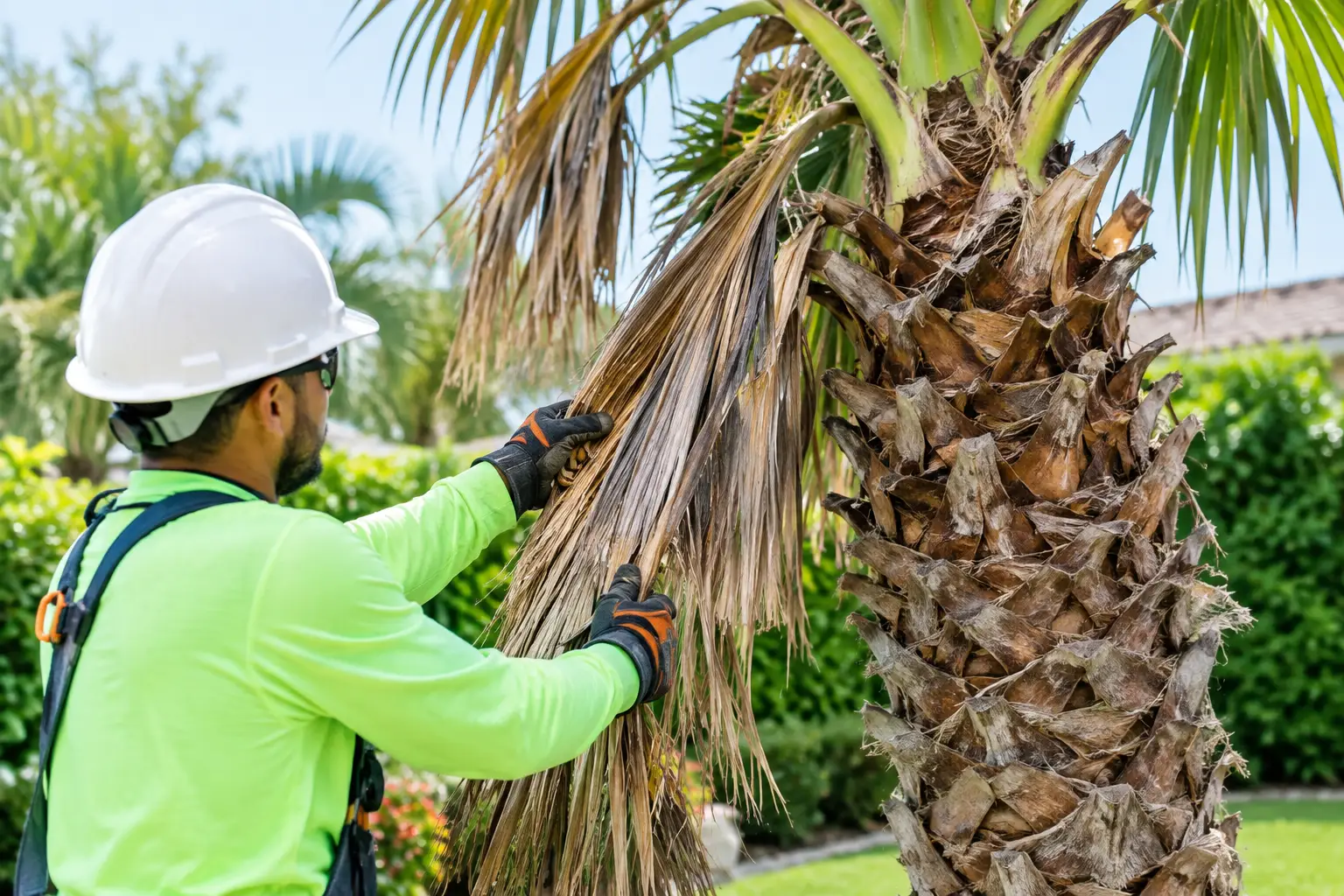
The work should include clean removal of dead or hazardous fronds, trimming of branches that obstruct the garden, and a complete cleanup of the cut material. Palm debris is bulky, fibrous, and difficult to handle in ordinary garden waste bags. Spiny varieties can be particularly unpleasant to move without the right gloves and tools.
A careful team also protects what is below the palm. That may mean working around irrigation lines, flowering beds, decorative gravel, outdoor furniture, lighting, or a newly built deck. This attention matters because an otherwise simple pruning job can cause avoidable damage when branches are dropped carelessly.
At Creative Garden Co., palm branch work can fit into a broader maintenance visit. If the garden also needs weeding, seasonal cleanup, irrigation attention, hedge trimming, or tree styling, it makes sense to handle those tasks together. One coordinated visit leaves the whole space looking finished rather than improving one corner while the rest waits.
Safe Access Makes a Real Difference
A low palm with one or two dry fronds may be straightforward. A tall palm beside a home, driveway, solar panels, or covered seating area is a different job. Height changes the risk, and so does the direction in which branches can fall.
Professionals assess access before cutting. They consider whether a ladder can be positioned safely, whether branches need to be controlled as they come down, and whether the area below should be cleared first. This is especially valuable in family gardens, where play equipment, pets, and frequently used paths are part of daily life.
There is also a practical question of disposal. Leaving piles of palm fronds for later can attract pests, make a garden feel neglected, and create a scratchy obstacle for anyone using the space. Removal and cleanup are what turn pruning into a complete service.
Why Over-Pruning a Palm Causes Problems
It is tempting to remove every low or slightly faded frond and create a perfectly clean trunk. But palms are not shaped like standard shade trees. Their green fronds produce energy for the plant, and excessive removal can reduce vigor, slow recovery, and create a top-heavy appearance.
A healthy palm should retain a balanced crown. In most cases, dead, dying, broken, and clearly obstructive branches are the priority. Yellowing alone does not always mean a frond must be cut immediately. Sometimes it reflects normal aging, while other times it points to irrigation, soil, or nutrient issues that deserve a closer look.
The right approach depends on the palm species, age, location, and overall condition. A palm near a pool or pergola may need a cleaner lower profile than one standing at the edge of a larger garden. Good maintenance adapts to the setting instead of applying the same aggressive cut to every tree.
Watch for More Than Dead Fronds
Palm branch removal is also a useful opportunity to notice wider garden issues. Irrigation spray may be hitting a wall instead of reaching surrounding plants. Dense growth can reduce airflow. Old fronds caught in the crown can make the palm look unkempt even when the lower branches have been trimmed.
If branches are repeatedly drying out faster than expected, the cause may not be the branches themselves. Watering schedules, soil drainage, root space, and heat exposure can all influence palm health. Pruning improves appearance and safety, but it cannot replace a sensible maintenance plan.
This is where integrated garden care is useful. A team that understands planting, irrigation, cleanup, and outdoor construction can see how the palm relates to the entire space. The goal is not just a tidier tree. It is a garden that works better as a whole.
The Best Time to Remove Palm Branches
There is no single calendar date that suits every palm. In Southern Israel, routine checks after periods of wind are particularly worthwhile, since dry fronds can loosen and shift. It is also smart to inspect palms before hosting outdoor gatherings, starting a renovation, installing a pergola, or refreshing a garden for the warmer months.
Regular maintenance usually prevents urgent work. When palms are checked as part of an ongoing schedule, dead fronds can be removed before they build up, and small problems are easier to spot. For busy homeowners, this is often the most convenient option because the garden stays presentable without becoming another task on a long weekend list.
Urgent removal is appropriate when a branch is cracked, hanging over a used area, or resting against a roof, fence, or structure. In that situation, keep people away from the area and avoid trying to pull or snap the branch down from below. Palm fronds can shift suddenly and are harder to control than they appear.
A Clearer Garden Starts at the Canopy
Palm trees bring height, texture, and a distinct Mediterranean character to a garden. They can frame an entrance, soften a boundary, or stand beautifully beside natural stone, decking, and custom wood features. But when dead branches gather overhead, the same palm can make a carefully planned space feel neglected.
Thoughtful pruning restores that clean, cared-for look while preserving the palm’s natural form. It also gives surrounding planting more light and room, keeps pathways usable, and helps outdoor seating feel inviting again. The difference is often immediate: less clutter above, less debris below, and a garden that feels ready to use.
When a heavy frond is hanging where your family walks, plays, parks, or relaxes, it is worth dealing with before it becomes an emergency. Careful palm maintenance is one of those small actions that protects the garden and makes the whole outdoor space feel properly looked after.